From corner section to quotation
What is the difference between a postformed and an edgebanded corner?
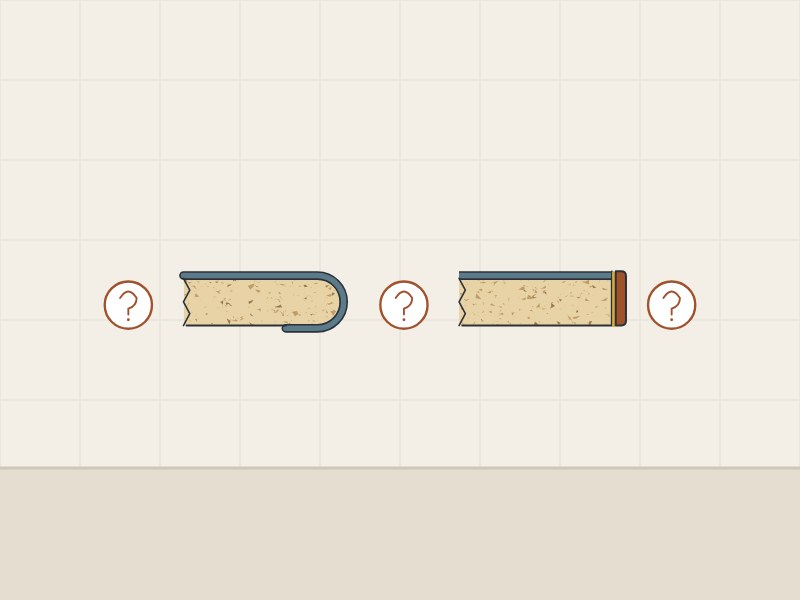
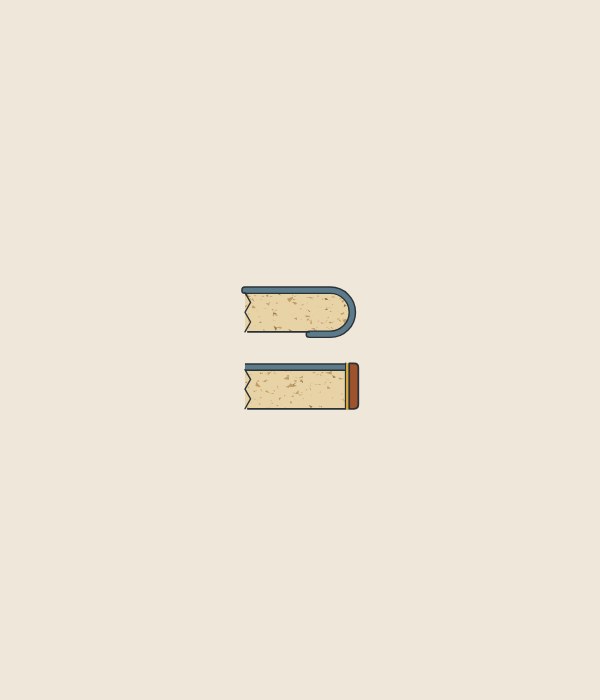
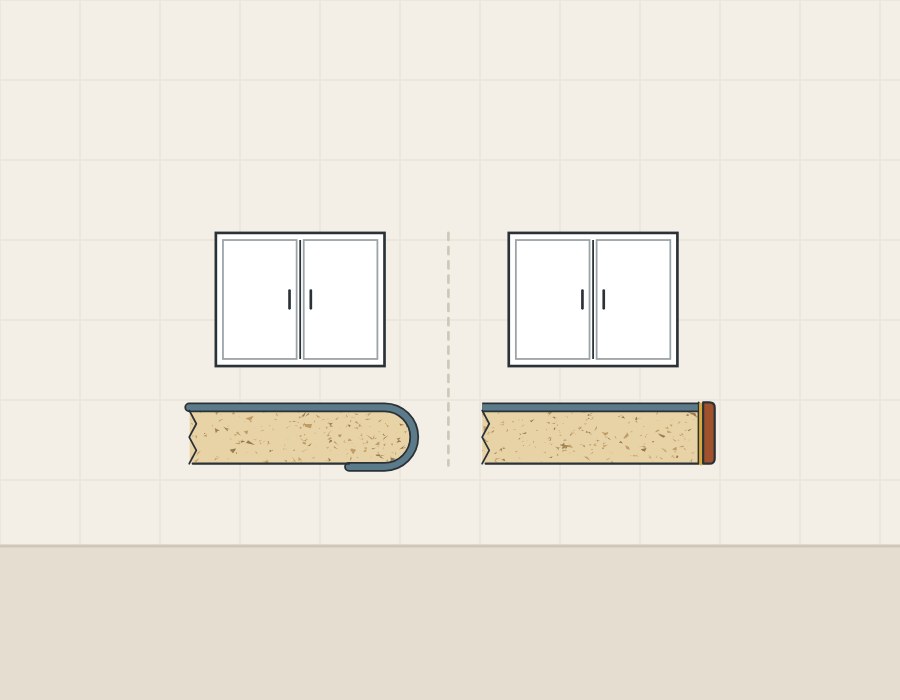
In a postformed corner the laminate itself turns the corner; in an edgebanded corner the face stops and a strip covers the edge.
The Composite Panel Association describes high-pressure laminate as kraft paper layers saturated with phenolic resin. ICDLI says thin laminate needs bonding to a supporting substrate.
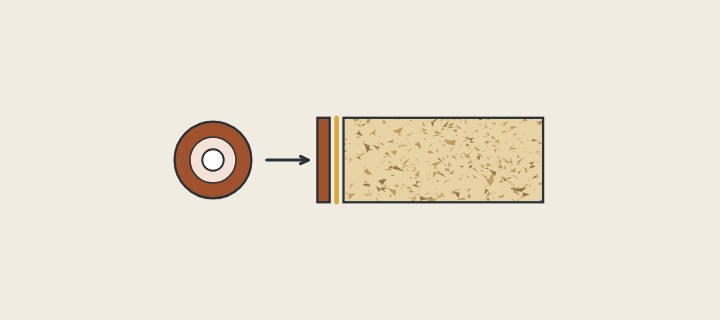
Formica’s edge profile article says traditional square countertop edges show a brown line between top sheet and edge. Annex A of NEMA LD 3-2005 lists self-banding with laminate as one way to seal an exposed core edge.
| Term | What it means |
|---|---|
| Postforming | Bending a heated postforming-grade laminate into a simple curve. |
| Edgeband | A separate strip bonded to the board edge. |
| Self-banding | Edging the board with a strip of laminate; NEMA’s Annex A lists it as one way to seal an exposed core edge. |
| Zero-joint edgeband | REHAU’s term for a strip with a functional layer, not adhesive. |
How is a postformed corner made?
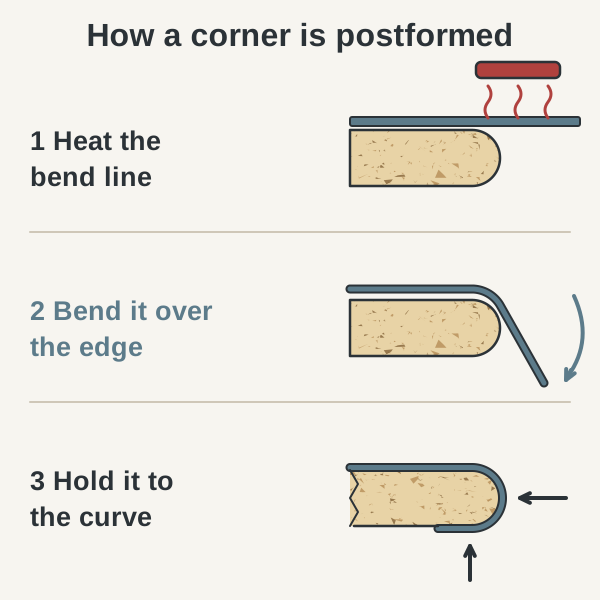
A postformed corner is made by heating a postforming laminate where it will bend and forming it over a shaped edge. The steps are drawn from NEMA’s Annex A, Formica and the Composite Panel Association; they are not a fabrication instruction.
- A postforming laminate is chosen; NEMA says such laminates are made so that they can be thermally bent.
- The profile has straight, parallel surfaces, as NEMA advises for formed moldings.
- The laminate is heated in the area where it will be formed.
- The bend is made quickly and uniformly once the proper temperature is reached.
- The laminate is held to the curve; the Composite Panel Association’s wording is “heat and restraint”.
Temperatures belong to each maker. Formica recommends 163 to 177 °C for its HGP and VGP postforming laminates. Wilsonart’s data sheet gives a nominal sheet temperature of 325 to 338 °F (163 to 170 °C) for its Types 335 and 350. NEMA advises consulting the laminate supplier before starting.
Which laminates can be postformed?
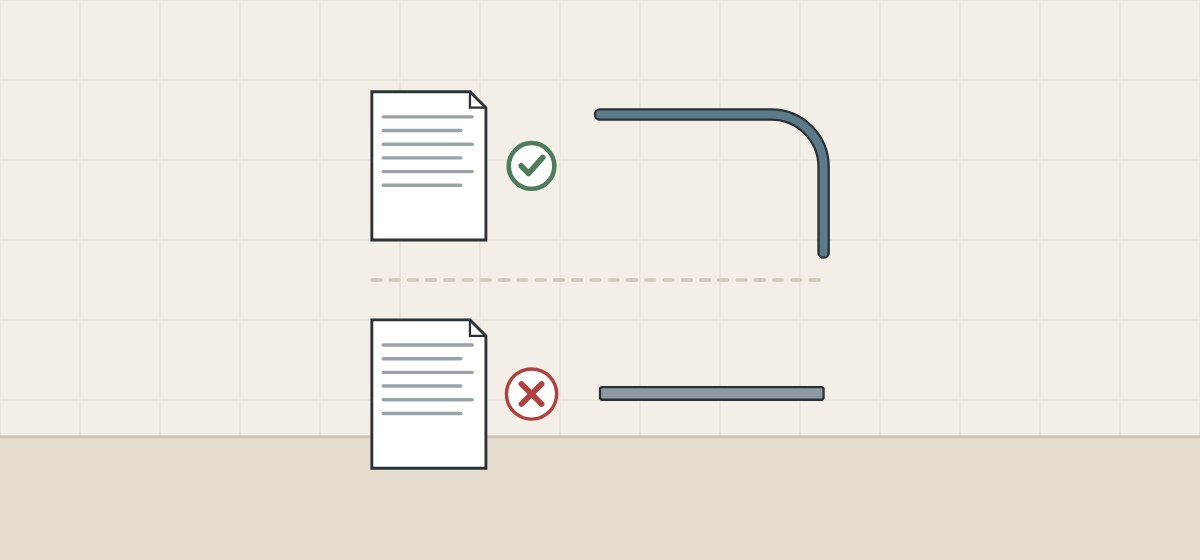
Only laminates their maker offers as postformable should be assumed to bend. The table gives each source’s own statement.
| Source | What it says |
|---|---|
| Formica | Postforming applies to specially developed grades; flame-retardant postforming laminates are less formable at a given thickness. |
| EGGER | Lists its Standard, PerfectSense Matt and Door Size laminates as postformable; Flammex and colored core laminates as not. |
| Wilsonart data sheet | Type 350 is labeled Postforming (HGP) and Type 335 (VGP), its usual choice for cabinet walls and doors, may also be postformed; Type 107 is general purpose (HGS). |
| Composite Panel Association | Describes postforming grade as up to about 0.038 in (0.97 mm) thick, normally formable to radii as small as 3/8 in (9.5 mm). |
Formica adds that some postforming laminates have a shelf life, while the formability of its own does not deteriorate in storage.
How do the two corners differ in section?
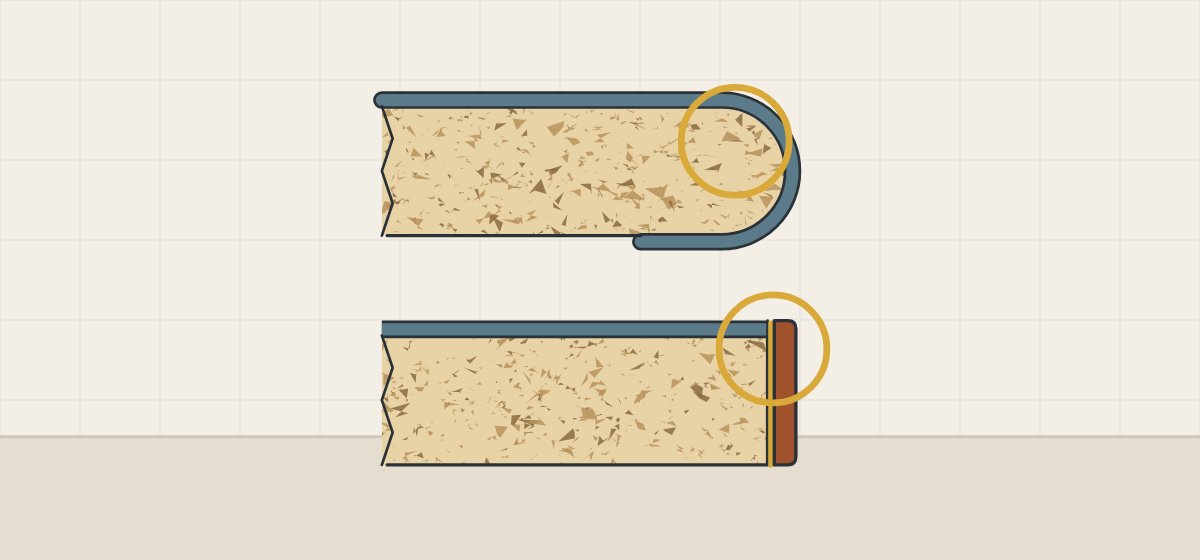
The difference is where the facing ends and what covers the board edge. Rows cite Formica and REHAU; rows marked “to confirm” are this guide’s prompts.
| Detail | Postformed | Edgebanded |
|---|---|---|
| Facing at the corner | Continues around the curve | Stops; a strip covers the edge |
| Joint at the corner | Formica: no visible seam on the curve | Adhesive line, or REHAU’s functional layer |
| Material to record | Postforming-grade laminate | Face, strip and bonding method |
| Strip material | None | REHAU offers PP, PMMA, ABS, PET and PVC |
| Ends and returns | To confirm: where the bent facing ends | To confirm: where strips meet |
Formica describes a postformed countertop as made in a single piece with no seams. A straight run hides the telling parts, so review the ends and returns. The aim is to identify the construction, not to rank the two routes.
What limits the shape of a postformed corner?
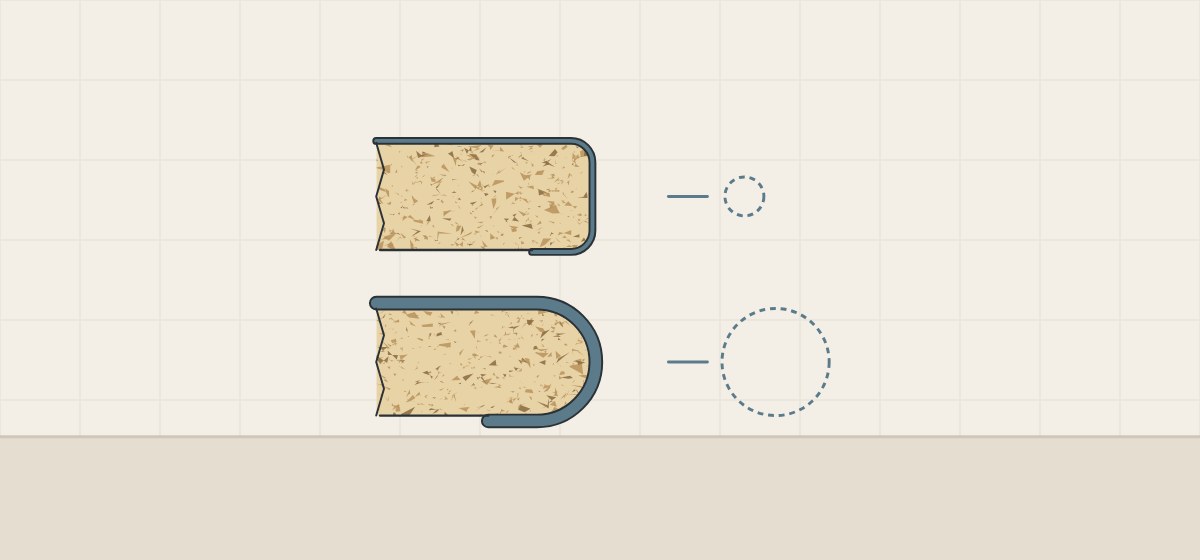
Grade, thickness and profile geometry limit the shape. The four points come from Formica and NEMA; the list after them is this guide’s own record of what to keep with an approval.
Simple curves
Formica’s definition covers simple cylindrical concave or convex curves.
Thickness and grade
Formica says thickness plays an important part: thin laminates generally form to tighter radii than thicker ones.
Profile geometry
NEMA’s Annex A asks for straight, parallel surfaces on formed moldings so that the material bends uniformly.
Supplier knowledge
NEMA says each supplier knows its own postforming laminate, and recommends proper forming equipment.
- Laminate maker, type and thickness
- Corner radius and profile drawing
- Sample reference for that exact shape
- A new review if the shape changes
Does a postformed corner make a vanity waterproof?
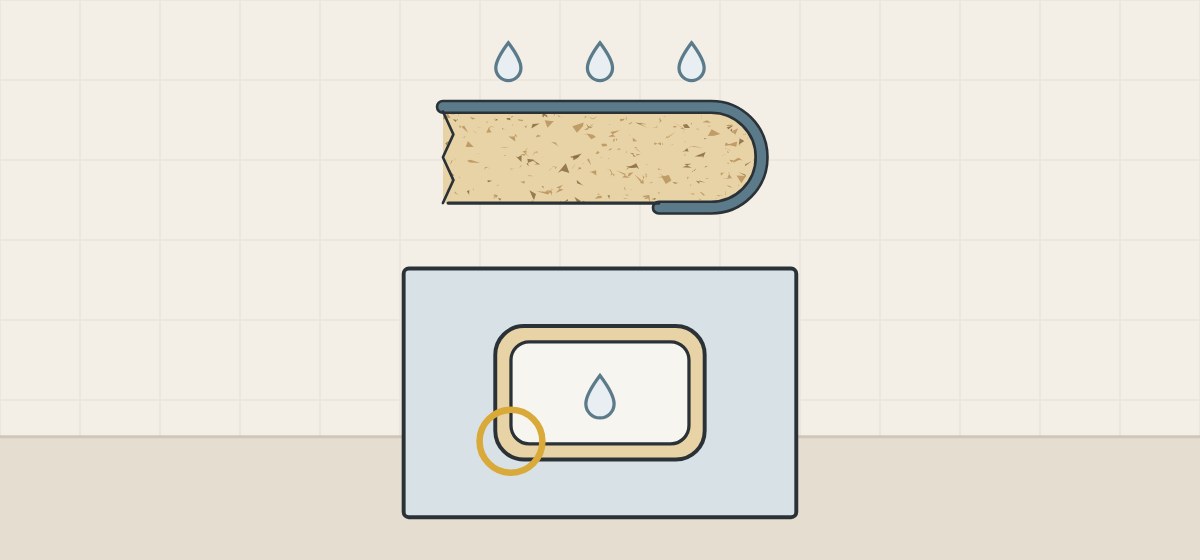
A postformed corner removes the joint at that corner only; none of the sources used here calls a postformed cabinet waterproof. Formica says curved surfaces eliminate joints in which dirt and water can accumulate. Four points from NEMA, Wilsonart and the Composite Panel Association still apply:
Other exposed edges
For higher than normal humidity, NEMA’s Annex A says the sink cutout and all exposed wood should be sealed.
The board core
The Composite Panel Association’s bulletin says particleboard or MDF that swells beyond its original dimensions in high humidity does not fully recover on re-drying.
Cutout corners
For inside corners NEMA gives a minimum radius of 3 mm (1/8 in) and Wilsonart 1/8 in (3.175 mm); NEMA’s reason is to reduce the possibility of stress cracking.
Warp
NEMA says postformed cabinet doors generally require a backer sheet or decorative laminate to minimize warpage.
Wilsonart states that its laminate should not be subjected to extremes in humidity. A water-performance statement for a cabinet needs its own documented scope.
What do sources say about the edgebanded alternative?
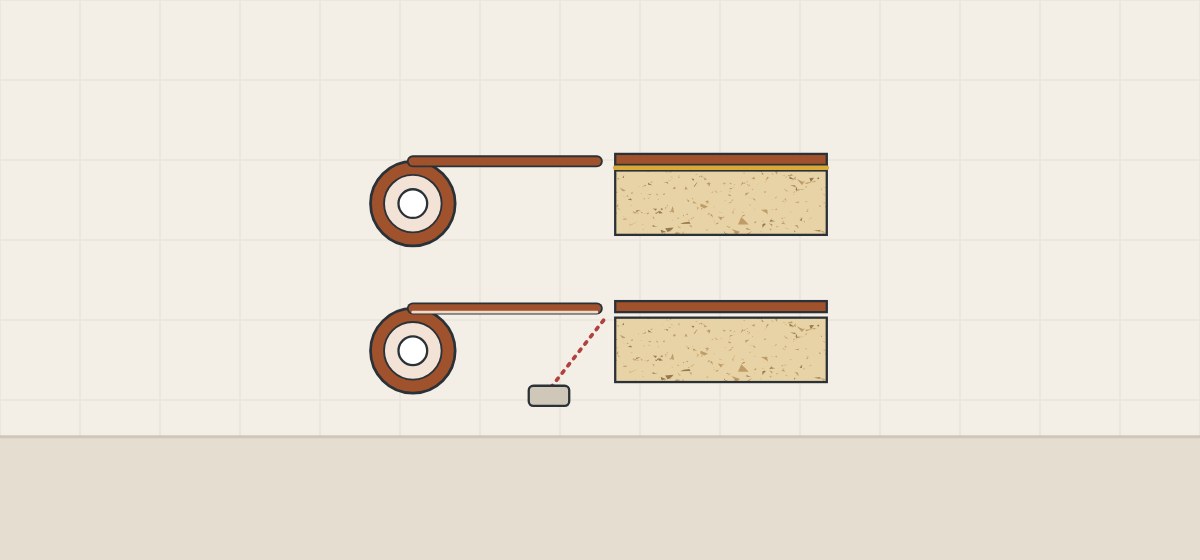
REHAU, NEMA and Formica describe several ways to bond a separate edge. Each row is the named source’s own statement.
| Source | What it says |
|---|---|
| REHAU primer edgebands | Adhesive is melted before it is applied to the board or edgeband; the page gives EVA and PUR adhesives as examples. |
| REHAU zero-joint edgebands | A functional layer is activated by laser, hot air or NIR. |
| REHAU RAUKANTEX pro | The maker claims an invisible zero joint. |
| NEMA LD 3-2005 Annex A (2005 text) | Hot melt adhesives suit only edge banding operations because of their low heat resistance. |
| Formica edge article | IdealEdge profiles, including Bullnose, adhere to the side of a laminate countertop. |
How should a buyer specify the corner construction?

Name the construction before comparing prices. These are this guide’s procurement steps, not a fabrication method.
- Name the route. Write “postformed” or “edgebanded” on the drawing, not “seamless round edge”.
- Draw the section. Show where the facing ends and what covers the board edge.
- Record the laminate. Maker, type, grade and thickness.
- Record the strip and bond. For an edgebanded corner: strip material and bonding process.
- Show the ends. Ends, returns and nearby cutouts belong on the drawing.
- Approve a corner sample. A finished corner with its ends, tied to the drawing revision.
- Control substitutions. Agree on any change of construction in writing.
When two quotes both show a round edge
Two quotes are not equivalent just because both show a rounded profile; one may be postformed and the other a bonded edge. Keep the accepted section and sample reference in the production record.
What should you send and ask before a quotation?
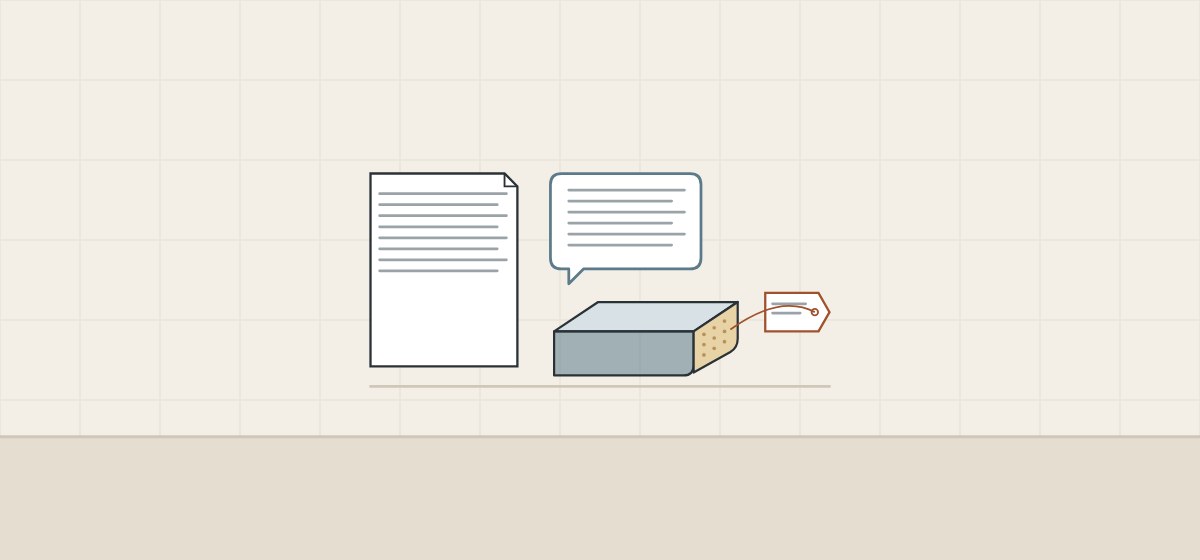
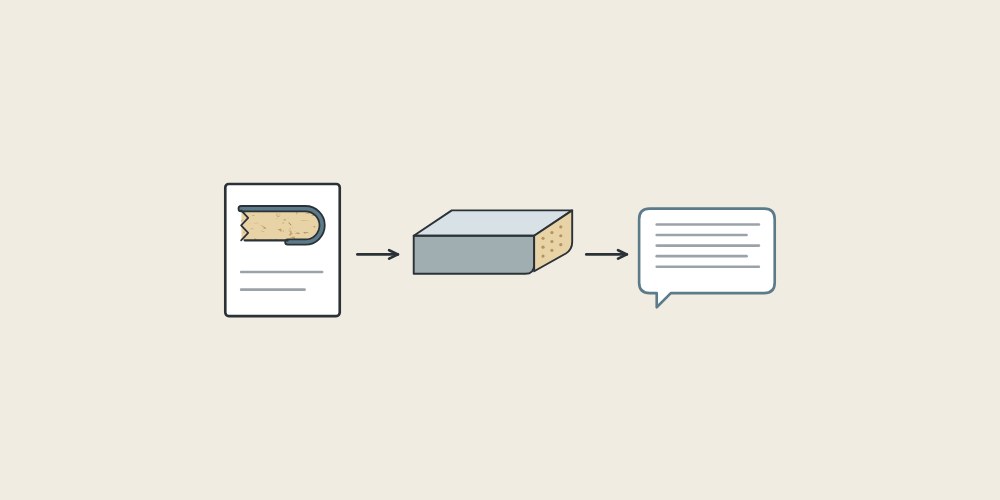
Send the corner section and ask how it will be built. The questions are this guide’s own.
| Question | Why it matters |
|---|---|
| Is the corner postformed or edgebanded? | A rounded front view fits both. |
| Which laminate type and thickness? | Formability depends on grade and thickness. |
| Does the maker list it as postformable? | Some laminates are listed as not postformable. |
| Which strip and bonding process? | Adhesive and functional-layer bonds differ. |
| How are ends and returns finished? | A straight run does not show them. |
| How are other exposed edges sealed? | One formed corner does not seal the cabinet. |
This guide’s list of what to send
- Cabinet drawing with the corner section
- Desired radius and edge profile
- Laminate maker, color and type, if chosen
- Where the cabinet stands relative to water
- Quantity and sample requirement
WNS Global confirms any product and terms it offers separately in writing. This guide does not state that WNS Global products have the features, ratings or listings named above.