From adhesive to approval
How do EVA, PUR and zero-joint edges differ?
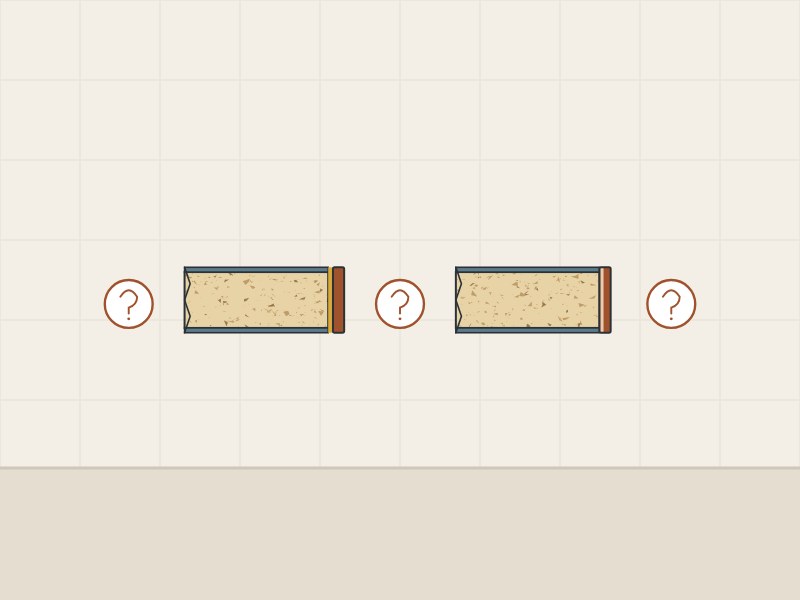
They differ in what joins the strip to the board. EVA and PUR are hot melt adhesives: REHAU’s processing tips name both among the hot melts its primed edgeband is suitable for.
A zero-joint edge carries its bonding layer on the strip. REHAU describes its LaserEdge as an edgeband with a pre-applied, co-extruded functional layer that replaces the traditional glue.
Jowat, an adhesive maker, lists EVA, PO and PUR hot melts for edgebanding.
| Term | What the named source says |
|---|---|
| EVA hot melt | REHAU: one of the hot melt adhesives its primed edgeband suits. |
| PUR hot melt | KLEIBERIT: a reactive adhesive that cross-links chemically after physical curing. |
| Primer | REHAU: its edgeband is produced with a universal primer for hot melt bonding. |
| Functional layer | HOMAG: the layer of a special edge that is melted to bond it. |
| Zero joint | HOMAG: the joint-free finish it offers with its airTec unit. |
How is a zero-joint edge bonded to the board?
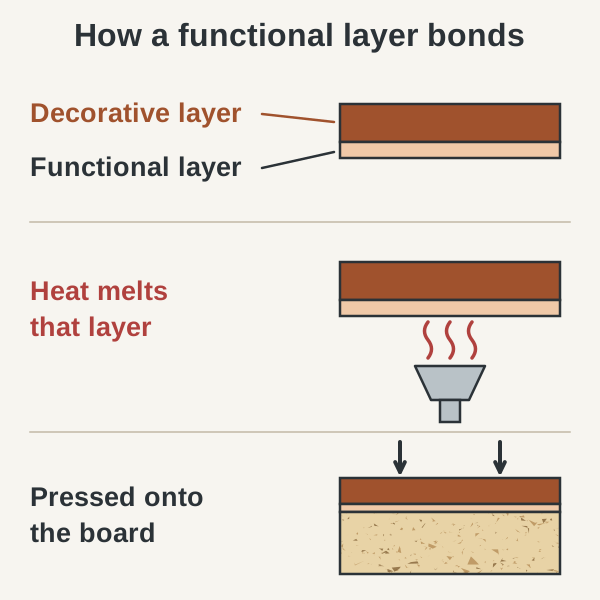
A zero-joint edge is bonded by melting a layer on the back of the strip and pressing the strip onto the board. The five steps follow HOMAG’s description of its airTec process and SURTECO’s FUSION-Edge page.
- The edge has a decorative layer and a functional layer.
- The functional layer is on the reverse side of the edge.
- A laser beam, hot air or near-infrared radiation heats that layer.
- The functional layer melts.
- The edge is pressed onto the workpiece.
SURTECO says FUSION-Edge needs no additional hot-melt adhesive.
What do adhesive makers say about EVA and PUR?
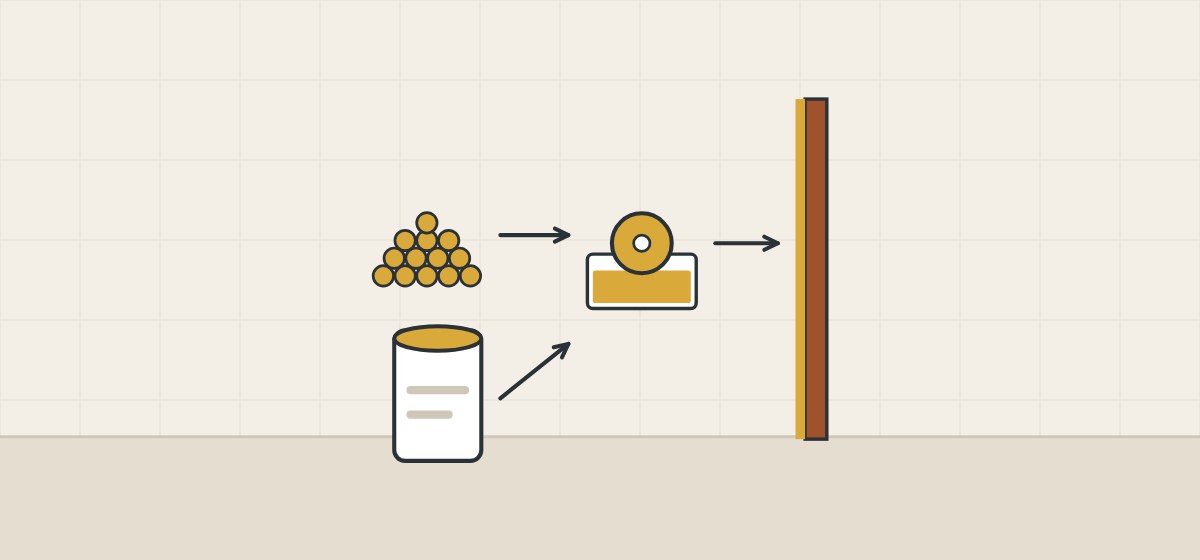
KLEIBERIT and Jowat, which both sell PUR adhesives, each single out PUR for kitchen and bathroom furniture.
| Source | What it says |
|---|---|
| KLEIBERIT | Reactive PUR adhesives are the products of choice for sophisticated edge banding in kitchen and bathroom furniture. |
| KLEIBERIT | Cross-linking after physical curing gives very high temperature resistance (-30 °C to +150 °C) and moisture resistance: clear benefits over EVA or polyolefin-based adhesives. |
| Jowat | PUR hot melts are known for a zero-bondline look and for resisting heat, moisture and chemicals in kitchens and bathrooms. |
| REHAU processing tips | PUR hot melt for high moisture conditions; APAO for high ambient conditions, such as kitchens or container export. |
| Henkel | Its Technomelt PUR Micro Emission adhesives contain less than 0.1% monomeric diisocyanate and, Henkel says, need no hazard label. |
For its glued edgeband, REHAU’s tips give a room temperature of at least 64 °F (18 °C) and a board moisture content of 7-10%.
What is the functional layer on a zero-joint strip made of?
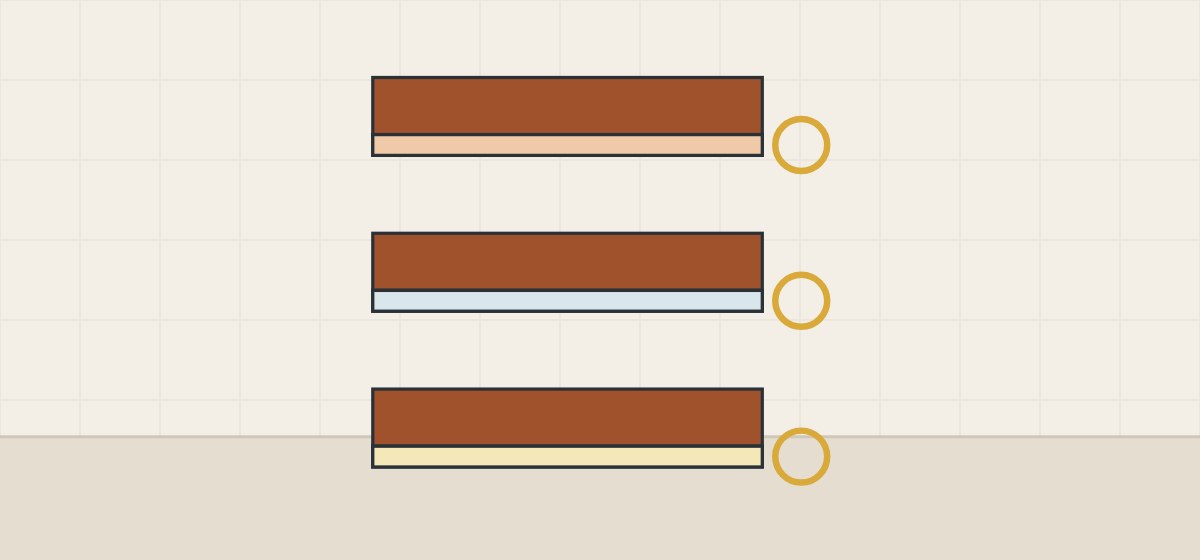
The functional layer depends on the edge maker. Three edge makers describe it as follows.
| Product | Layers the maker names | Activation it names |
|---|---|---|
| REHAU LaserEdge | Polypropylene functional layer, per its US page; decorative layer of ABS or polypropylene | Hot-air, laser and NIR machines |
| EGGER ABS Seamless Edging | Color-coordinated TPU functional layer on the back | HotAir, laser and NIR |
| SURTECO FUSION-Edge | Functional layer on the reverse side | Laser, hot air and NIR |
REHAU’s processing tips say its glued edgeband is extruded from PVC, ABS, PET or PP. ABS and PP therefore appear on both routes.
Which machine process applies each kind of edge?
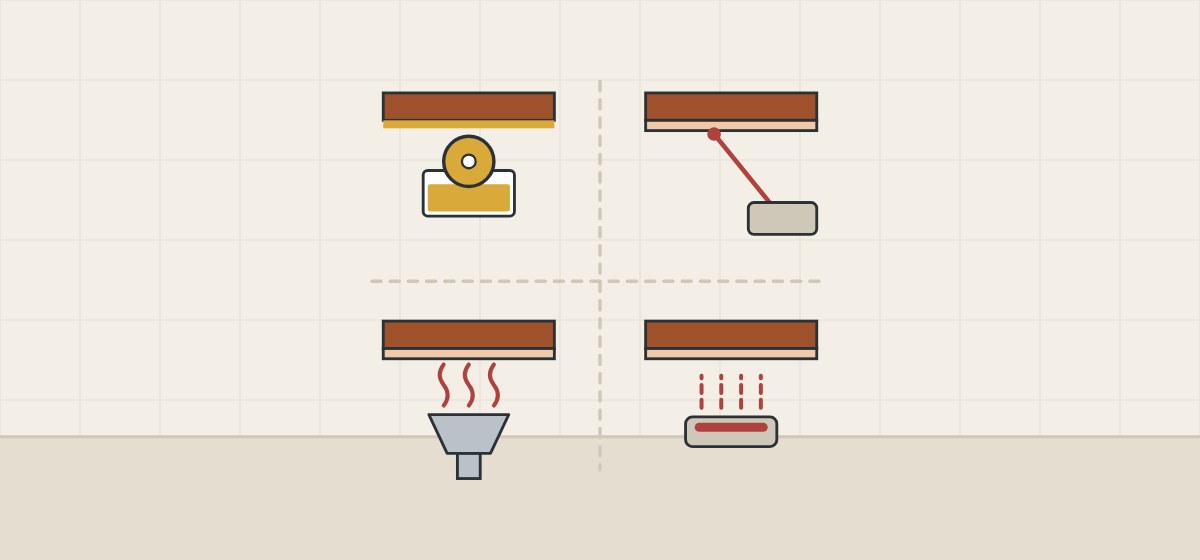
Glued edges pass a glue application unit; zero-joint edges pass a laser, hot-air or NIR unit. The four descriptions cite maker sites; the list after them is this guide’s.
Glue roller
HOMAG’s EDGETEQ S-300 applies glue with a roller and has interchangeable tanks for PUR cartridges or EVA granulate.
Laser
HOMAG introduced laserTec in 2009: a laser beam melts the surface to be glued, which is pressed onto the workpiece.
Hot air
HOMAG launched airTec in 2013 for edges with decorative and functional layers. A case study on its site says airTec was developed for shops wanting a lower investment than laserTec, and for shorter runs.
NIR
SURTECO says near-infrared radiation heats the functional layer on the reverse side of FUSION-Edge.
- Machine process: glued, laser, hot air or NIR
- Adhesive maker and grade, if glued
- Edge maker and product name
- Date and reference of the sample
Does a tidy joint prove moisture resistance?
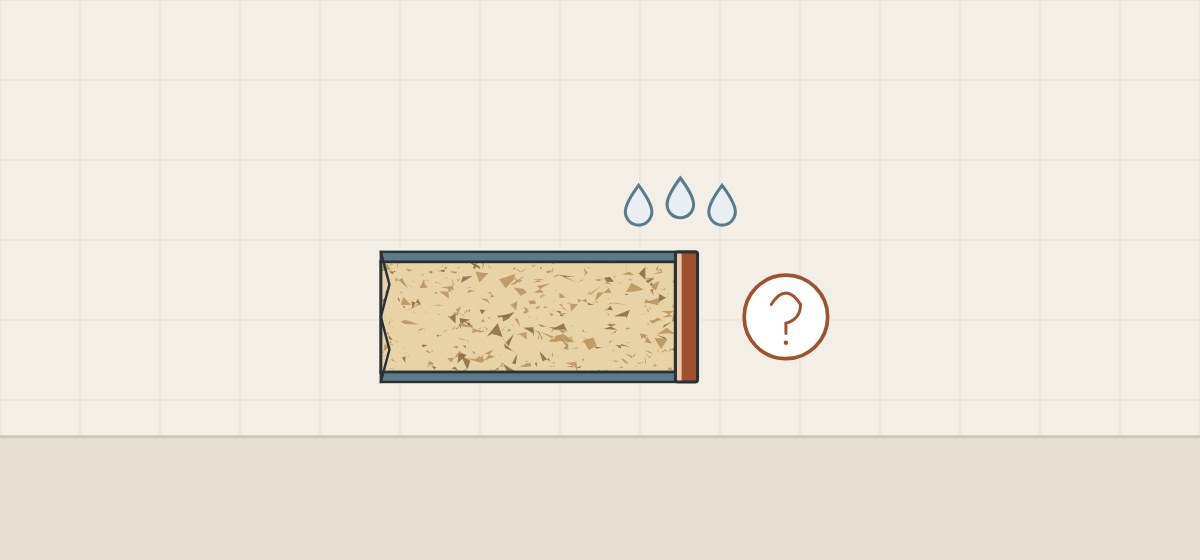
A tidy joint does not prove it. Makers make claims about moisture and bond strength for their products and processes, and some link a tight joint to moisture protection. Four examples:
REHAU
REHAU claims heat and moisture resistance for zero-joint edgebanding and says this suits spaces with heat and steam, naming bathrooms. Its LaserEdge page claims the layer helps achieve better moisture resistance.
EGGER
EGGER lists ABS Seamless Edging as creating a visually seamless joint and, separately, as heat, peel and water vapor resistant.
KLEIBERIT
KLEIBERIT claims that zero bond lines offer the best protection against moisture. It also says a badly made edge joint that meets water, steam or heat will swell and in time ruin the whole piece of furniture.
HOMAG
A case study on HOMAG’s site lists, among reasons for airTec, a significantly higher adherence force of the edge compared to hot melt glues.
These are the makers’ own claims, reported here and not adopted by this guide. If the project has a performance requirement, ask for evidence for the actual assembly under the stated exposure.
Which published cabinet tests involve the door edge or humidity?
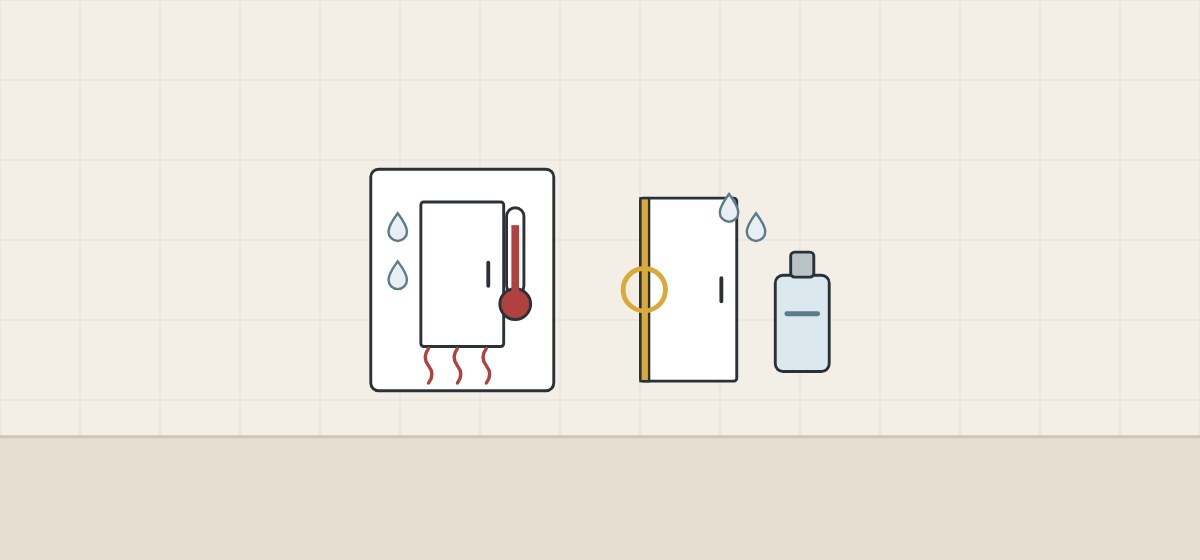
An article on the Kitchen Cabinet Manufacturers Association (KCMA) site quotes a KCMA vice president calling the association’s A161.1 standard the only performance standard for kitchen and bath cabinets. A second article on the KCMA site summarizes its tests, including the four exposures below. The standard itself was not read for this guide.
| Exposure | What the article describes |
|---|---|
| Door edge and detergent | A cabinet door edge is exposed to a standardized detergent formula for 4 to 24 hours, depending on door type. |
| Heat and humidity | A cabinet door stays in a hotbox at 120 °F and 70 percent relative humidity for 24 hours. |
| Hot and cold | One hour in the hotbox, a return to room conditions, then one hour in a coldbox at -5 °F. |
| Household substances | Exposed exterior surfaces receive vinegar, fruit juices, ketchup, coffee, olive oil and 100-proof alcohol for 24 hours, and mustard for one hour. |
How should a buyer specify a vanity edge?
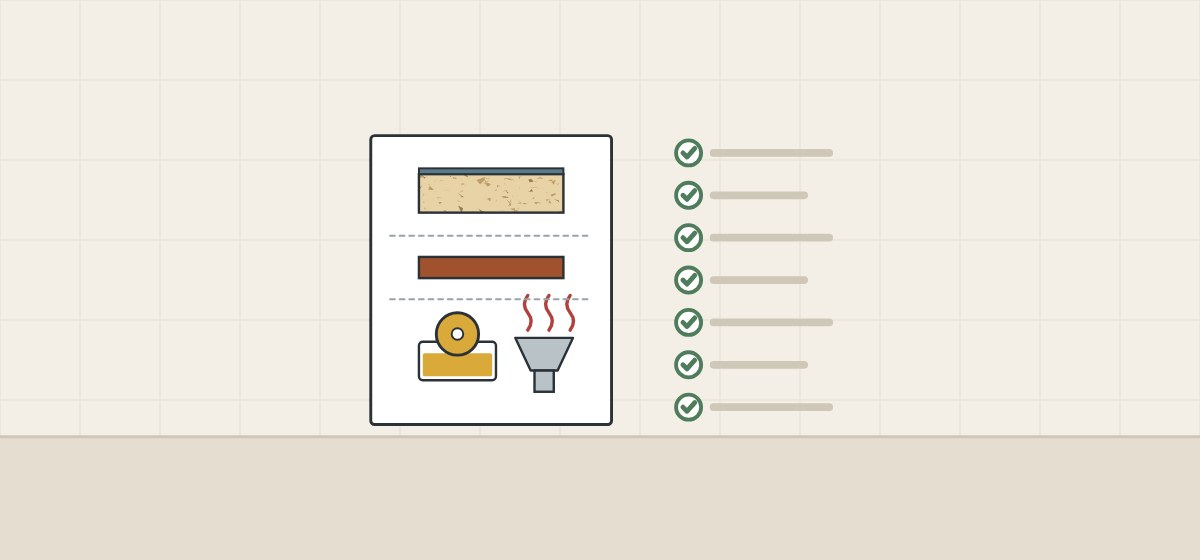
Specify three things separately: the board, the edge strip and the bonding process. The steps are procurement guidance, not a test method.
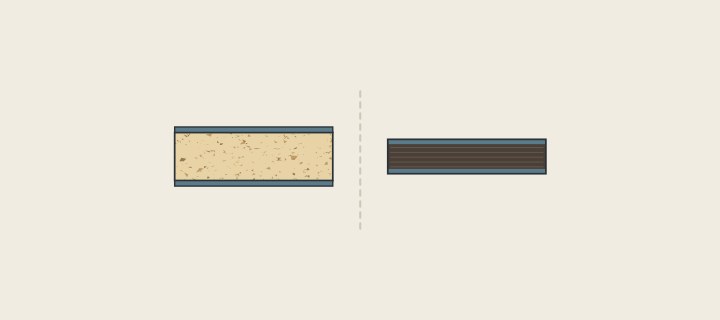
- Name the board. Core and face, the same for every offer being compared.
- Name the strip. Maker, product, material and thickness, and whether it has a functional layer.
- Name the process. Glued with EVA, PO or PUR, or activated by laser, hot air or NIR.
- Name the adhesive. For a glued edge, the adhesive maker and grade.
- State the exposure. Say what the edge must withstand, apart from how it must look.
- Ask for evidence. A test report for the assembly, or the item left marked as open.
- Approve a production sample. Made on the proposed board with the proposed process, including corners and exposed ends.
When the edge changes after approval
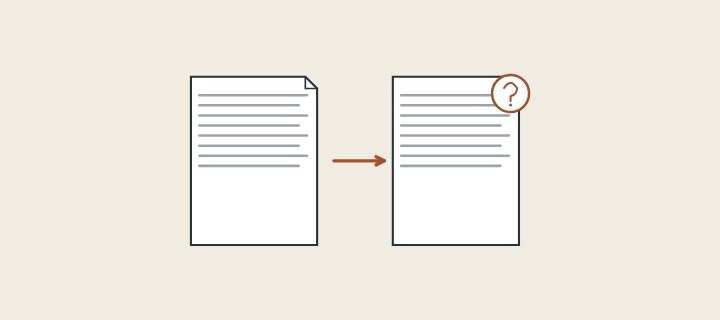
One color code can hide a change of board, strip or process. Put all three in the approval record, ask for a new review when any changes, and keep a labeled sample of the approved edge.
What should you send and ask before a quotation?
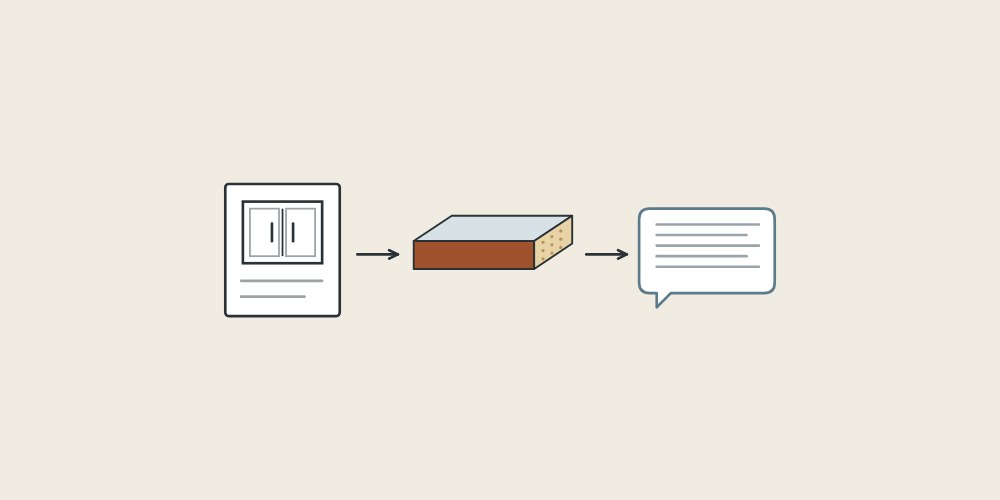
Send the edge requirement with the drawing, and ask the questions below. The questions and the list are this guide’s own.
| Question | Why it matters |
|---|---|
| Which bonding process will be used? | Glued and functional-layer edges differ. |
| Which adhesive, if glued? | Makers describe EVA, PO and PUR differently. |
| Which strip, from which maker? | ABS or PP names the material, not the bond. |
| Which activation, if zero-joint? | Makers name laser, hot air and NIR. |
| What evidence covers moisture? | Maker claims are not tests of the cabinet. |
| Is the sample from production? | A showroom piece may be made another way. |
Include with your request
- Cabinet drawing with exposed edges marked
- Board specification: core and face
- Edge color, thickness and finish
- Required exposure or test, if any
- Quantity and destination market
WNS Global confirms any product and terms it offers separately in writing. This guide does not state that WNS Global products have the features, ratings or listings named above.