From rating to function
What does a shower hinge load rating include?
A published rating is a door weight tied to conditions. Bohle’s Juna hinge page lists a load capacity of 50 kg next to a maximum door size of 1 × 2.25 m and glass thicknesses of 6, 8 and 10 mm.
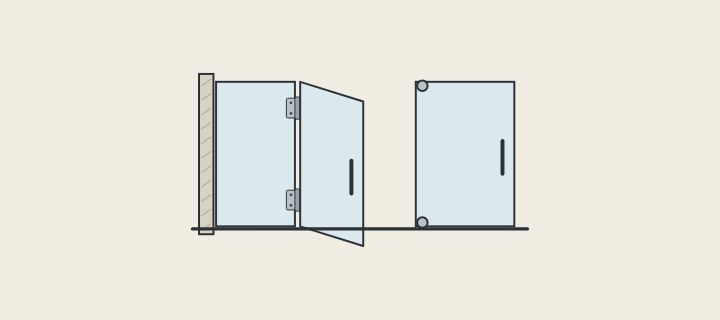
The NGA manual describes glass-to-wall and glass-to-glass hinges, and pivot hinges mounted at the top and bottom of the door.
| Term | What it means |
|---|---|
| Load capacity | The door weight a maker states. |
| Door size limit | The largest door the rating is stated for. |
| Glass thickness | The thicknesses the hinge accepts. |
| Hinge count | How many hinges the weight applies to. |
| Zero position | Where the closed door rests. |
| Self-closing | The hinge returns the door. |
| Lift function | The hinge raises the door as it opens. |
How do you read a hinge rating against a door?
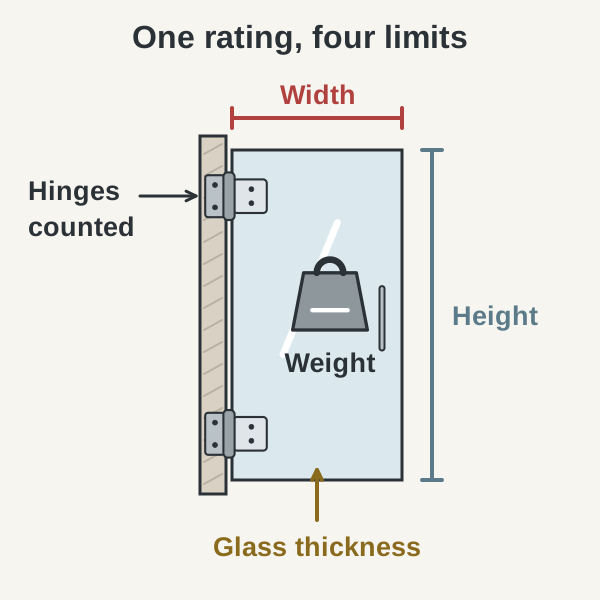
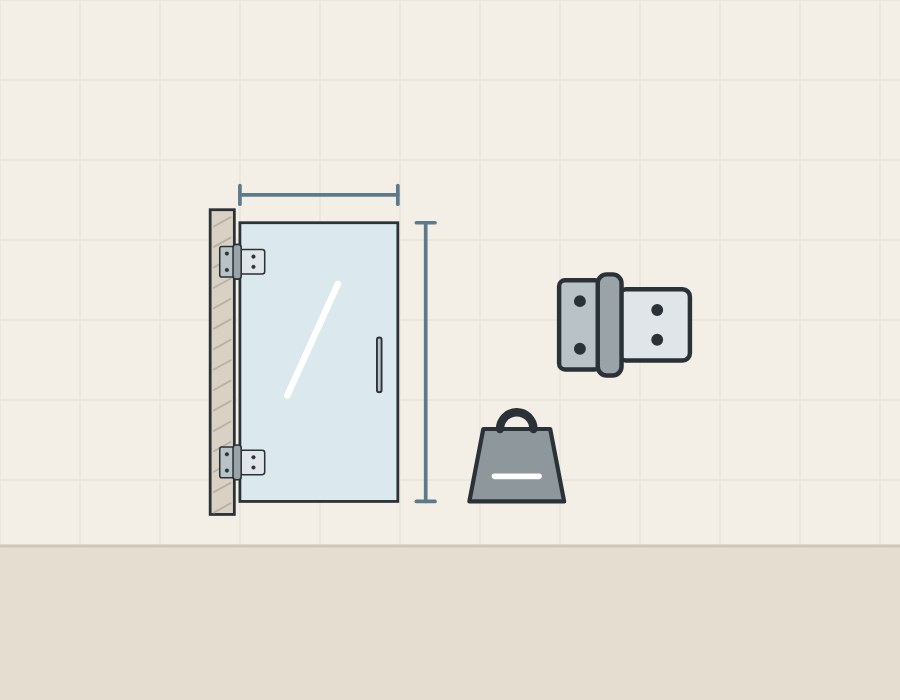
Check the door against every limit the maker prints, not the weight alone. The steps follow the items FHC, Bohle and DORMA-Glas print with their ratings.
- Work out the door’s weight from its size and glass thickness.
- Find the load capacity for the exact hinge model.
- Note the number of hinges that capacity is stated for.
- Compare the door’s width and height with the stated limits.
- Confirm the glass thickness and type the hinge accepts.
- List the functions separately from the load.
FHC’s Venice flyer warns not to exceed either the maximum weight or the maximum width when choosing the quantity of hinges.
What ratings do named makers publish?
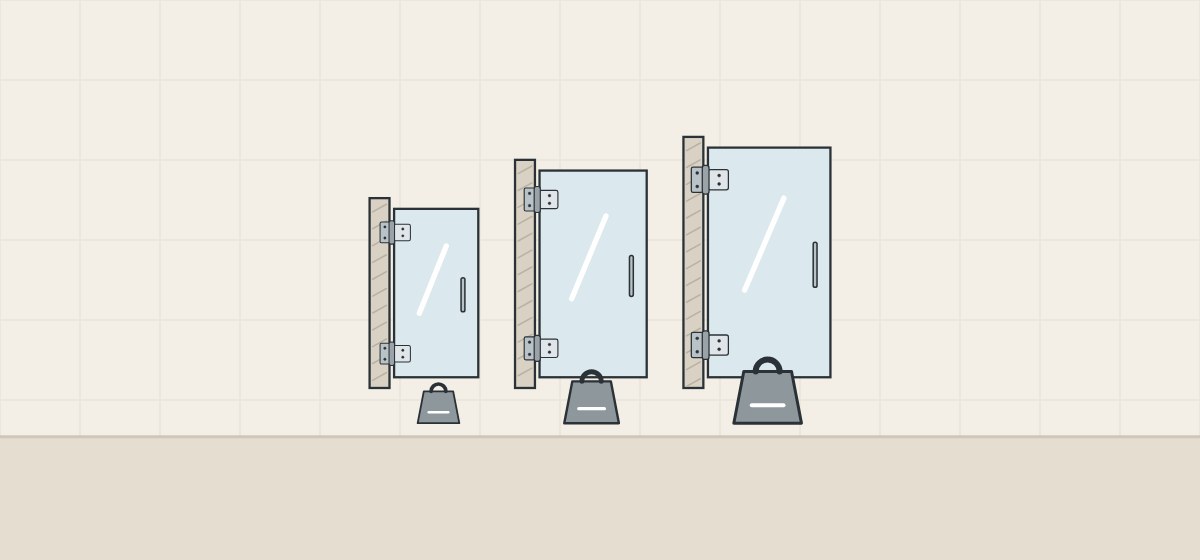
The makers below publish different weights with different limits. Do not carry a figure from one series to another.
| Hinge | Load stated | Limits stated with it |
|---|---|---|
| Bohle Juna | 50 kg | Door up to 1 × 2.25 m; glass 6, 8 or 10 mm. |
| Bohle Madrid FM and Arta FM | Up to 40 kg | Door up to 1 × 2 m; toughened safety glass 8 or 10 mm. |
| DORMA-Glas MORANO S1 | 45 kg, two hinges | Width 1,000 mm at 2,000 mm height; 8 mm glass. |
| DORMA-Glas MORANO S1 XL | 60 kg, two hinges | At 2,000 mm height: 1,200 mm wide in 10 mm, 1,000 mm in 12 mm. |
| FHC Venice (series flyer) | 110 lb (50 kg), two hinges | Door width 36 in (914 mm); tempered glass 3/8 to 1/2 in. |
| Rockwell Titan | 140 lb, two hinges | Door width 39 in; glass 3/8 to 1/2 in. |
DORMA-Glas ties width to glass thickness: MORANO S1 XL allows a wider door in 10 mm glass than in 12 mm. FHC’s sheet for one wall-mount Venice hinge prints a different two-hinge figure, 145 lb at 40 in, so read the sheet for the model ordered.
Does a third hinge raise the rating?
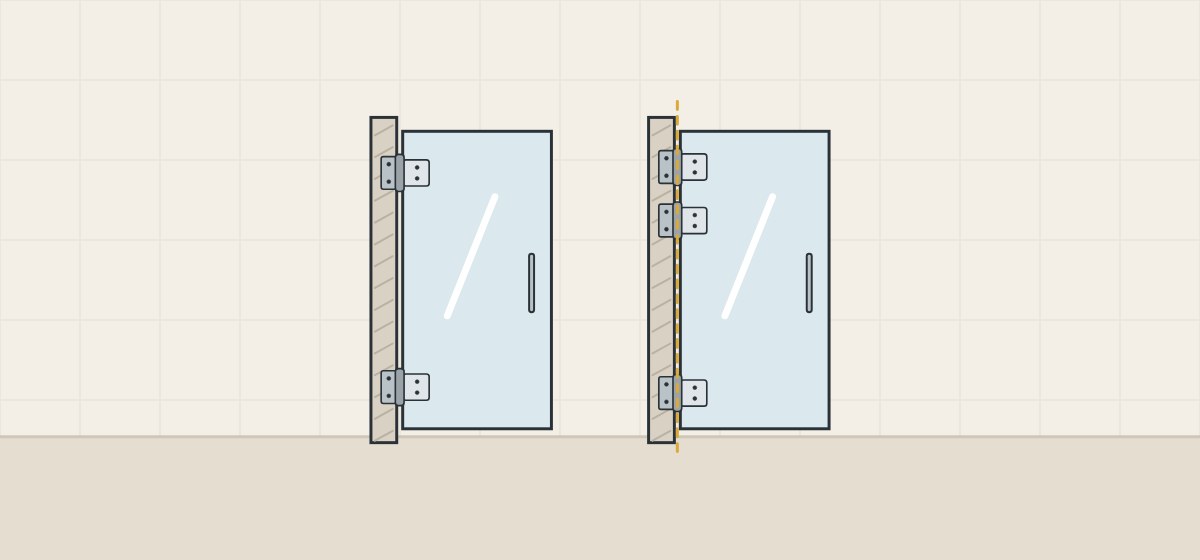
It depends on the maker. DORMA-Glas states that a third hinge does not increase the maximum load capacity; FHC’s Venice flyer and Rockwell’s catalog print a higher weight for three hinges on the models below.
| Maker and model | Two hinges | Three hinges |
|---|---|---|
| DORMA-Glas MORANO S1, S1 XL, TANORA S1 | Load capacity stated for two | No increase in maximum load capacity. |
| FHC Venice (series flyer) | 110 lb (50 kg) | 140 lb (64 kg); width stays 36 in. |
| Rockwell Luxe H Type and Elegance Full Backplate | 36 in, 110 lb | 36 in, 140 lb. |
| Rockwell Classic (not Classic Junior) | 28 in, 80 lb | 32 in, 120 lb. |
DORMA-Glas still recommends three hinges from a door height of 2,150 mm, for better stability of the door glass. The NGA manual says the pivot points of three side-mount hinges should align; out of alignment, hinges bind and the door sags.
Which hinge functions are separate from the rating?
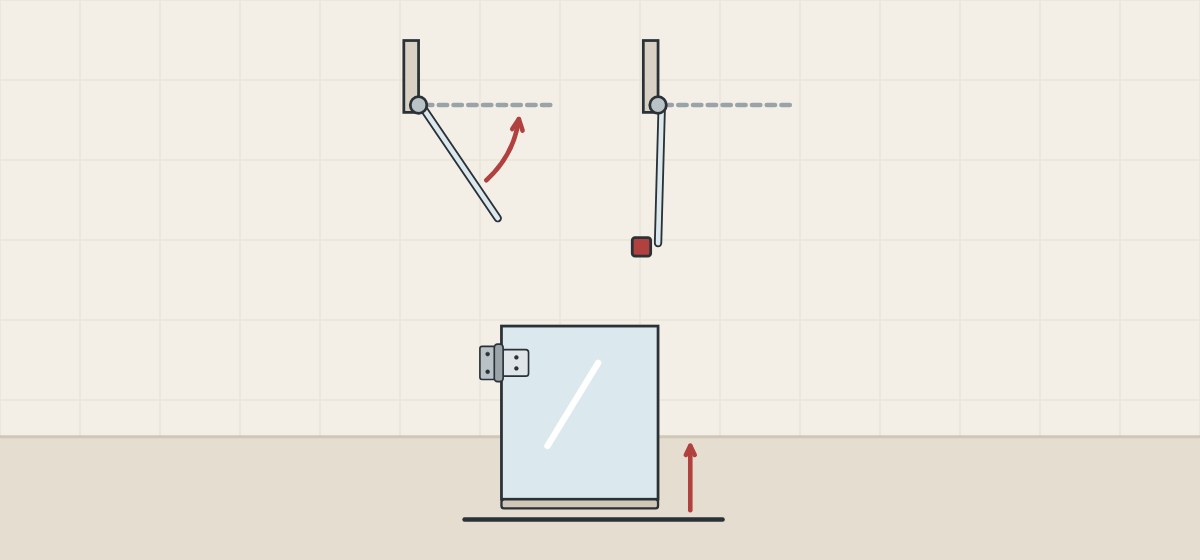
Closing, alignment, lift and stop behaviour are separate features. The cited makers describe them as follows:
Self-closing and self-centering
Bohle lists Juna as self-closing from about 20°. DORMA-Glas lists MORANO S1 from 20° and TANORA S2 from 70°. FHC says Venice hinges self-center within 15 degrees of closed.
Zero position
Bohle says zero-position adjustment aligns the door exactly in the closed position. DORMA-Glas describes MORANO S1 zero positioning as infinitely adjustable.
Lift on opening
Bohle’s FM mechanism raises the door leaf by 5 mm as it opens so the seal does not drag. Its Vala FM lift is activated after assembly by removing a single screw.
Stop, hold-open and offset
Bohle describes its stop hinge as limiting the opening to a fixed direction. MORANO S1 holds the door open at 90°. FHC’s Venice wall-mount sheet describes a pivot-pin setting that allows 5 more degrees of closing.
- Closing angle
- Zero position: fixed or adjustable
- Lift: yes or no, and how much
- Stop or hold-open angle
What must the glass and the wall provide?
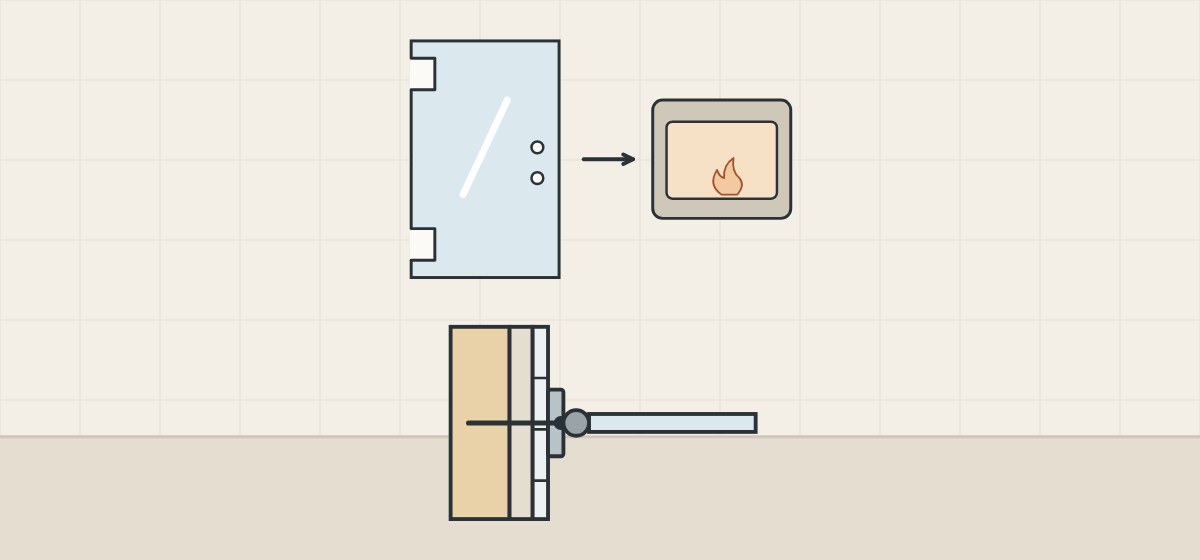
The glass must be the type and cutout the hinge maker names, and the wall must hold the fixings. Four points:
Glass type
FHC says to use only monolithic tempered glass with Venice hinges. DORMA-Glas specifies toughened safety glass to EN 12150-1.
Cutouts before tempering
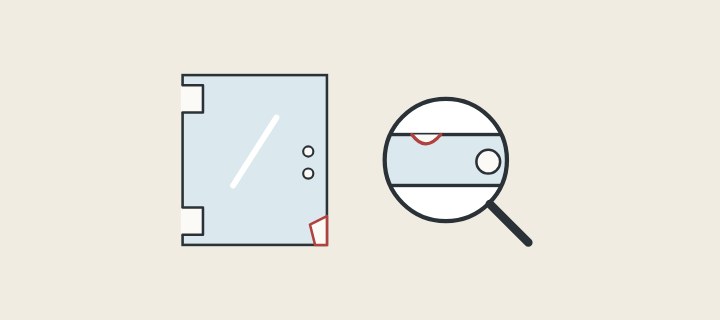
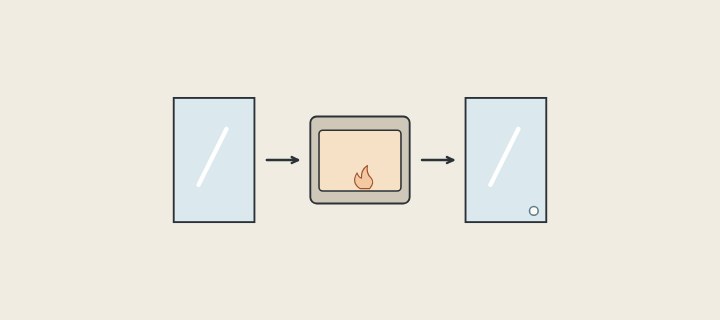
The NGA manual says all cutting and notching should be done before the glass is tempered, and never to cut or drill tempered glass.
The hinge’s own template
FHC’s sheet for one Venice hinge gives a cutout template measured from the finished glass edge, for a standard 1/4 in (6 mm) glass-to-wall clearance.
Wall substrate
The NGA says a door hinged from a wall is only as sound as the substrate it is attached to.
A replacement hinge has to match glass that already exists. Rockwell says its hinges fit typical glass cutout templates; that is the maker’s statement about its own range. Have the installed hinge identified and check the replacement’s template against the door.
What do the standards and trade guides cover?
The published texts read for this guide address the enclosure or installation practice. The load rating itself comes from the hinge maker’s own document.
| Document | What its published text shows |
|---|---|
| EN 14428:2015+A1:2018 | BSI lists the British edition as current. Its scope: characteristics for shower enclosures for domestic purposes. |
| DIN EN 14428, as cited by makers | Bohle cites tests with 100,000 cycles for Juna; DORMA-Glas cites an in-plant durability test to the 2019-07 edition. |
| NGA manual, 2023 | Follow the hardware maker’s width and weight limits. Most single-acting doors should be outswing only; check local building codes. |
How should a buyer specify a shower hinge?
Specify the hinge as a complete application: door, glass, mounting and movement together. These steps are procurement guidance.
- Fix the door first. Width, height, glass thickness and the resulting weight.
- Name the mounting. Glass-to-wall, glass-to-glass or pivot.
- Ask for the rating with its limits. Weight, door size, glass thickness and hinge count.
- Settle the hinge count. Ask what a third hinge changes for that model.
- List the functions. Closing angle, zero position, lift, stop or hold-open.
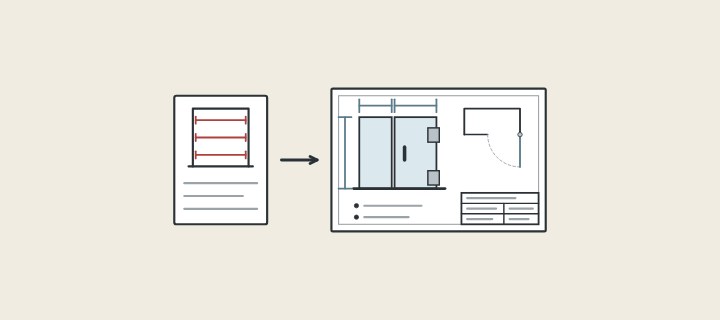
- Tie the glass drawing to the hinge. Use that model’s cutout template.
- Review the swing in the room. Approve room clearance separately from the hardware.
For spares and replacements
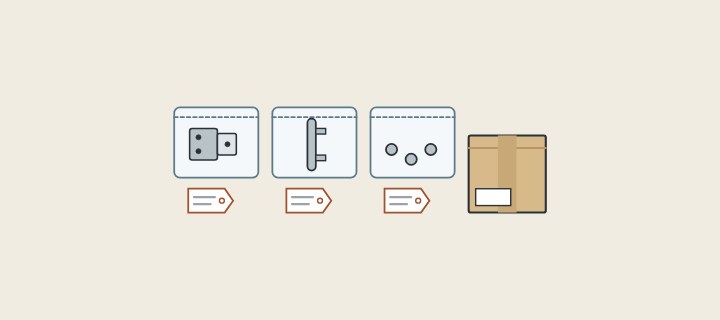
Record the exact hinge model, finish, mounting and glass-drawing revision before packing or ordering spares. A carton marked only “shower hinge” leaves the next maintenance team guessing.
What should you send and ask before a quotation?

Send the door data and ask for the hinge’s documents, not only its name.
| Question | Why it matters |
|---|---|
| Which hinge model and maker is offered? | Ratings belong to a model. |
| What door weight, width and height is it rated for? | The weight holds only inside the size limits. |
| For how many hinges is that weight stated? | Makers differ on what a third hinge adds. |
| Which glass thicknesses and glass type? | Each hinge accepts a stated range. |
| Which functions does it have? | Self-closing, lift, stop and zero position are separate. |
| Which cutout template applies? | Glass is cut and drilled before tempering. |
Include with your request
- Door width, height and glass thickness
- Mounting: wall or glass, and angle
- Wall construction at the hinges
- Functions the door needs
- Finish and quantity per room type
WNS Global confirms any offered hinge, enclosure and commercial terms separately in writing. This guide does not state that WNS Global products have any load rating, function, test result or listing named above.