From spill to specification
What is the difference between a stain and an etch?
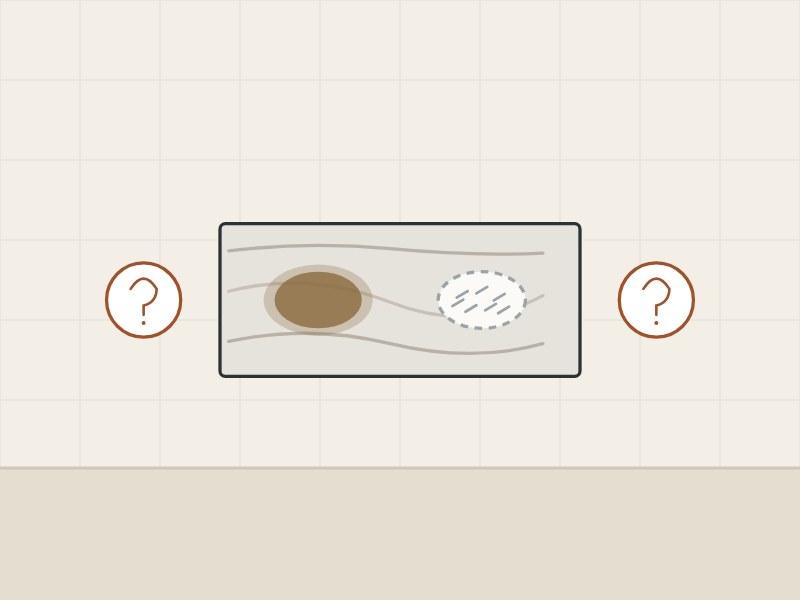
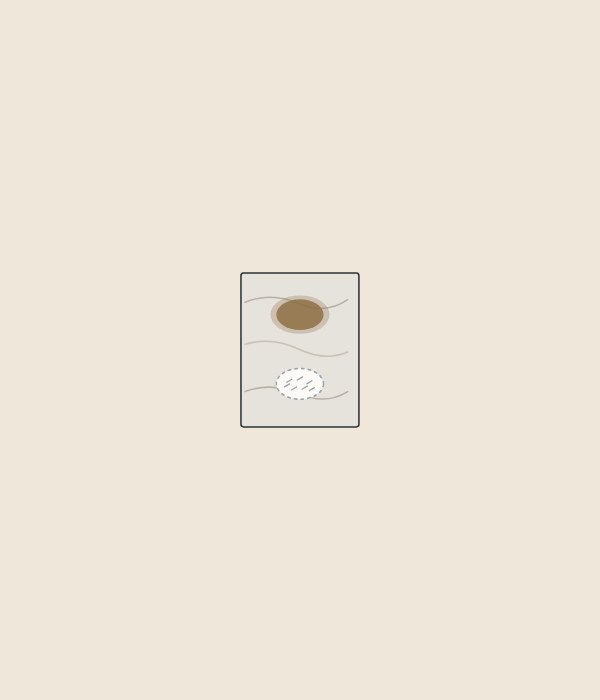
A stain is absorbed into the stone; an etch is damage to the surface itself. The NSI notes that some materials etch the finish without leaving a stain, and others do both.
A stone care guide on Arizona Tile’s site, presented with Beyond Stone Solutions, says a true stain is always darker than the surrounding material; a lighter mark is etching by an acid or bleaching by a strong base.
| Term | What it means |
|---|---|
| Stain | A substance absorbed into the stone. |
| Etch | Physical damage left by an acid. |
| Calcareous stone | Composed mainly of calcium carbonate (NSI). |
| Siliceous stone | Composed primarily of silicates such as quartz, feldspar and mica (NSI). |
| Impregnator | A product that acts as a repellent rather than a sealer (NSI). |
| Topical sealer | A physical film or barrier over the surface (Dry-Treat). |
Why do acids etch marble and limestone?
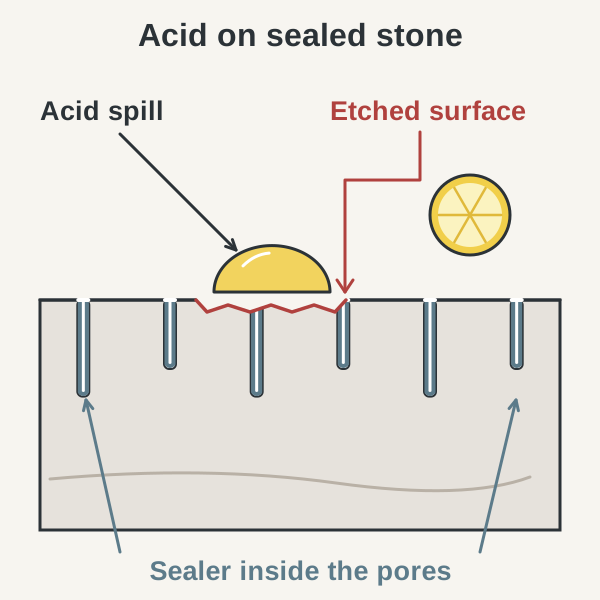
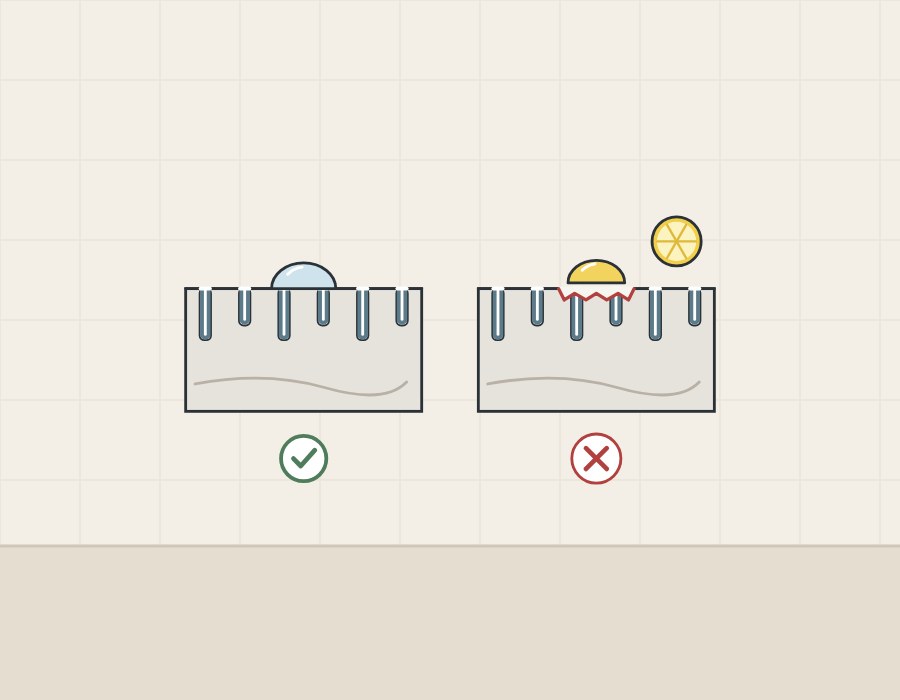
Marble is primarily calcite, as Dry-Treat’s marble page puts it, and the NSI says calcium carbonate is sensitive to acidic solutions. The sequence combines Dry-Treat’s account of etching with Akemi’s description of an impregnation; it is not a record of any product.
- An acidic liquid lands on the top; Dry-Treat’s examples are lemon, cola, coffee and wine.
- The impregnation sits in the pore system, with no layer on the surface.
- The acid therefore touches the stone itself.
- The acid dissolves calcium in the stone.
- A rough, permanent mark is left, as Dry-Treat describes it.
- The liquid may still be repelled, so there may be no stain.
Dry-Treat’s marble page gives the reason: impregnating sealers do not physically stop a substance from touching the surface. The U.S. Geological Survey describes the same reaction outdoors: acids in polluted air and rain dissolve the calcite in marble and limestone.
What does an impregnating sealer do, and what does it not do?
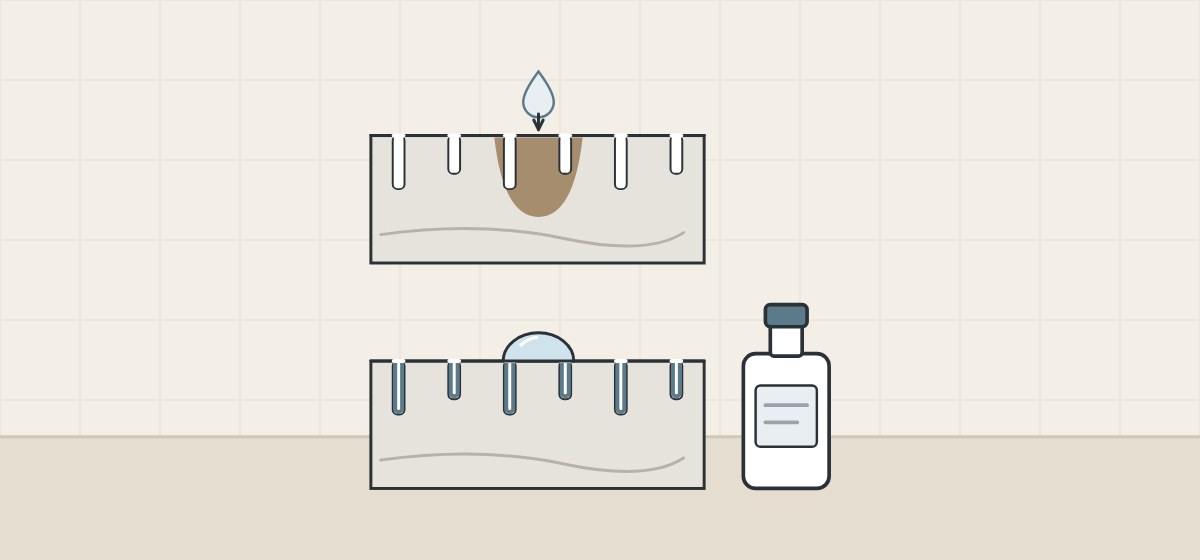
An impregnating sealer makes the stone repel liquids, so stains are slower to set; it puts no barrier on the surface. Each row is the named source’s own description.
| Point | What the source says |
|---|---|
| Where it sits | Akemi: in the pore system, with no surface layer; the stone stays breathable. |
| Mechanism | Lithofin: a thin film of active substances on the capillary walls inside the stone. |
| Stain resistance | NSI: more stain resistant, not stain proof. |
| Time limit | Dry-Treat’s maintenance guide: given enough time or pressure, water and oil can penetrate. |
| Etching | The Arizona Tile guide: does not protect the surface from etching and chemical damage. |
The NSI adds that many stones do not require sealing, although applying an impregnating sealer is common practice.
What do sealer makers say about etching?
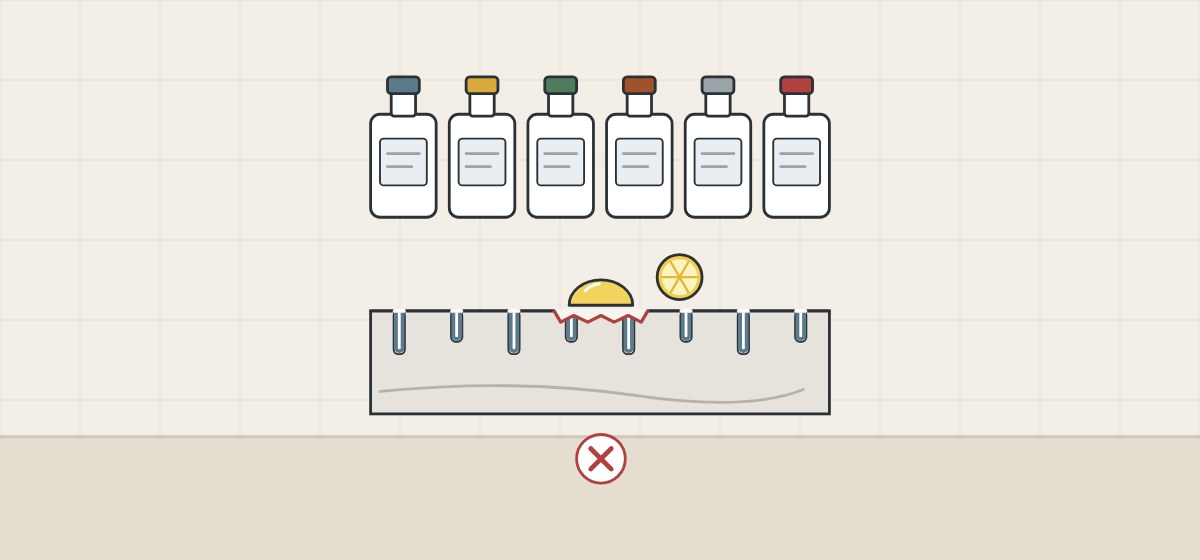
Each of the six makers below states the limit in its own document, for one product or for penetrating sealers in general.
| Maker | Document | Statement |
|---|---|---|
| Laticrete | STONETECH FAQ sheet | Penetrating sealers cannot protect against etching. |
| Dry-Treat | Stain-Proof marble page | No impregnating sealer prevents acid etching. |
| Miracle Sealants | 511 Impregnator data sheet | The product does not stop acid etching. |
| Tenax | Proseal product page | No anti-etch protection on marble; wine, tomato, citrus and coffee etch it. |
| Fila | MP90 Eco Xtreme data sheet | No protection against acid attack. |
| Akemi | Stone FAQ | Almost no protective effect against acidic liquids on limestone and marble. |
Read the notes as well as the headline: the 511 Impregnator data sheet lists acids among the things the product resists, then notes that it will not stop acid etching.
Which stones and bathroom products are involved?
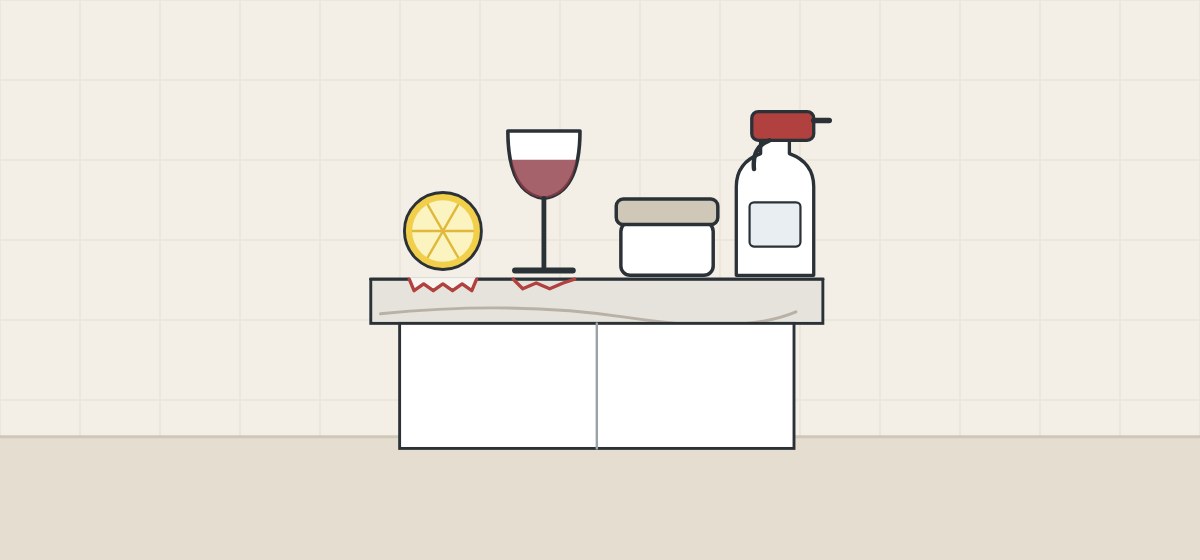
The stones at risk are the calcareous ones, and the risk comes from ordinary products and cleaners. Four points:
Acid-sensitive stones
Dry-Treat lists marble, limestone, travertine and onyx as stones that impregnators cannot protect from acid etching.
Siliceous stones
The Arizona Tile guide says granite is much more resistant to acids. The NSI still does not recommend acidic cleaners on siliceous stone, which may contain traces of acid-sensitive minerals.
Everyday products
The NSI says products containing lemon, vinegar or other acids may dull or etch calcareous stone. Akemi’s Stain Repellent W data sheet says that even on stone treated with that product, spots may form after long exposure to aggressive products such as juice, vinegar, alcohol or cosmetics.
Acidic cleaners
Laticrete says its acidic cleaner can be used on hard water deposits only if the substrate is not acid sensitive. Dry-Treat does not recommend acidic cleaners on acid-sensitive stones.
- The stone’s geological type, not only its trade name
- The cleaning products the site will use
- Whether acidic cleaners are among them
Can a topical coating or anti-etch treatment stop etching?
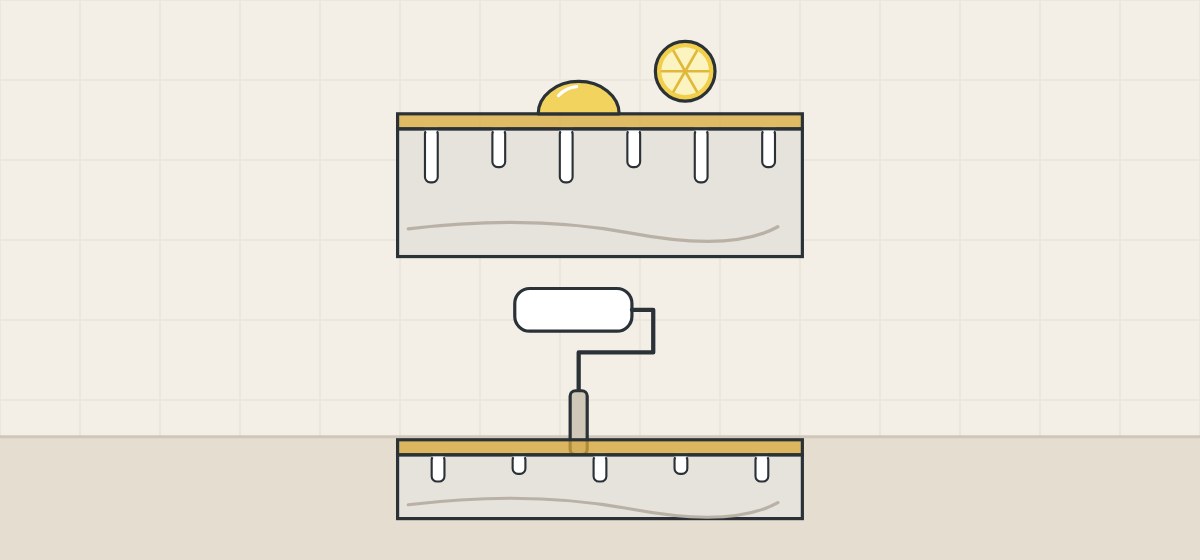
By Dry-Treat’s reasoning, only something that keeps the acid off the stone could, and each such product has its maker’s own limits. Three points:
What a topical sealer is
Dry-Treat’s FAQ says a topical sealer forms a physical film that darkens the surface, is less hard than it, wears relatively quickly and must be stripped before re-coating.
Not for every location
Laticrete says its two STONETECH Finish & Sealer topical coatings cannot be applied to kitchen countertop or bath vanity surfaces, and that topical coatings are not breathable.
Producer processes
Antolini describes Azerocare Plus as its own process for marble, onyx and soft quartzite in named finishes. Antolini says it was tested in cycles of 24 hours and protects against etching and staining from acid-based organic substances such as lemon and wine. These are the producer’s own claims.
A coating is not a repair. Laticrete says etching can only be properly repaired by mechanically refinishing the damaged area; the NSI advises contacting the stone dealer or a professional restorer.
How long does a sealer take to cure, and how long does it last?
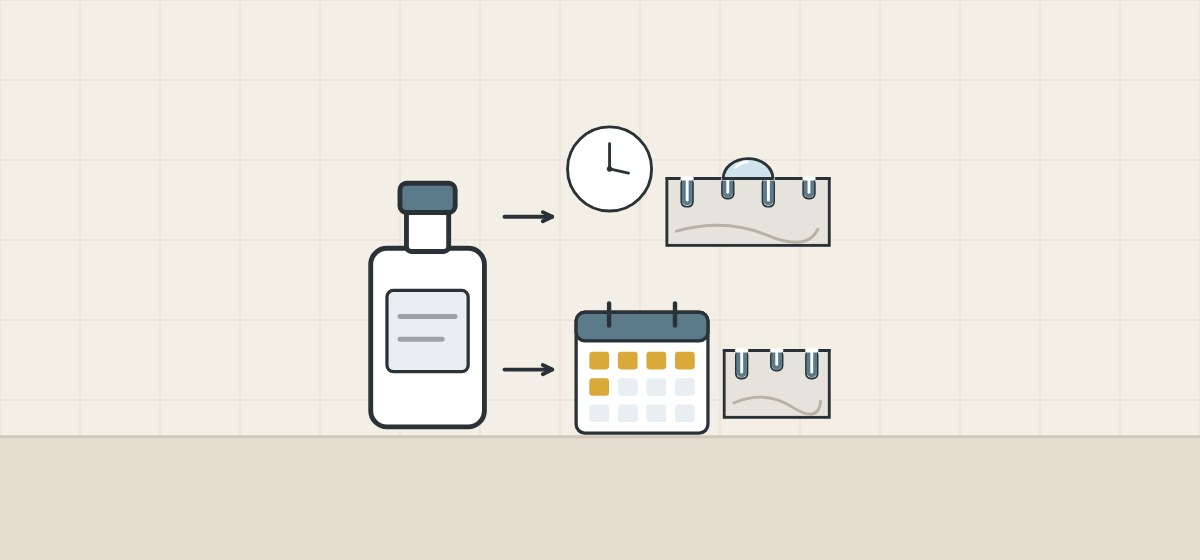
That depends on the named product: the makers’ figures below run from 24 hours to more than two weeks. This guide gives no resealing interval; the NSI refers the reader to the supplier or sealer maker.
| Source | Stated figure |
|---|---|
| Laticrete STONETECH BulletProof | Full cure in 24–72 hours. Expected wear up to 5 years on interior surfaces; reapply annually for best results. |
| Miracle Sealants 511 Impregnator | Keep the area dry and free from staining materials for 72 hours. |
| Tenax Proseal | 24 hours to full protection; can last up to 4–5 years on areas not under heavy wear. |
| Fila MP90 Eco Xtreme data sheet | Protection takes effect after 24 hours. |
| Dry-Treat Stain-Proof sealers | Most take over two to three weeks to fully cure. |
| Lithofin impregnations | Full effect within approx. 2 to 5 days. |
How should a buyer specify care for a stone vanity top?
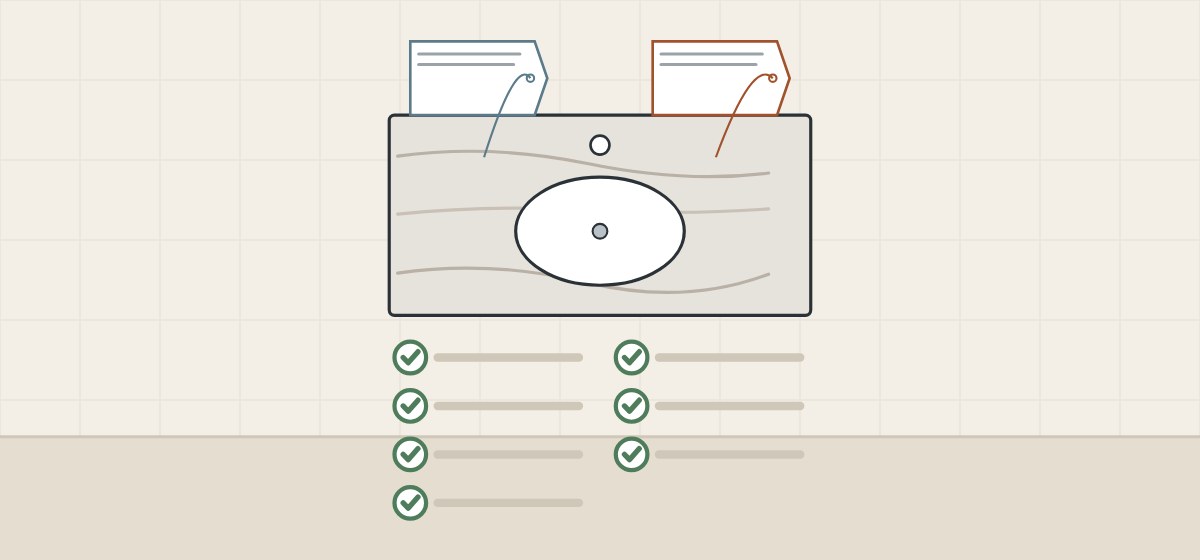
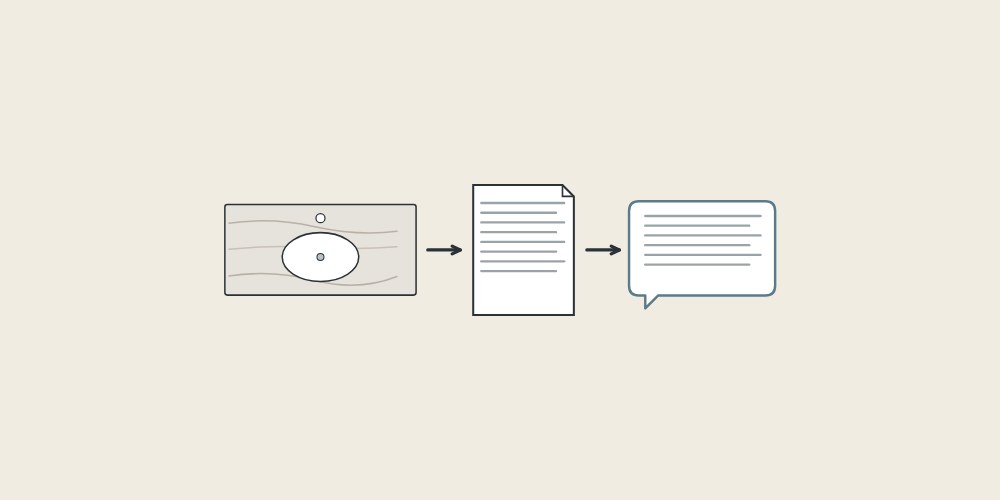
Write the care brief around the actual stone and keep the two risks apart.
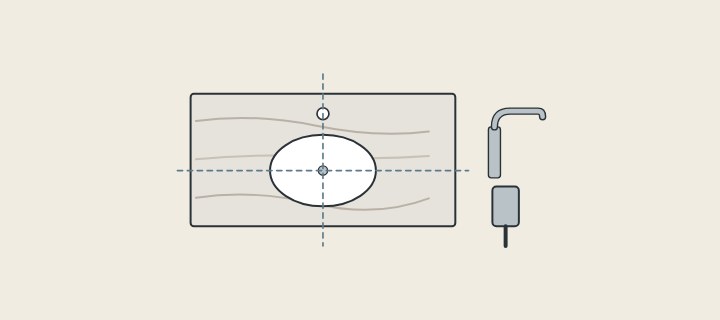
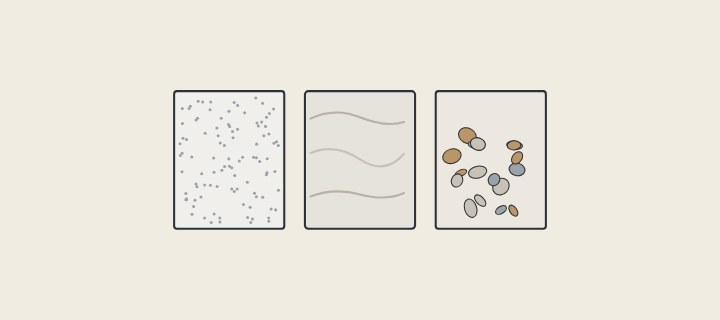
- Name the stone and finish. A color name helps with ordering; a care decision needs the material.
- Split the two risks. Ask what addresses stains and what, if anything, addresses etching.
- Name the treatment. Product, type (impregnator or coating) and its data sheet.
- Record the cure time. Use the named product’s figure before handover.
- List the cleaning products. Check each against the stone.
- Do not test with household acids. Lemon juice or vinegar can etch a calcareous sample; none of the sources used here describes it as a test.
- Agree who handles marks. Record where a mark is and what touched it; do not decide the cause from a photo.
What to tell the end user
Say plainly that sealed calcareous stone is still acid-sensitive, and keep the care instructions with the finish schedule. Beading water shows the repellent is working, as Laticrete puts it; it says nothing about acids. Do not promise that cleaning removes every mark: an etch needs refinishing.
What should you send and ask before a quotation?

A complete request names the stone, the treatment and the conditions of use.
| Question | Why it matters |
|---|---|
| What stone and finish is offered? | Calcareous stone is acid-sensitive. |
| Is the top treated, and with what? | An impregnator and a coating behave differently. |
| Does the treatment address etching? | The six sealer makers cited here say their impregnators do not. |
| Which cleaners are approved? | Acidic cleaners conflict with calcareous stone. |
| Who assesses and refinishes marks? | A stain and an etch need different responses. |
Include with your request
- Stone, finish and any treatment you expect
- How the top will be used and cleaned
- The cleaning products on site
- Quantity per room type
WNS Global confirms any offered vanity top, stone, treatment and commercial terms separately in writing. This guide does not state that WNS Global products are sealed, coated, tested or resistant to stains or etching in any way named above.