From printed grain to approved sample
What is the difference between synchronized and all-over woodgrain texture?
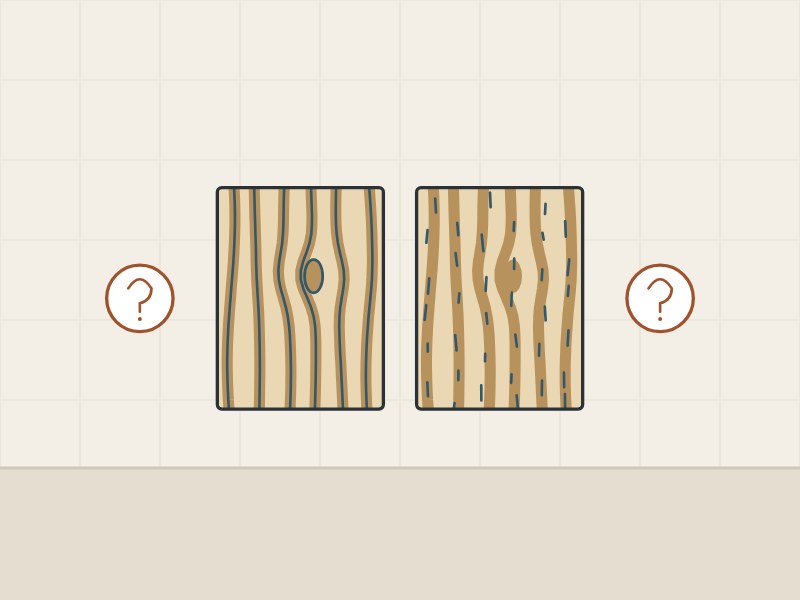
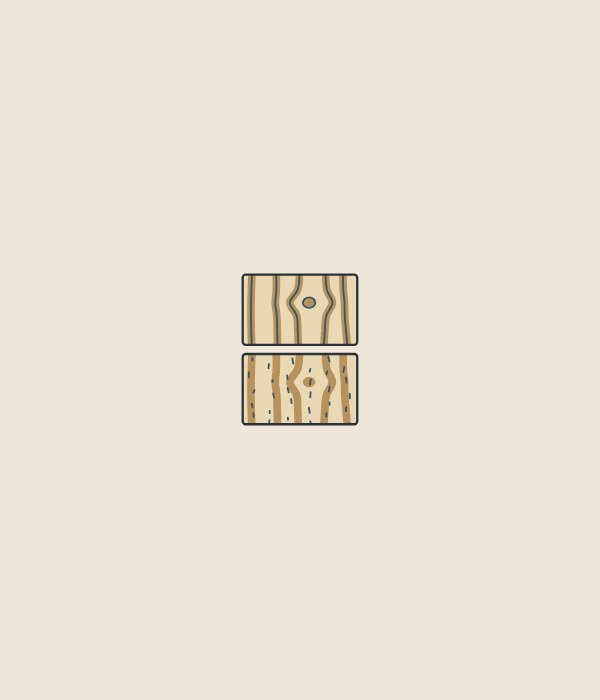
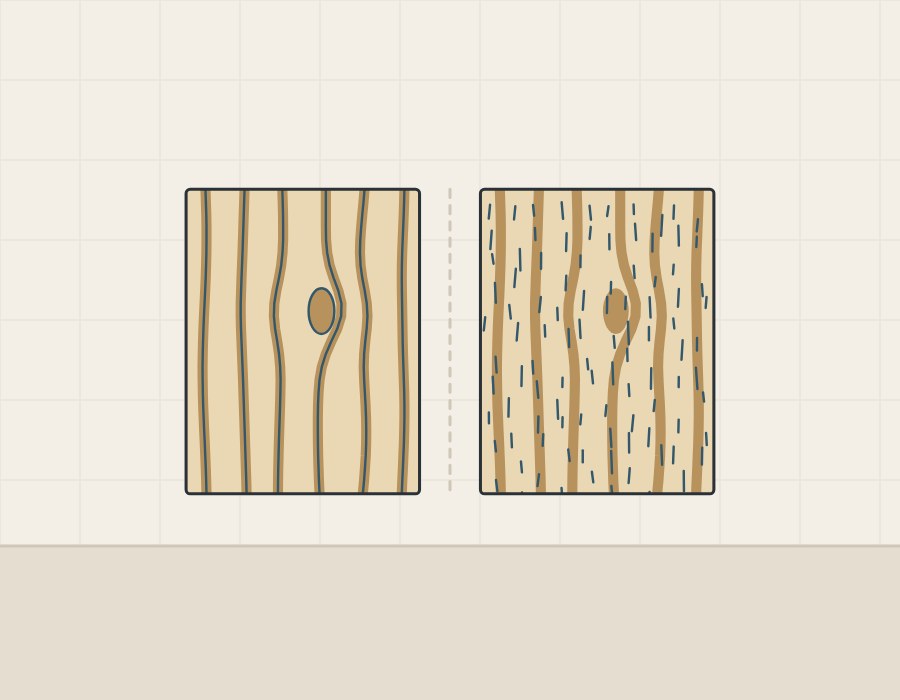
The difference is whether the relief you feel is aligned with the grain you see. Pfleiderer defines a synchronized texture as surface embossing whose tactile structure is aligned in register with the printed decor image.
Pfleiderer adds that wherever the print shows grain lines, knots, pores or cracks, the texture reproduces them. It names the technique embossed in register, or EIR.
EGGER uses the term all-over for its ST12 Omnipore Matt, a texture with irregularly distributed pores of varying depths. EGGER’s description of ST12 names no decor that the texture follows.
| Term | What the source means by it |
|---|---|
| Synchronized texture | Pfleiderer: embossing aligned in register with the printed decor. |
| Embossed in register (EIR) | Pfleiderer: the embossing follows the exact pattern of the print. |
| Synchronized pore | EGGER: knots, cracks and grains matched with the texture. |
| All-over texture | EGGER: irregularly distributed pores of varying depths (ST12). |
| Deep texture | Pfleiderer: visible and tangible relief made by special press plates. |
How can you check whether a texture follows the printed grain?
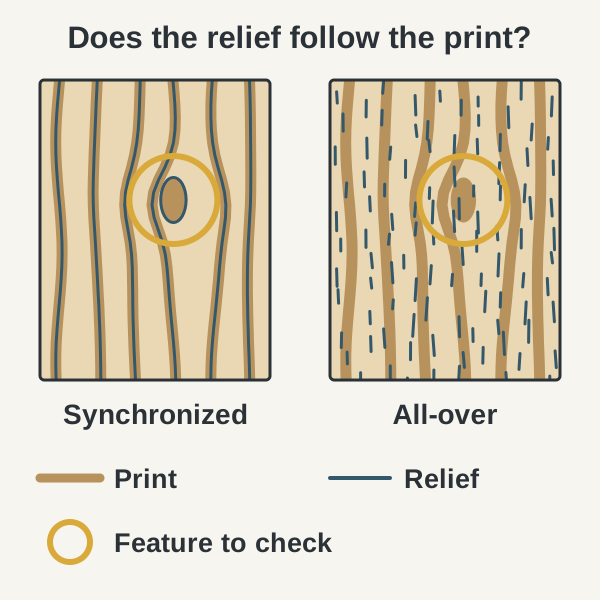
Pfleiderer’s description suggests what to look for: relief where the print shows a feature. The six steps below are this guide’s own way to check a sample; they are not a maker’s procedure.
- Pick one distinctive printed feature, such as a knot, a crack or a wide grain line.
- Tilt the sample toward a light until the relief shows.
- See whether a recess or ridge sits on that feature.
- Run a fingertip along the feature and feel for the same line.
- Repeat on a second feature elsewhere on the sample.
- Record the result with the decor and texture references.
Depth is a separate question. EGGER’s description of ST22 Deepskin Linear speaks of a deep, brushed character and does not use the word synchronized.
Which textures do makers describe as synchronized?
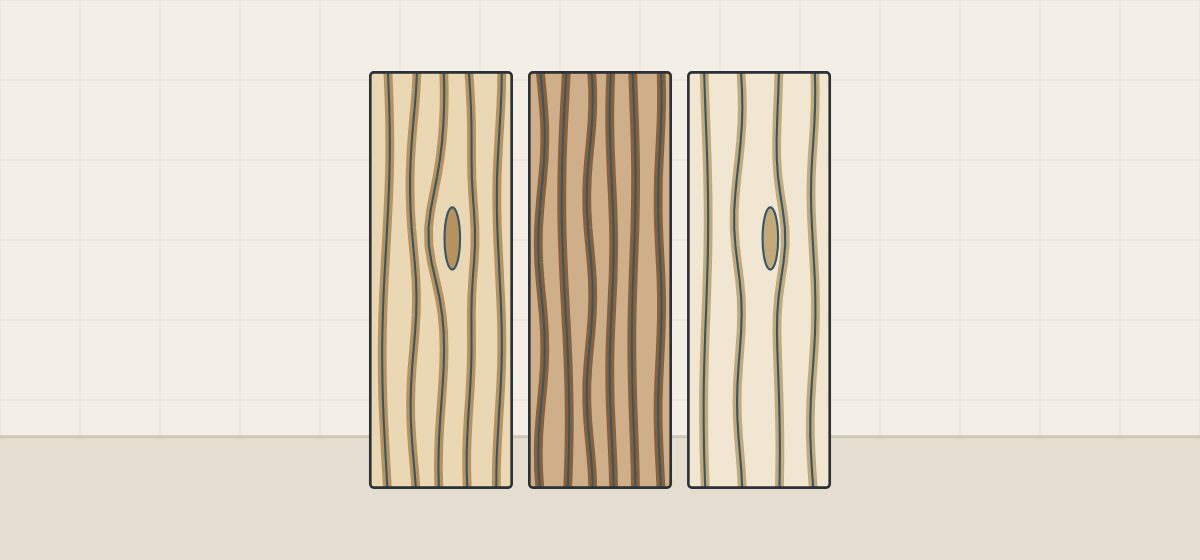
Several board makers publish a texture, series or collection that they describe as synchronized or embossed in register. Six examples, each in the maker’s own terms:
| Maker | Texture or range | What the maker says |
|---|---|---|
| EGGER | ST37 Feelwood Rift | Synchronized with the Halifax Oak decor series. |
| Pfleiderer | SyncroFlow | EIR boards; texture matched to the printed decor. |
| Kronospan | AD Arvadonna Chestnut | Synchronized pores follow the Arvadonna Chestnut decors. |
| Wilsonart | #57 Aligned Oak | Uses synchronized texture; described with aged oak designs. |
| ARAUCO | Taction | Synchronized to an exclusive contemporary oak design. |
| STEVENSWOOD | EIR Walnut | EIR texture aligned to the grain. |
The words differ: synchronized, synchronized pore, aligned, embossed in register. Ask which term the supplier’s own data sheet uses.
Which textures are not tied to one decor?
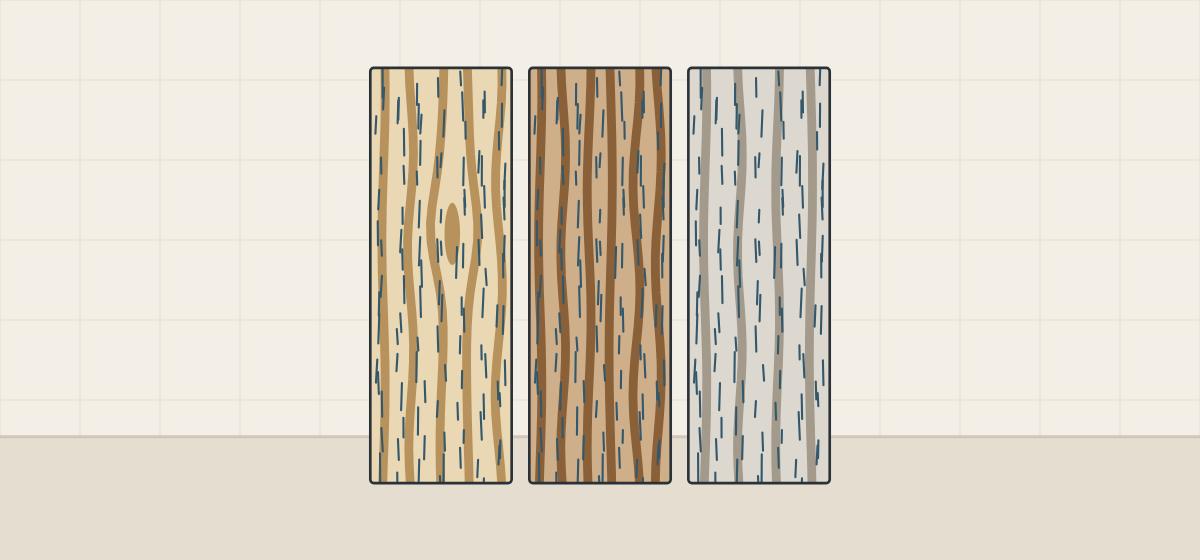
Other textures are described by their own pattern or by the range of decors they suit. Five examples in the makers’ words; in the pages used here, only EGGER uses the term all-over.
| Maker | Texture | What the maker says |
|---|---|---|
| EGGER | ST12 Omnipore Matt | All-over; irregular pores of varying depths. |
| EGGER | ST17 Omnipore Oiled | Irregular all-over wood pore; very low gloss. |
| Pfleiderer | NW Natural Wood | Universally applied to many fine-pored woodgrains. |
| Kronospan | RW Rift Wood | Linear; for the most diverse wood designs. |
| ARAUCO | Suede | Functional, non-directional textured finish. |
Deep does not mean synchronized. Pfleiderer’s DeepFlow page lists two premium series: DeepFlow, for deep textures with pronounced light-and-shadow effects, and SyncroFlow, for decor-synchronous textures.
Does a synchronized texture mean the front is real wood?
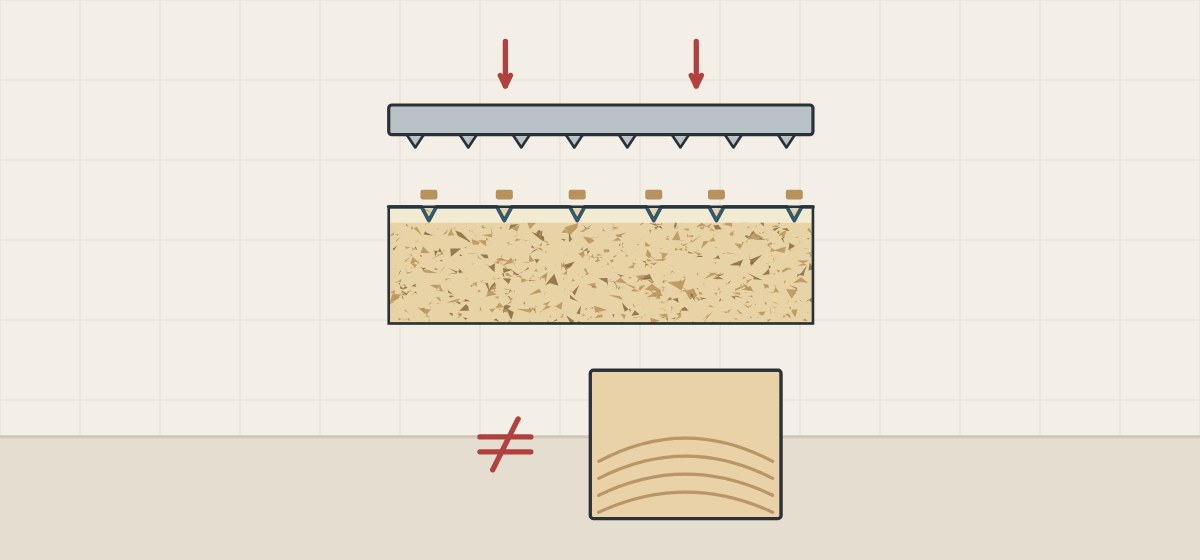
The makers quoted here describe a faced board, not solid wood. Four points from the sources, then this guide’s own list:
The board
Pfleiderer describes SyncroFlow boards as double-sided, melamine-faced wood-based panels. EGGER calls Feelwood an alternative to real wood or veneer.
The relief
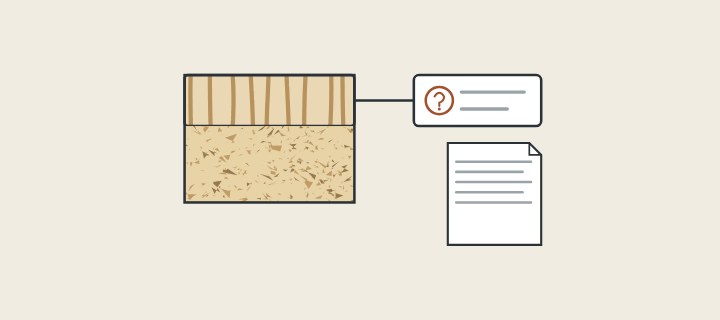
The Composite Panel Association (CPA) says TFL textures are created with steel press plates that emboss the decorative overlay.
The core
CPA names particleboard and MDF as substrates for TFL. Pfleiderer lists SyncroFlow on several MDF and chipboard (particleboard) substrates, so the texture name does not fix the core.
The standard
The published scope of EN 14322:2021 covers surface requirements and dimensional tolerances for melamine faced boards for interior use.
Left open
This guide’s list of what a texture name does not state:
- Core type and grade
- How the board behaves in a humid room
- Edge treatment
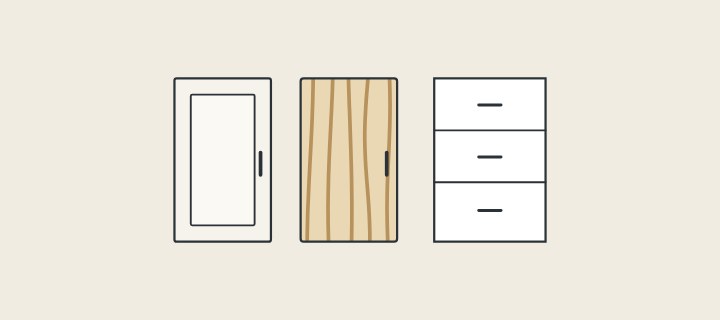
- Construction of the door or drawer front
Is a decor code enough to fix the texture?

Not on its own: EGGER and Wilsonart list decor and texture (or finish) as separate references. Four points from the makers’ pages:
Combinations
EGGER’s collection page counts 268 decor and texture combinations.
Availability
Wilsonart’s finish page notes that not all finishes are available for every design.
Tied or broad
ARAUCO describes Taction as synchronized to an exclusive contemporary oak design. EGGER says its ST36 Feelwood Brushed gives a wide variety of wood reproductions a synchronized feel.
Samples
On the same collection page EGGER states: “Colour-matching decor selection only possible on the original sample.”
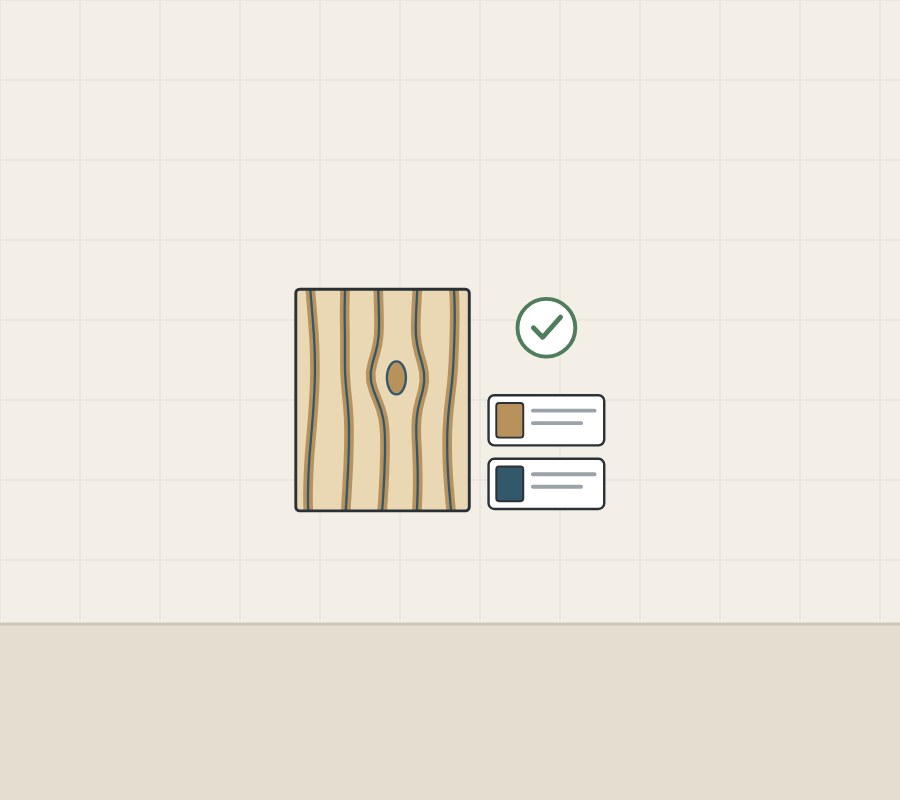
Write both references on the approval: the decor code and the texture code, as the maker prints them. A decor name alone can leave the feel open.
Do edges and matching laminate carry the same texture?
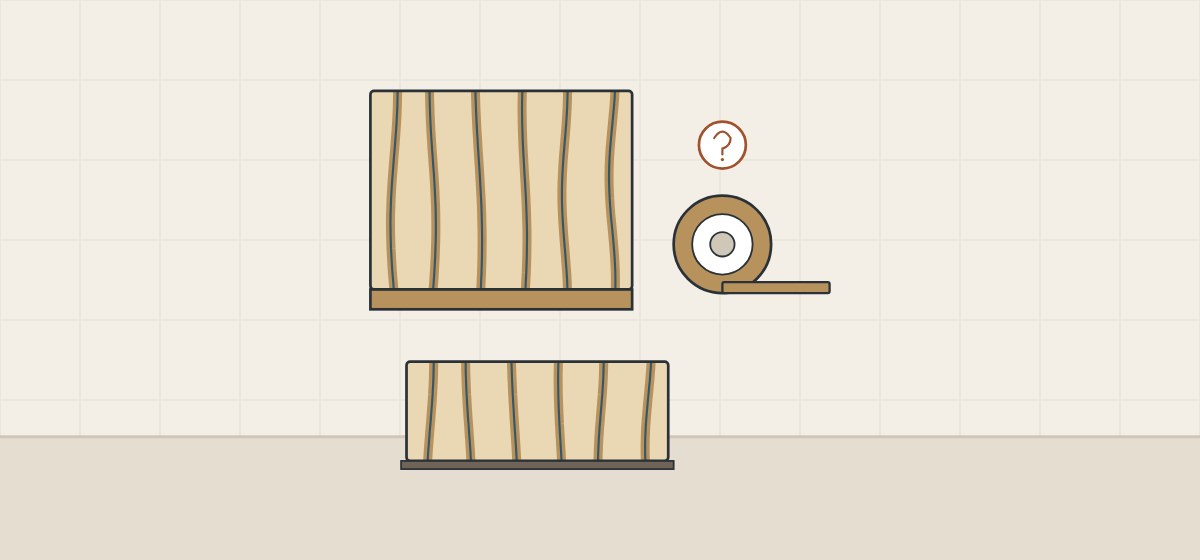
Makers say matching edging and laminate are available. The pages used here do not describe an edge texture as synchronized, so ask. What four pages state:
| Source | What it says |
|---|---|
| EGGER edging page | Every decor in MFC or laminate is available in matching ABS edging. |
| EGGER Feelwood page | Range includes faced chipboard, MFMDF, laminate, worktops and edging. |
| STEVENSWOOD EIR Walnut | Matching HPL and edge banding available. |
| Composite Panel Association | TFL panels typically require a decorative edge treatment. |
How should a buyer approve a woodgrain texture sample?
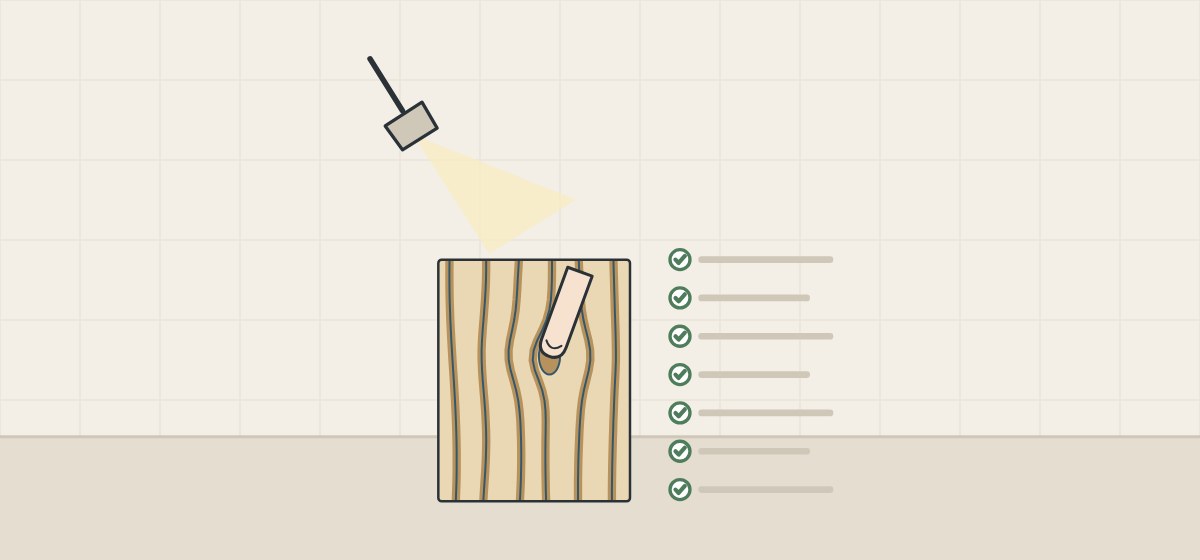
Approve the look and the feel together, on a physical sample. These seven steps are this guide’s procurement guidance; they build on the facts above and on this guide’s own judgment.
- State the requirement. Say whether the relief must follow the grain or only suit it.
- Ask for a physical sample. A screen image shows the print, not the relief.
- Check alignment. Compare one grain feature with its relief, then a second.
- View it in project light. Note the light and the viewing angle used.
- Record both references. Decor and texture, as the maker writes them.
- Check the edges. Compare the edge band with the face.
- Specify the board separately. Core, grade and edge treatment are their own lines.
If an alternative is offered
Compare its print and its texture with the approved sample. A similar color is not enough to accept a change from a synchronized texture to one with its own pattern. Ask the supplier to state plainly that the proposed finish differs.
What should you ask before a quotation?

A request that names only a wood color leaves the texture open. Each question below maps to a point earlier in this guide.
| Question | Why it matters |
|---|---|
| Is the texture synchronized with the decor? | Makers publish both kinds. |
| Which decor and texture references apply? | Wilsonart: not all finishes are available for every design. |
| What is the board: core and grade? | The texture name does not state it. |
| Is matching edging available? | EGGER and STEVENSWOOD list edging as a separate item. |
| Can a physical sample be supplied? | EGGER: color-matching decor selection only on the original sample. |
| What changes if the finish is substituted? | Print and relief can both differ. |
This guide’s list to send with a request
- Decor wanted, with a reference or photo
- Whether alignment is required or preferred
- Parts that carry the finish
- Room type and lighting
- Quantity and a sample request
WNS Global confirms any product and terms it offers separately in writing. This guide does not state that WNS Global products have the features, ratings or listings named above.