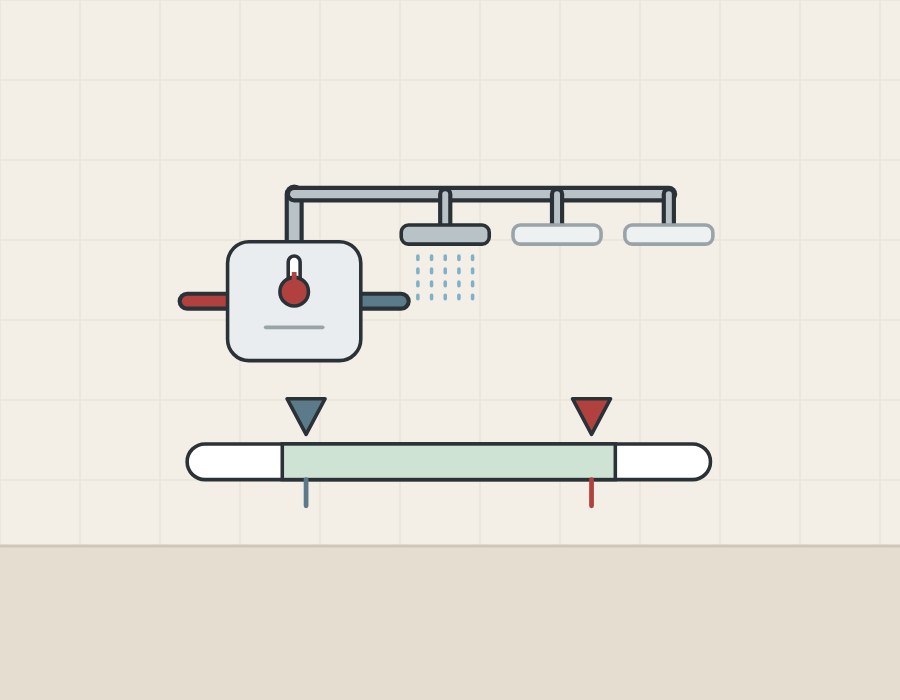
From smallest demand to selection
What does minimum flow mean for a thermostatic mixing valve?
Leonard Valve’s FAQs define minimum flow as the lowest flow at which a valve will operate and still supply an outlet temperature within specification.
The figure belongs to one model under the maker’s stated conditions.
| Term | What it means |
|---|---|
| Minimum flow | Leonard: lowest flow at which a valve still supplies an outlet temperature within specification. |
| Flow capacity range | Leonard’s LV-296 sheet: outside it, valves will not provide the desired accuracy. |
| Pressure-loss chart | A graph of flow rate against pressure drop through the valve. |
| Smallest demand | The lowest flow the valve sees in use. |
| Recirculated flow | Tempered water returned through the valve by a circulating loop. |
How do you find the smallest real demand?
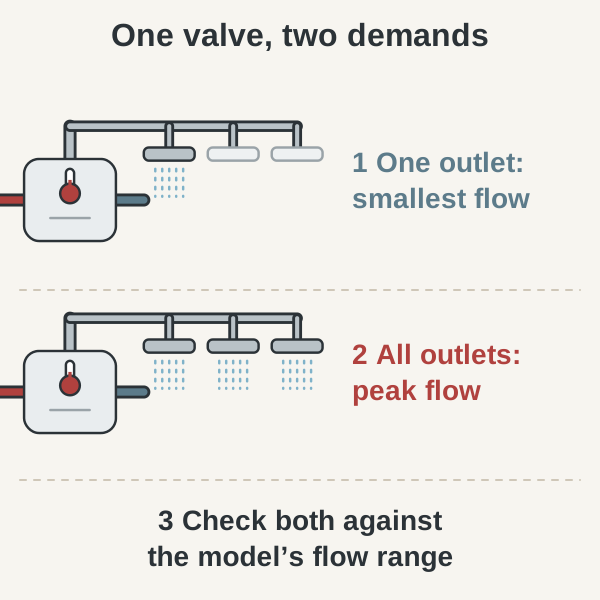
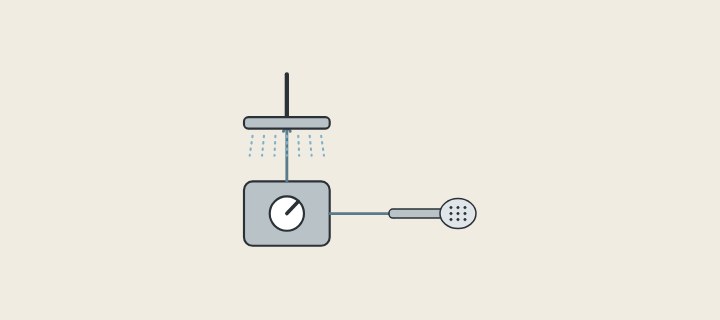
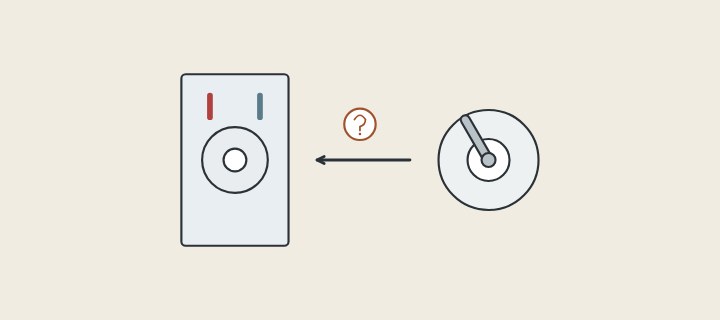
The smallest demand is the lowest flow that will pass through the valve, often one outlet running alone. Leonard’s FAQs give a single person bathing as the low-demand case. Six steps:
- List every outlet and mode the valve serves.
- Mark the outlet with the lowest flow that can run on its own.
- Record that outlet’s rated flow from its own data sheet.
- For a recirculating system, ask the designer for the return flow through the valve.
- Compare the lowest figure with the model’s published minimum flow.
- Record peak, simultaneous demand as a separate case.
The smallest outlet’s flow is not always the flow through the valve. Leonard’s FAQs say some makers rely on recirculated water to cover a higher minimum, and that temperature control suffers if that flow is below the valve’s actual minimum.
What minimum flows do makers publish?
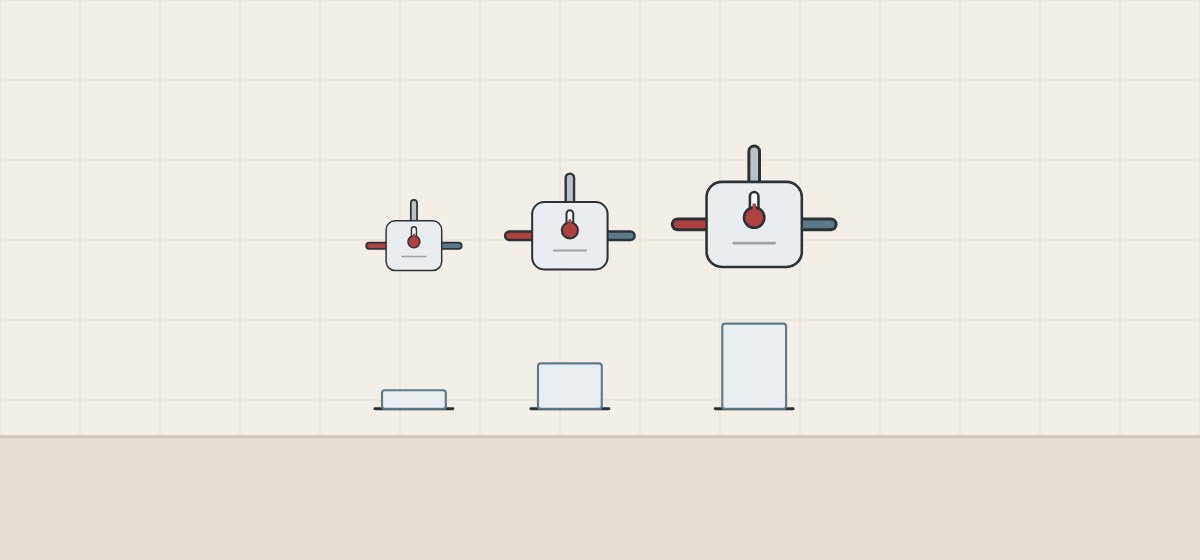
The table lists figures from four makers’ own documents; each applies only to the model named.
| Maker and model | Published minimum | Maker’s context |
|---|---|---|
| Caleffi 521 series | 1.0 gpm | 0 gpm when recirculation flow is 1 gpm or more. |
| Leonard LV-296-10-LF | 1.5 GPM | LV-296-20-LF: 1 GPM. |
| Leonard type TM-30, 50, 80, 125, 150 | 5.0 to 18.0 GPM | Bulletin G-2B, February 2015. |
| Bradley TMV25 to TMV200 | 2.0 to 20.0 gpm | Standard valves, for constant flow. |
| Bradley HL45 to HL2X2 | 1.5 to 10.0 gpm | High-low valves. |
| Bradley S59-4000(A) | 0.35 gpm | Point-of-use valve. |
| Watts LFMMVM1 | 0.5 gpm | Minimum ASSE 1070 flow. |
Apart from Caleffi’s 0 gpm with recirculation, the minimums in these documents run from 0.35 to 20 gpm. A figure copied from one model, or guessed from pipe size, says nothing about another.
Is the top of the pressure-loss chart the maximum flow?
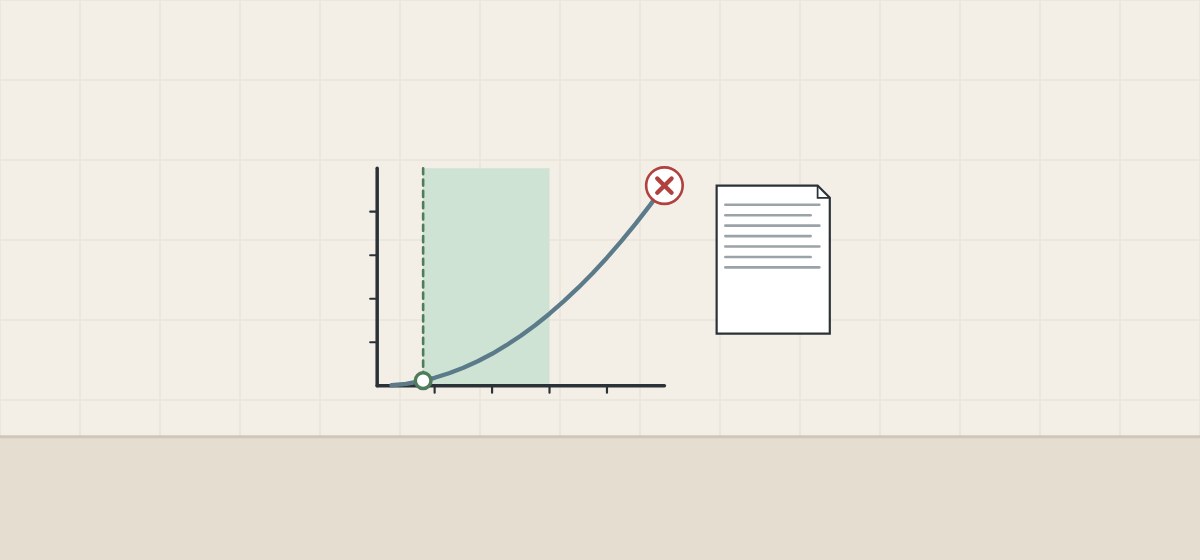
Not according to Caleffi. Its article says a flow-against-pressure-drop graph is shown instead of a maximum, and that a reader may be tempted to treat the top end as the maximum: “don’t do that.”
| Point | What the maker says |
|---|---|
| Why not the top end | Caleffi: excessive velocity, potential noise and erosion. |
| Velocity guide Caleffi cites | Copper Development Association, as quoted by Caleffi: maximum 4 to 5 ft/s in copper tube for hot water below 140 °F. |
| Caleffi 521 series | Maximum recommended differential 20 PSID, about 15 GPM on its graph. |
| Bradley Navigator | Select for a 5 to 15 psi drop; avoid drops above 20 psi. |
Both makers express the upper limit as a pressure drop, not as the last point on the curve.
What do the ASSE standards say about flow?
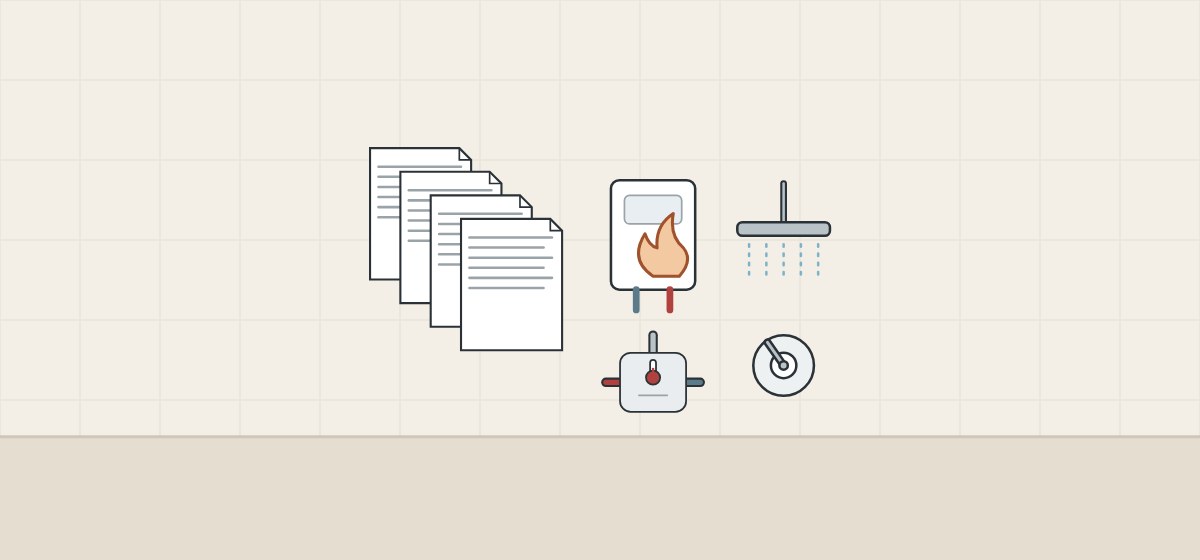
ASSE publishes separate standards by valve location and use, and makers describe a different test flow for each. The standard texts were not read; editions are from ASSE’s standards list. For ASSE 1016, CSA Group shows a later reaffirmation.
ASSE 1017-2023
Mixing valves installed at the hot water source. For the 2009 edition, Leonard’s chart shows ±3 °F for valves flowing 3.0 to 5.0 GPM at 10 PSI, ±5 °F from 5.0 to 40 GPM and ±7 °F over 40 GPM. Acorn Controls says the default test starts from the flow at a 10 PSI differential, then halves it.
ASSE 1016
Compensating valves at the point of use for showers; CSA Group lists the 2017 edition as reaffirmed in 2026, while ASSE’s list shows it as reaffirmed in 2021. Leonard’s chart gives the minimum flow for ASSE 1016-2017 as 2.5 GPM or the maker’s minimum rated flow, whichever is less.
ASSE 1070
Temperature limiting devices for sinks, bidets, lavatories and bathtubs (2020, reaffirmed 2025). Acorn Controls says there is no default flow rate; the maker shows the lab its advertised minimum.
ASSE 1069
Mixing valves for individual or multiple fixtures (2020, reaffirmed 2025). Acorn Controls says these are tested at the advertised flow rate if there is one, otherwise at 2.5 GPM.
- Standard the valve is listed to
- Edition named on the listing
- Minimum flow for that listing
- Where the valve is installed
What options do the documents show when demand varies widely?
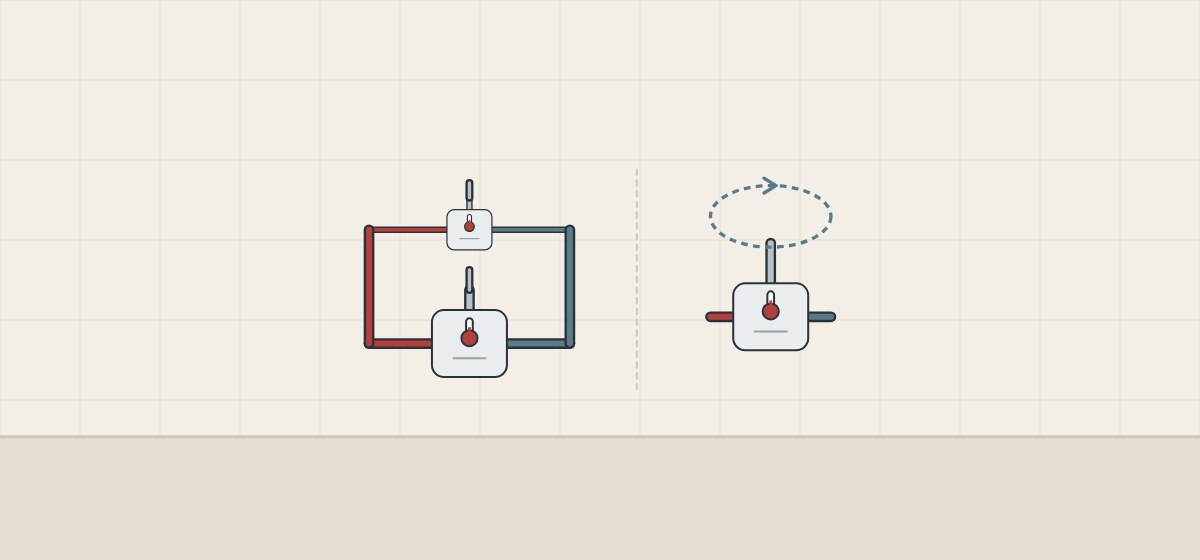
The documents cited show four options where flow varies between low and high:
One high-low valve
Bradley’s Navigator brochure describes its high-low valves as a single valve design for both high and low demand, best used where usage fluctuates.
Two valves
Leonard’s FAQs give the small valve in its New Generation High/Low Systems a true minimum flow of 1.0 GPM.
Recirculated flow
Caleffi’s brochure gives its 521 series a minimum of 0 gpm when recirculation flow is 1 gpm or more. That is a condition for one model, not a general remedy.
Point-of-use valves
ASSE’s guidelines say ASSE 1017 valves are not intended for point of use. Bradley’s brochure lists point-of-use models with minimums of 0.35 and 0.5 gpm. Neither presents them as replacing a source valve.
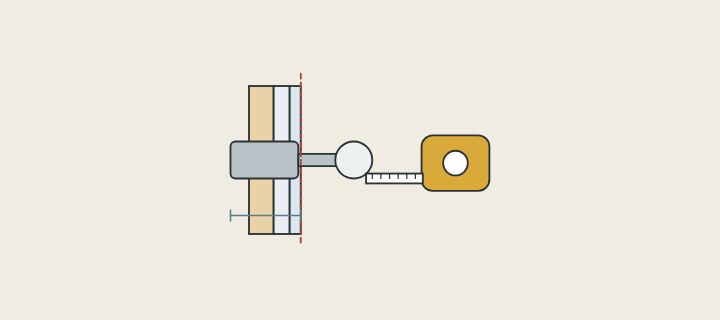
Leonard’s LV-296 sheet tells the specifier to consult the flow capacity chart and not to oversize.
Does minimum flow matter for a shower valve?
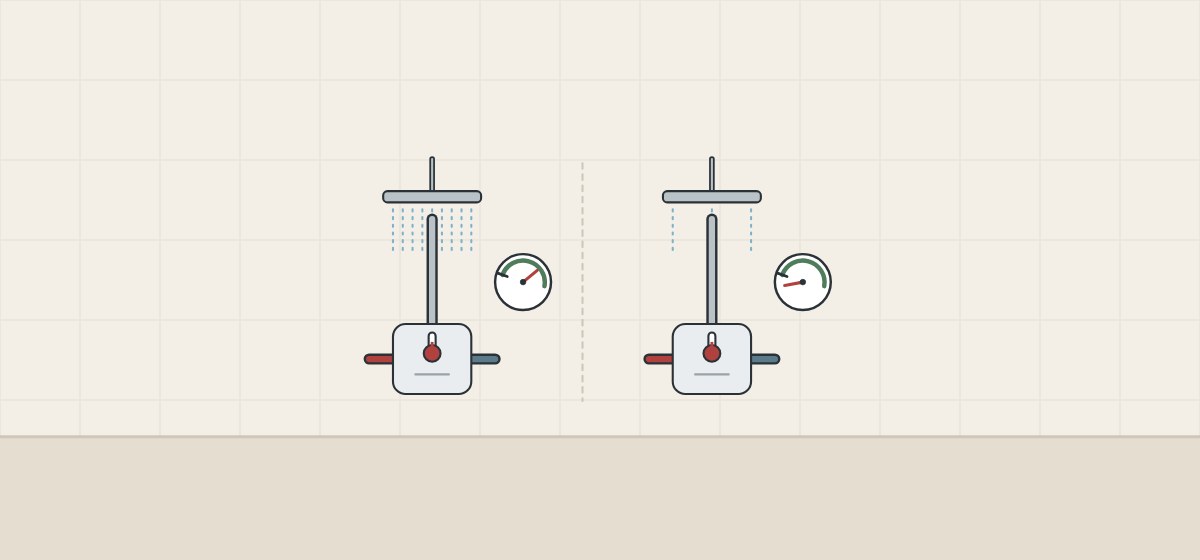
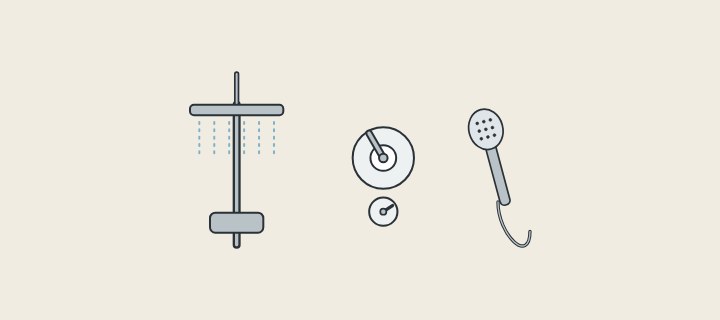
Yes, per ASSE’s guidelines: the showerhead flow rate must not be less than the valve maker’s published minimum flow rate. ASSE’s white paper defines a low-flow showerhead as one below 2.5 GPM.
| Source | What it says |
|---|---|
| ASSE guidelines | Showerhead flow must not be less than the valve maker’s published minimum flow. |
| ASSE white paper, revised March 2012 | Match the showerhead’s maximum flow to a compensating valve whose minimum flow is equal or lower. |
| Same white paper | If the valve’s minimum exceeds a new showerhead’s flow, replace the valve with one that matches. |
| Delta T17TH135 | Cartridge minimum flow rating 1.2 gpm. |
| Watts LFMMVM1 | For ASSE 1069 use: shower heads rated at 1.5 gpm or higher. |
How should a buyer specify a thermostatic mixing valve?

These steps turn the facts above into a selection record. They are procurement guidance, not a plumbing design.
- State where the valve sits. At the hot water source or at a fixture.
- Record the smallest demand. The lowest flow and the outlet that causes it.
- Record peak demand. Simultaneous use, as a separate line.
- Get the model’s range. Minimum flow and recommended upper limit.
- Check the pressure drop. At peak flow, against the maker’s limit.
- Record supply conditions. Hot and cold temperatures and pressures.
- Record the listing. Standard, edition and certifier.
Keep each scenario visible
A larger connection or a higher chart endpoint is not evidence of better temperature control.
What should you send and ask before a quotation?
Have the supplier or plumbing designer resolve any low-demand mismatch before ordering.
| Question | Why it matters |
|---|---|
| What is the model’s minimum flow? | Leonard: valves will not provide the desired accuracy outside the flow capacity range. |
| Under what conditions? | Some minimums assume recirculation. |
| What upper flow is recommended? | Caleffi: the chart’s top end is not the maximum. |
| Which standard is it listed to? | Source and point-of-use valves differ. |
| Is a high-low option offered? | Bradley describes these for fluctuating use. |
| What is the showerhead’s rated flow? | ASSE: it must not be less than the valve’s published minimum. |
Include with your request
- Outlets served and their rated flows
- Smallest and peak demand, separately
- Recirculation return flow, if any
- Supply temperatures and pressures
- Project location and required standard
This guide sets no temperature or pressure limit and makes no scald-protection promise; confirm requirements with the local authority. WNS Global confirms any product and terms it offers separately in writing. This guide does not state that WNS Global products have the features, ratings or listings named above.