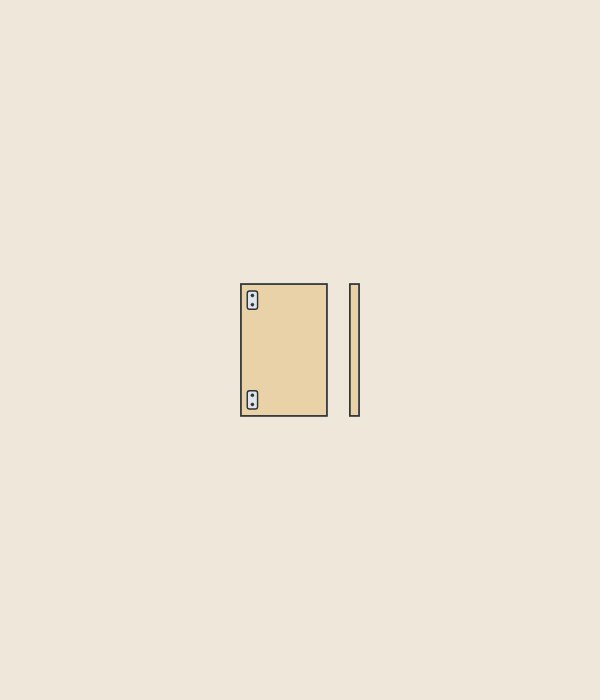
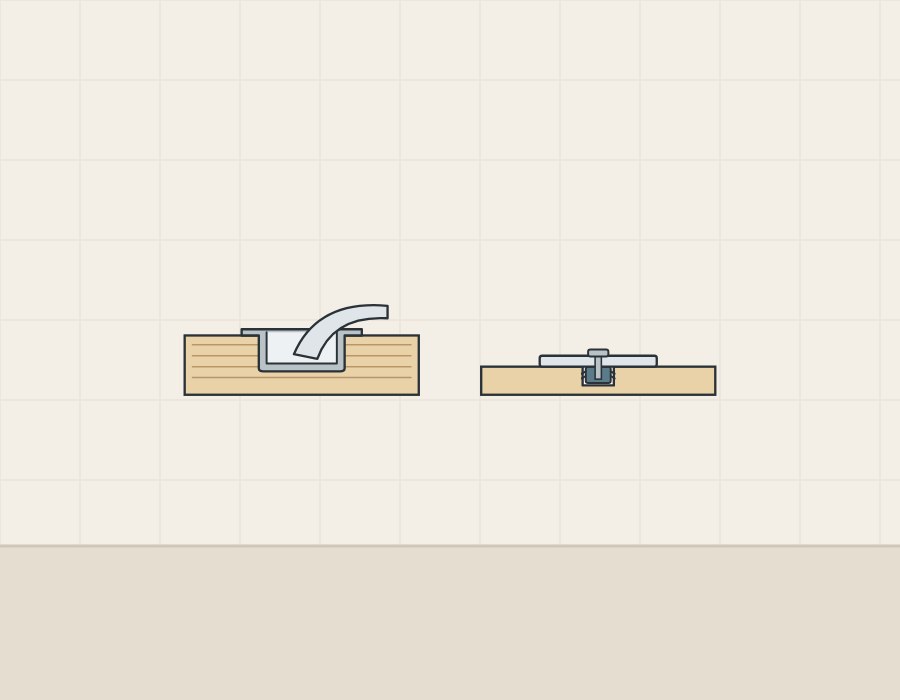
From panel section to fixing
Why does a thin front need a different hinge fixing?
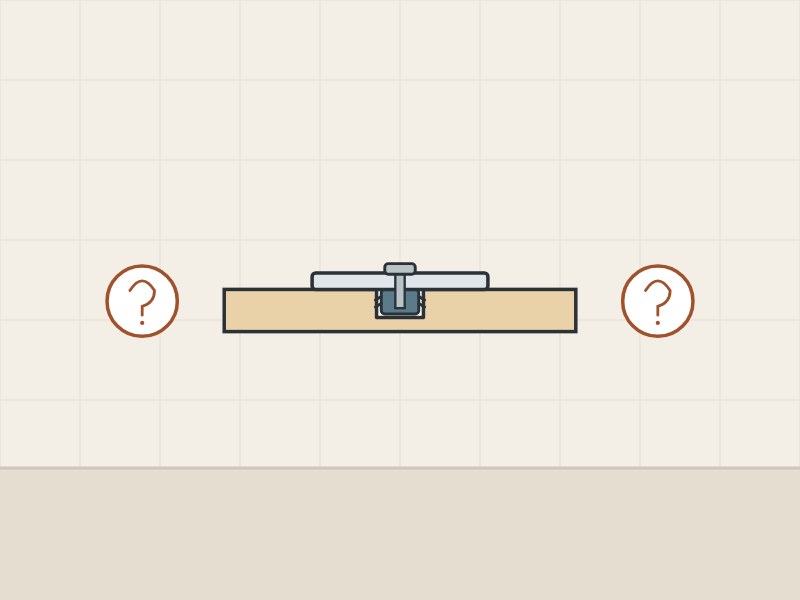
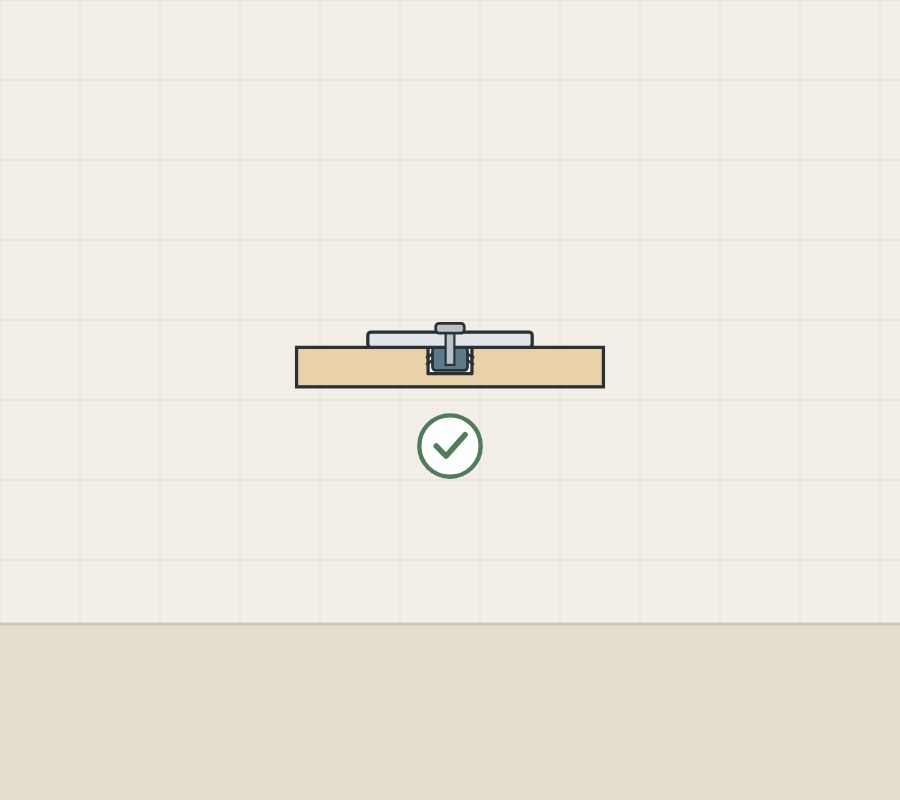
Some makers fix the hinge to a thin front without a drilled cup. Blum’s EXPANDO T assembly page says boss drilling is no longer required for hinges and that the fixing produces a new drilling pattern.
Blum describes steel teeth that bite into hard fronts and nylon components that anchor in soft panels. Its page allows panels of 8 mm or more, provided they have sufficient stability and strength.
Hettich’s thin-door hinge still uses a cup. Hettich lists the Sensys thin door hinge for doors of 10 to 19 mm, with a cup 35 mm in diameter and 7.8 mm deep.
| Term | What it means |
|---|---|
| Boss drilling | Blum’s term for the hinge drilling that EXPANDO T no longer requires. |
| Hinge cup | The part of a hinge set into the door. |
| Blind hole | A hole that does not pass through the whole panel. |
How is a fitting fixed with EXPANDO T?
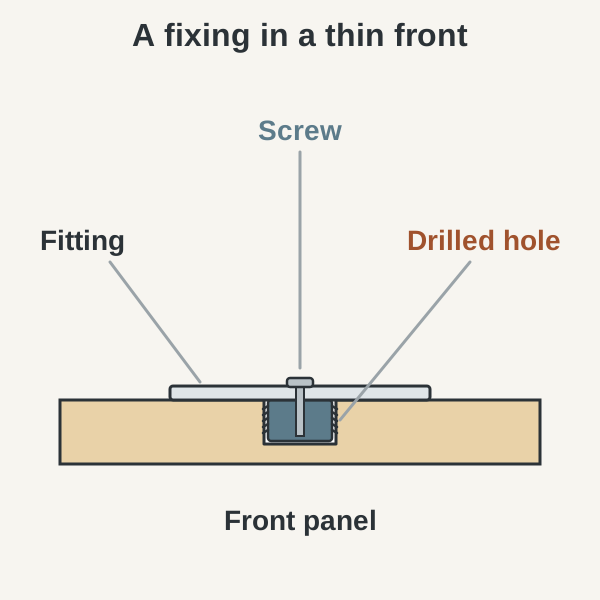
Blum’s assembly page sums the work up as drill, insert and tighten the screws. The steps follow Blum’s installation article and describe that system only.
- Drill holes 10 mm in diameter and 6 mm deep (Blum’s installation article says a minimum of 6 mm).
- Drill as many holes as the fitting needs.
- Place the fitting in the holes.
- Fully tighten the screws.
- Reach at least Blum’s minimum torque for the front material.
- Check the first few assemblies with a torque screwdriver.
Blum also generally recommends a trial application to test the fixing with the material, and assembly by an experienced furniture manufacturer.
How thin can a front be for each maker’s fixing?
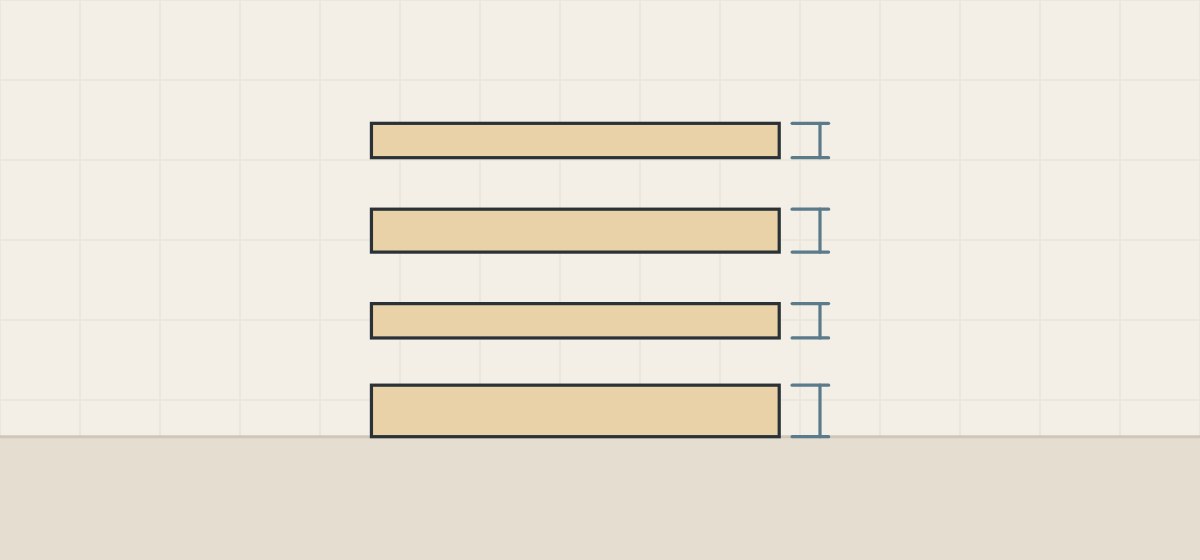
The sources used here give no single figure; each maker states its own.
| Maker and product | Thickness stated | Fixing stated |
|---|---|---|
| Blum EXPANDO T | 8 mm or more; 8 mm to 14 mm on Blum’s Australian page | Drilled holes, no boss drilling |
| Hettich Sensys thin door hinge | 10 to 19 mm | Cup; screwed on, pressed in or with expanding sockets |
| Salice Universal hinges for special-material doors | Minimum 8 mm | Hinge plate fixed with the included screws |
| Grass Tiomos M9 | From 12 mm | Not stated here |
Grass presents the Tiomos M9 as a Tiomos hinge for thin furniture doors. “Thin” is 8 mm for one product and 12 mm for another, so the word alone does not specify hardware.
Which front materials do the makers name?
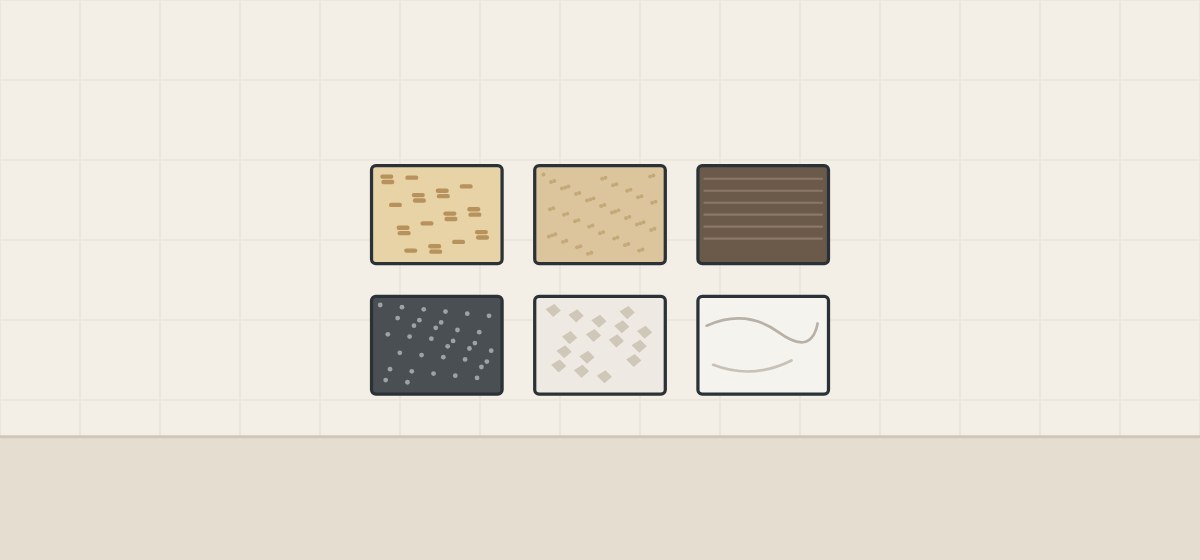
Blum publishes a material list and Salice names example materials. Blum’s assembly page adds a minimum tightening torque for each material.
| Material | Blum minimum torque | Condition |
|---|---|---|
| Chipboard | 1.5 Nm | Transverse tensile strength above 0.4 N/mm² |
| MDF | 1.5 Nm | Transverse tensile strength above 0.6 N/mm² |
| HDF, HPL, mineral composites | 2 Nm | None stated |
| Natural stone | 3 Nm | Listed as Nero Assoluto granite |
| Quartz composite, ceramic panels | 3 Nm | None stated |
Salice gives metal, ceramics, cements, quartz composites, HPL, HDF and MDF as examples for its hinges for doors of at least 8 mm. Blum states that it accepts no liability for EXPANDO T used with materials not listed or with fittings from other manufacturers.
What material does the fitting actually grip?
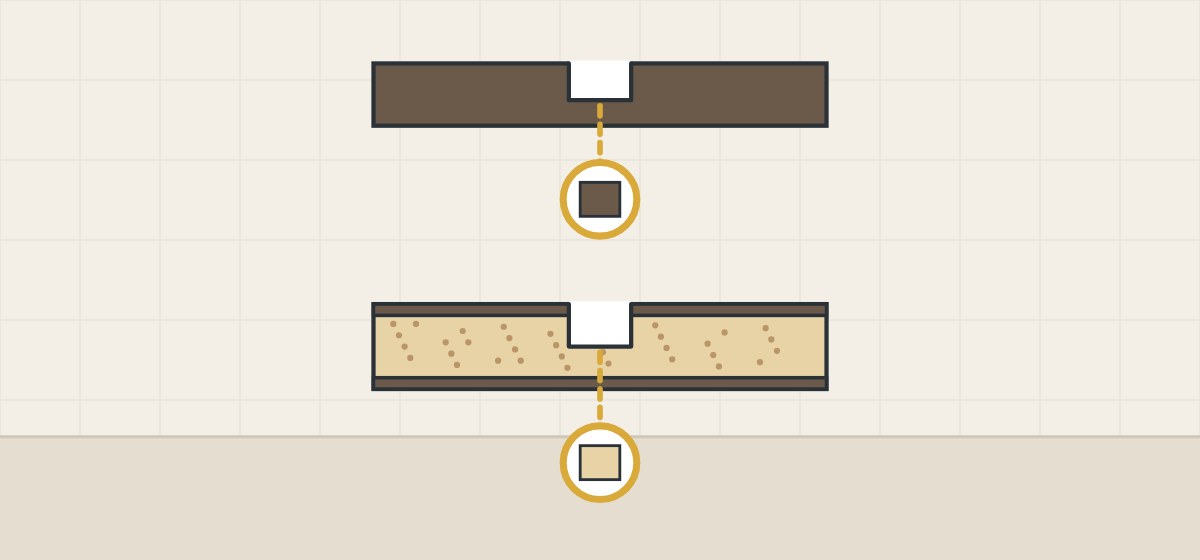
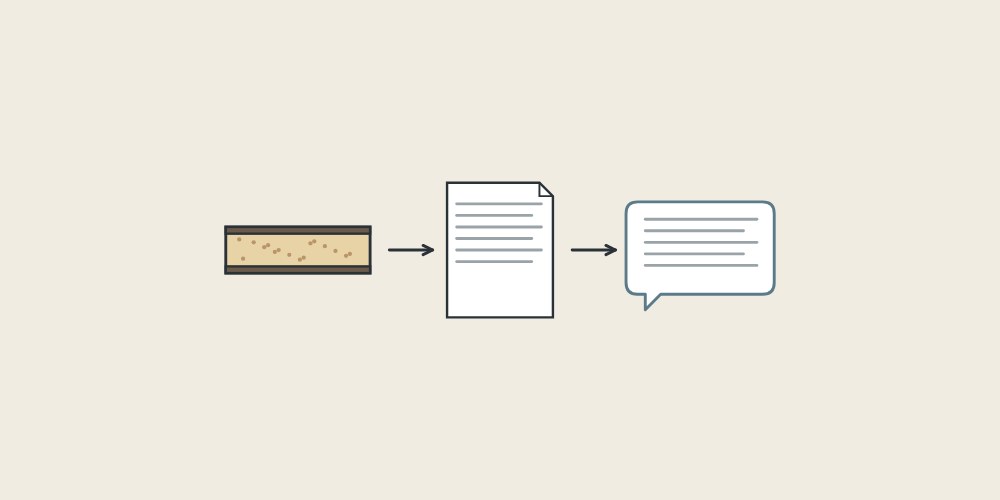
The fitting grips the material at the drilled hole, which may not be the visible face. A material name can cover different builds. Three cases follow, then this guide’s own list of what to request.
Thin HPL on a board
ISO 4586-3:2018 covers HPL under 2 mm thick. Its abstract says such laminate is normally intended for bonding to a supporting substrate. In that build the board behind the face is a separate material.
Chipboard and MDF
Blum’s entries apply to chipboard and MDF above a stated transverse tensile strength, a property to request from the board maker.
Stone, quartz and ceramic
Blum lists one named granite, quartz composite and ceramic panels. Its condition of sufficient stability and strength still applies.
- A cross-section of the front at the fixing
- Each layer and its thickness
- The layer the fitting engages
- The panel maker’s data for that layer
What limits do the makers attach to the fixing?
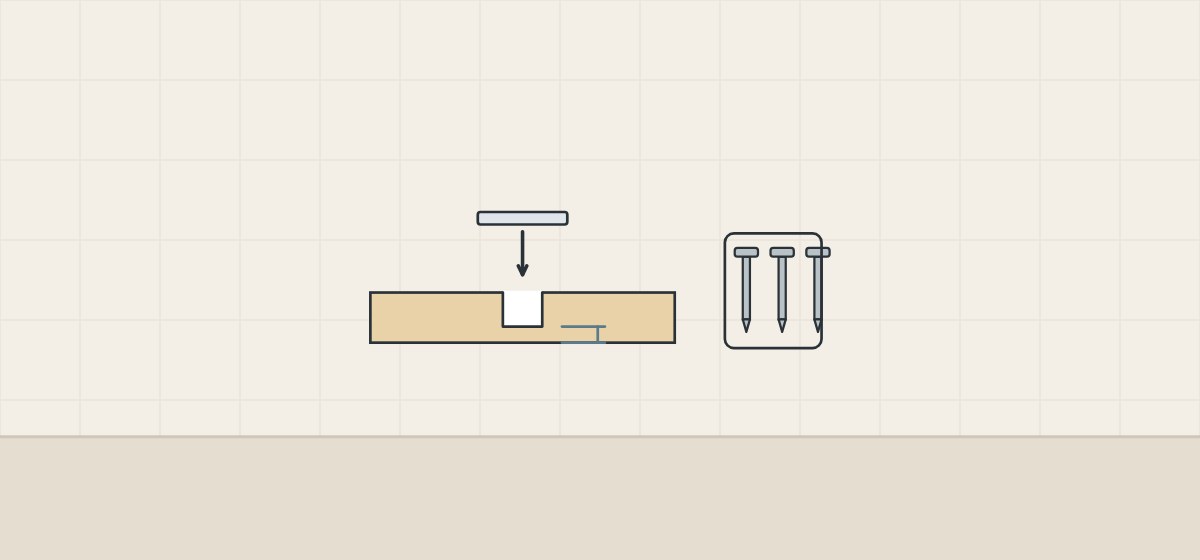
Hettich and Salice tie the fixing to their own parts, the door material and testing. A panel maker, Wilsonart, adds limits for holes and fasteners in its compact laminate.
Tested fixing
Hettich says the method of attaching its thin door hinge must suit the type and quality of the door material and be tested for a secure fit.
Supplied screws
Salice says the hinge plate must be fixed to the door with the included screws, and accepts no responsibility for problems with other screws.
Blind-hole depth
In its compact laminate guide, Wilsonart says to leave at least 1/16 in between the bottom of a blind hole and the back decorative surface. For wall panels it says mechanical fasteners should not penetrate beyond 1/8 in of the opposite face.
Weight and movement
For partition hardware, Wilsonart says the attachment system must support the weight of the panels and the strain from dimensional change and use.
This guide found no door weight, door size or hinge count for EXPANDO T on the Blum pages it used. Take those figures from the document for the chosen combination.
What do hinge standards cover?
The published scopes used here set tests for the hardware itself.
| Source | What it covers |
|---|---|
| EN 15570:2008 | Test methods and requirements for the strength and durability of hinges pivoting on a vertical axis and their components. |
| Hettich Sensys thin door hinge | Hettich states a quality classification under EN 15570, Level 3. |
| ANSI/BHMA A156.9-2026 | Cabinet hardware including hinges; BHMA’s summary describes cycle tests by hardware type and strength tests. |
How should a buyer specify a thin vanity front?
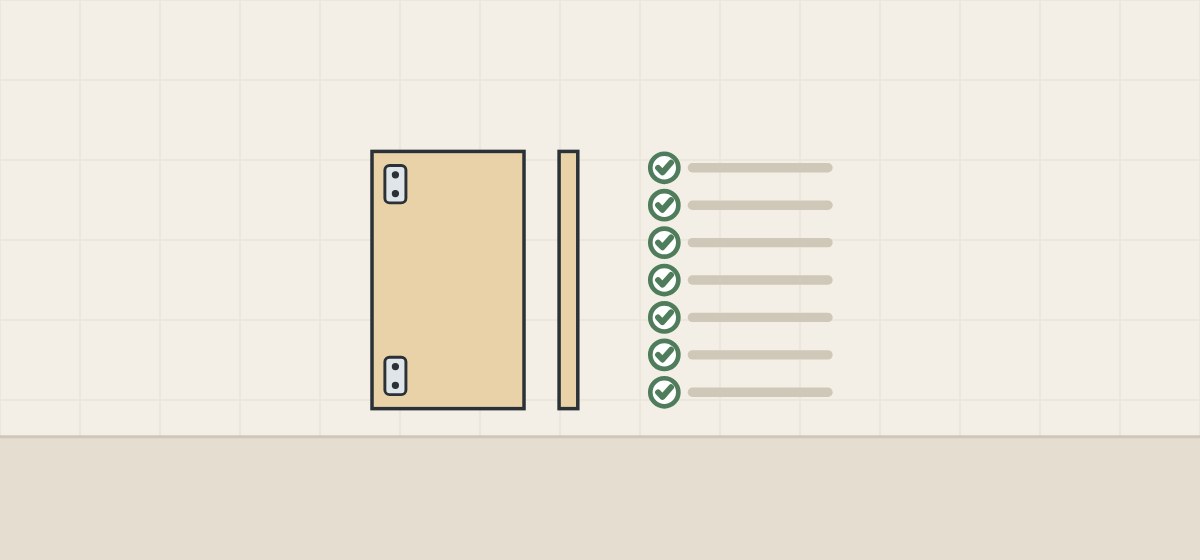
These steps are procurement guidance for a vanity order, not an installation instruction.
- Draw the front section. Show every layer and the finished thickness at the fixing.
- Name the gripped layer. State the material the fitting engages, not the decor name.
- Name the hardware. Maker, product and fixing type, with its document.
- Compare panel and document. Thickness range, listed materials and any strength condition.
- Ask for a trial. A trial assembly in the real panel, with the torque used.
- Record weight and size. Check them against the hardware maker’s guidance.
- Approve one combination. A prototype approves that panel, fitting and position only.
A new front means a new fixing check
If a finish or panel is substituted, ask whether the fitting still engages the same material at the same thickness. If not, review the hardware again.
What should you send and ask before a quotation?
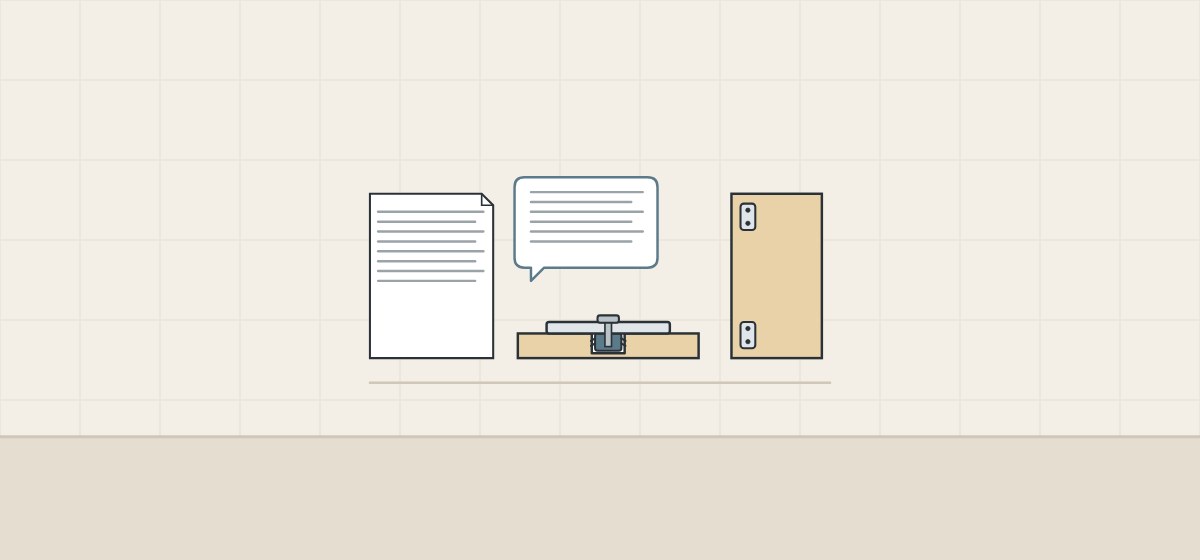
A complete request describes the panel and the fixing together. The questions and the list of enclosures are this guide’s own.
| Question | Why it matters |
|---|---|
| What is the front’s cross-section? | The fitting grips a layer, not a decor name. |
| Which hinge and fixing are proposed? | Thickness ranges differ by maker and product. |
| Is the material on the maker’s list? | Blum accepts no liability for unlisted materials. |
| How was the fixing tested in this panel? | Hettich asks for a tested, secure fit. |
| Which screws and torque are used? | Salice ties its hinge to the supplied screws. |
| What changes if the panel changes? | A new build needs a new fixing check. |
Include with your request
- Front section and finished thickness
- Door height, width and estimated weight
- Opening type: door, lift or drawer
- Preferred hardware, if any
- Quantity per vanity model
WNS Global confirms any product and terms it offers separately in writing. This guide does not state that WNS Global products have the features, ratings or listings named above.