From door weight to hinge schedule
What decides how many hinges a vanity door needs?
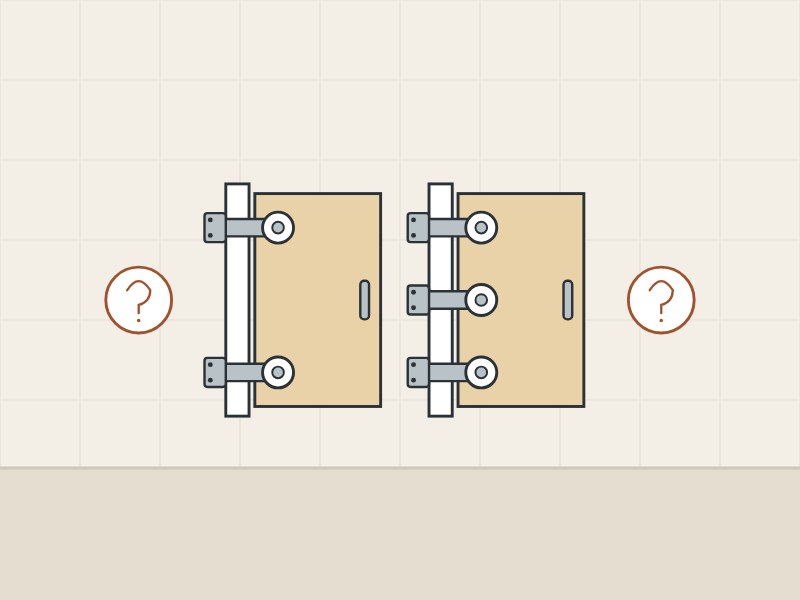
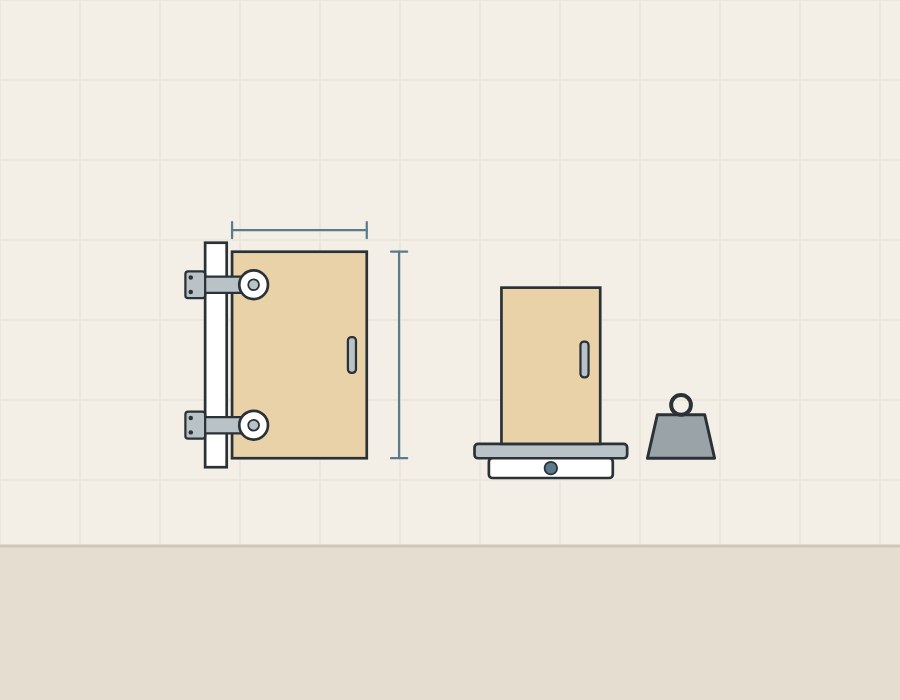
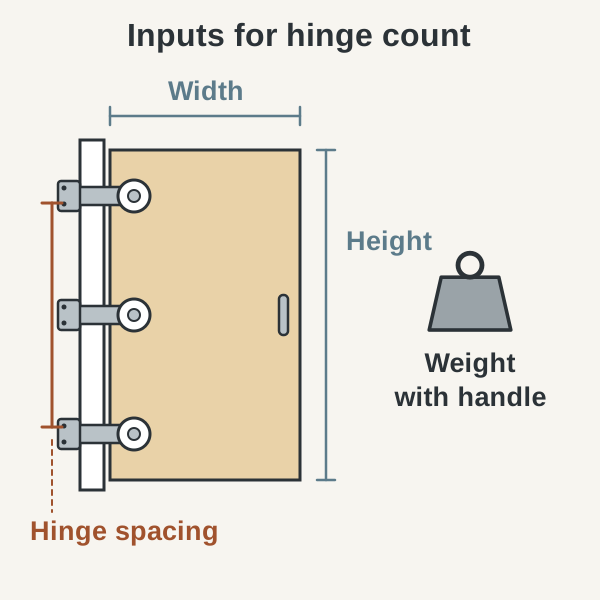
Blum calls door weight the key factor, as a rule, and counts additional weights such as handles in it.
Hettich adds the material quality of the door to width, height and weight. Its guide values are for 19 mm chipboard panels with a density of 750 kg/m³.
| Input | What the source says |
|---|---|
| Door weight | Blum: as a rule, the key factor. |
| Handles | Blum: include them in the door weight. |
| Door width | Blum: its counts hold for widths up to 600 mm. |
| Door height | Blum: height also affects the count. |
| Door material | Hettich: material quality is a key factor. |
| Hinge spacing | Hettich: as far apart as possible, for stability. |
How do you work out the count for one door?
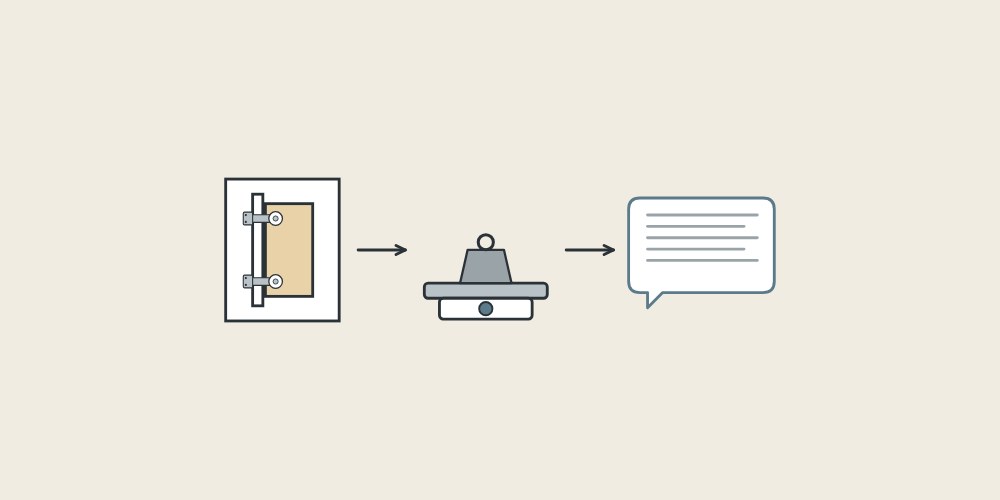
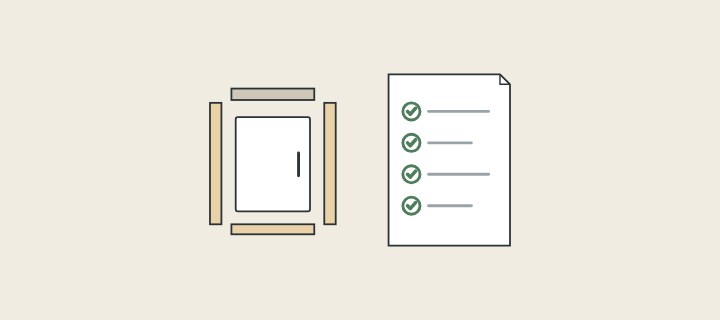
Work from the finished door to the maker’s guidance for the exact hinge, then test if unsure. The six steps are this guide’s reading order, built on what Blum and Hettich publish; they are not a calculation.
- Weigh or calculate the finished door, with handles and any insert.
- Record the door width, height and thickness.
- Identify the exact hinge and find its maker’s hinge-count guidance.
- Read the count for the door weight, then check the width condition.
- Check whether the height or a tall, narrow shape calls for one more hinge.
- If in doubt, mount a trial door and adjust the count.
Blum says it offers a front weight calculator in its product configurator. The last step is Hettich’s advice: mount a trial door and adjust the number of hinges as necessary.
What figures do hinge makers publish?
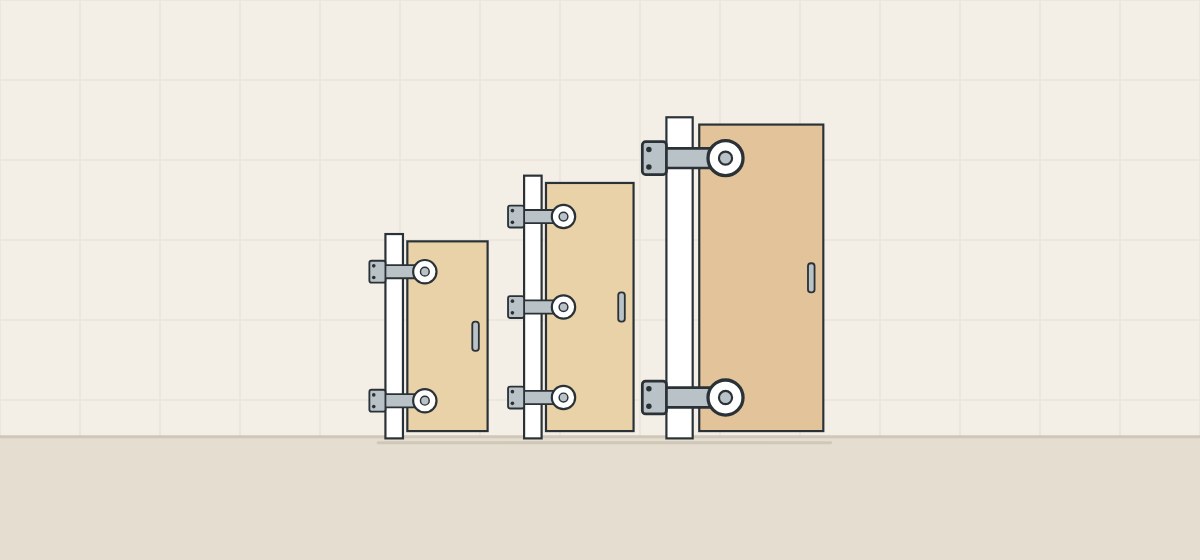
Makers publish counts for their own hinges, each with conditions. None of the three examples is a figure for hinges in general.
| Maker and hinge | Published figure | Condition or listed limit |
|---|---|---|
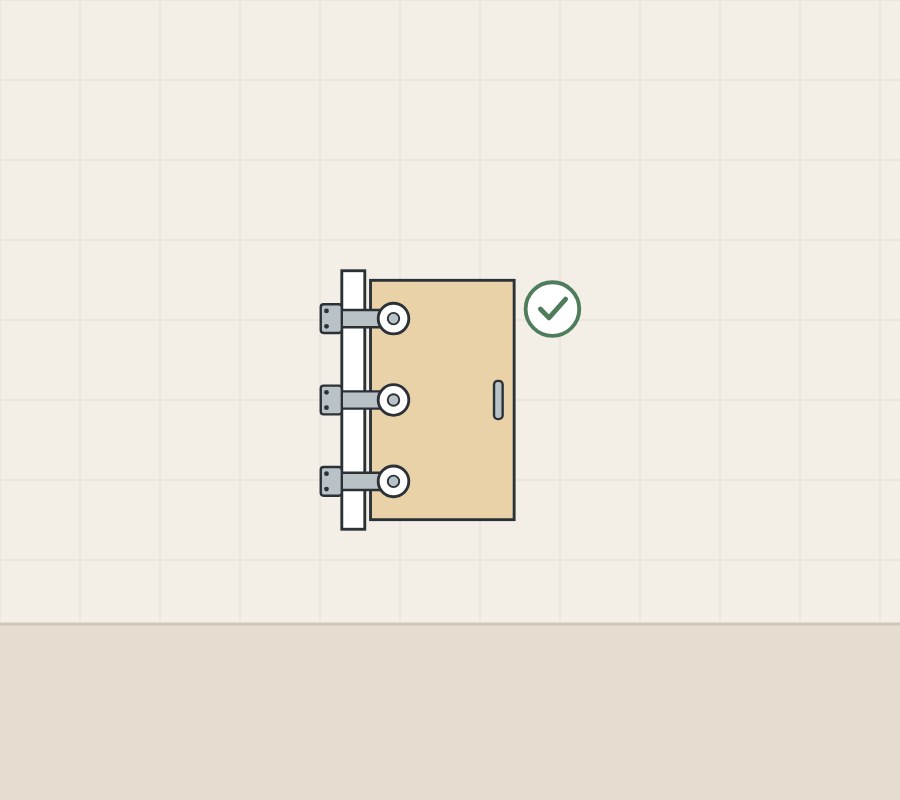
| Blum, CLIP top BLUMOTION | Two hinges optimal for 4–6 kg; three for 6–12 kg. | Door widths up to 600 mm. |
| Hettich, Sensys | A diagram of counts by door height. | Guide only; 19 mm chipboard at 750 kg/m³; width up to 600 mm. |
| Sugatsune, J95-24/25T-NI | Two hinges hold 55 lb (25 kg); three hold up to 88 lb (40 kg). | Maker’s load figure for this hinge only; listed maximum door height 2400 mm, 40 mm cup bore. |
Sugatsune describes the J95 as a heavy-duty hinge for wide, heavy custom doors. Blum’s page gives no count below 4 kg or above 12 kg, and 6 kg sits in both of its bands. Read the count from the guidance for the hinge in the quotation.
How do door width and height change the count?
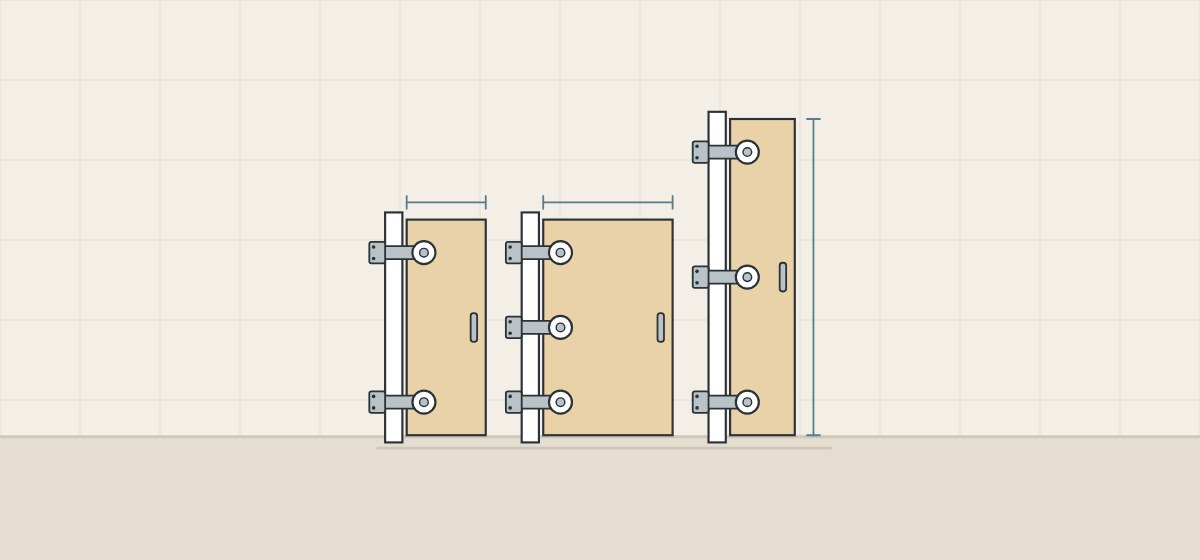
A wider or taller door can need more hinges than its weight alone suggests. Blum and Hettich both tie their counts to a door width.
| Factor | Maker | What the maker says |
|---|---|---|
| Width | Blum | Counts valid up to 600 mm; a door up to 650 mm wide needs an additional hinge. |
| Height | Blum | Height also affects the count. |
| Tall, narrow door | Blum | Three hinges may be wise for stability, even where 6 kg does not strictly require them. |
| Spacing | Blum | In general, the further apart the hinges, the more securely the door hangs. |
| Spacing | Hettich | The distance between hinges must be as large as possible. |
These statements are not drilling positions. Take positions from the hinge maker’s instructions and the cabinet drawing.
Which standards test cabinet hinges and doors?
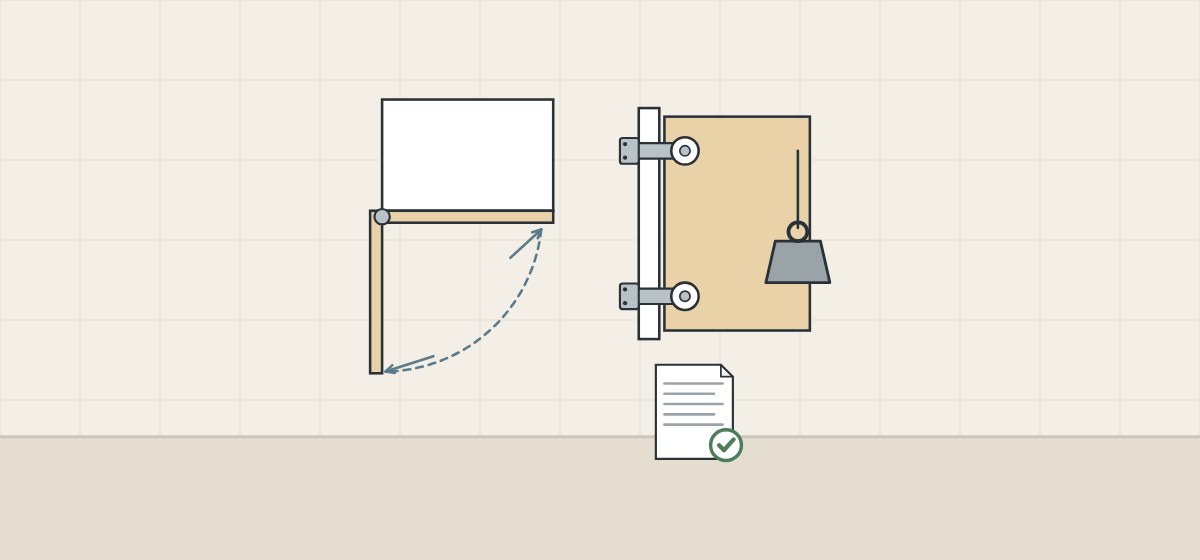
Three published standards test hinges or cabinet doors; one maker’s claim and this guide’s own request list follow them. The public pages read for this guide describe tests, not a hinge count per door.
ANSI/BHMA A156.9-2026
Per the BHMA summary, this standard covers cabinet hardware, hinges included, with operational, cyclical and strength tests. The summary gives 100,000 cycles for a Grade 1 hinge as an example.
EN 15570:2008
The SIS page for the Swedish edition shows it as valid. Its scope is strength and durability tests for hinges pivoting on a vertical axis. Hettich’s UK hinge catalog states a classification under EN 15570, Level 2 or Level 3, against individual hinges.
KCMA A161.1
A cabinet standard, not a hinge standard. KCMA describes a door test of 25,000 cycles through a 90-degree swing and a load test with 65 pounds applied to the door.
Maker claims
Grass says on its Tiomos page that the hinge is tested with up to 100,000 cycles.
What to ask for
For any test claim on a hinge, this guide suggests asking the supplier for these four points:
- The standard and its edition
- The grade or level claimed
- The exact hinge the report covers
- Who tested it, and when
What does hinge count not settle?
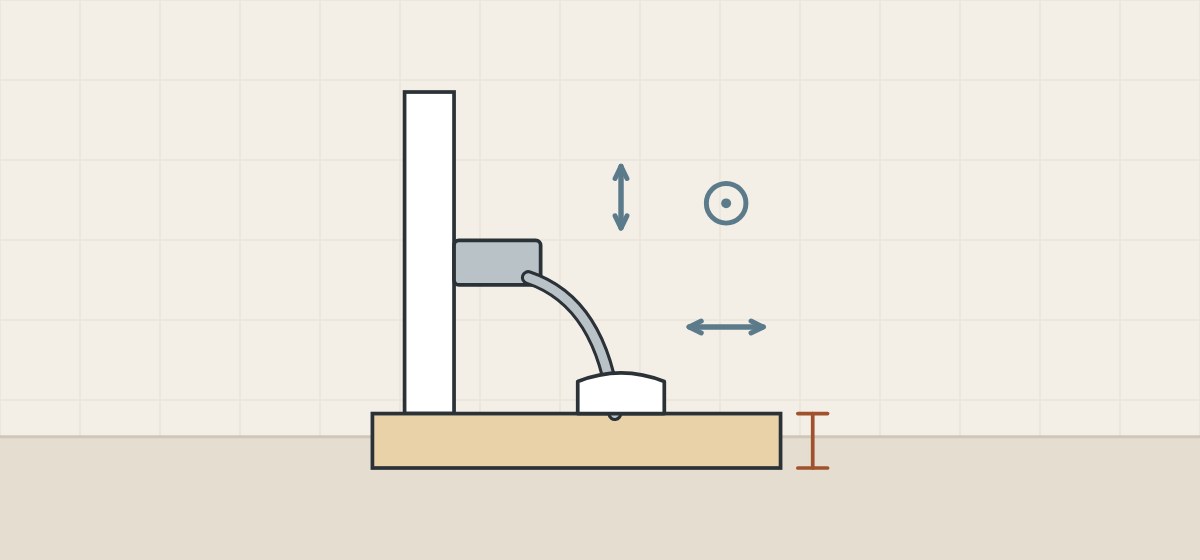
Hinge count answers the weight and size question only. Four other points are checked on their own inputs:
Closing speed
Blum says on its US product page that the BLUMOTION soft-close feature can be deactivated on one or both hinges so doors close at the right speed.
Alignment
Blum describes three-dimensional adjustment, Grass 3D adjustment and Sugatsune 3-way adjustment with the door installed. Adjustment sets the door position.
Door thickness
Grass gives 12 to 26 mm for Tiomos and, in its hinge catalog, recommends a trial fitting from 24 mm for Tiomos 110.
Overlay and swing
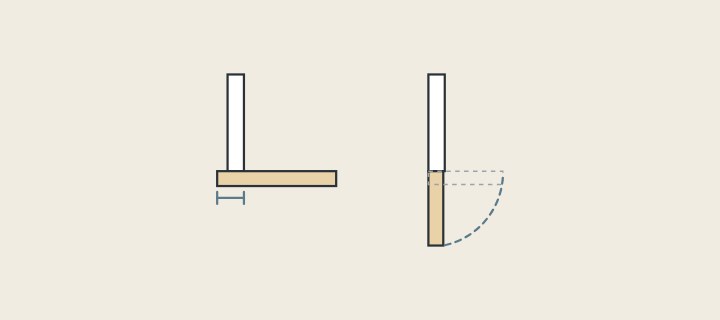
Sugatsune lists overlay options and a maximum opening angle of 93 degrees as separate entries from its load figures.
Keep count, overlay and opening angle as separate lines on the hardware schedule.
When should the hinge count be checked again?
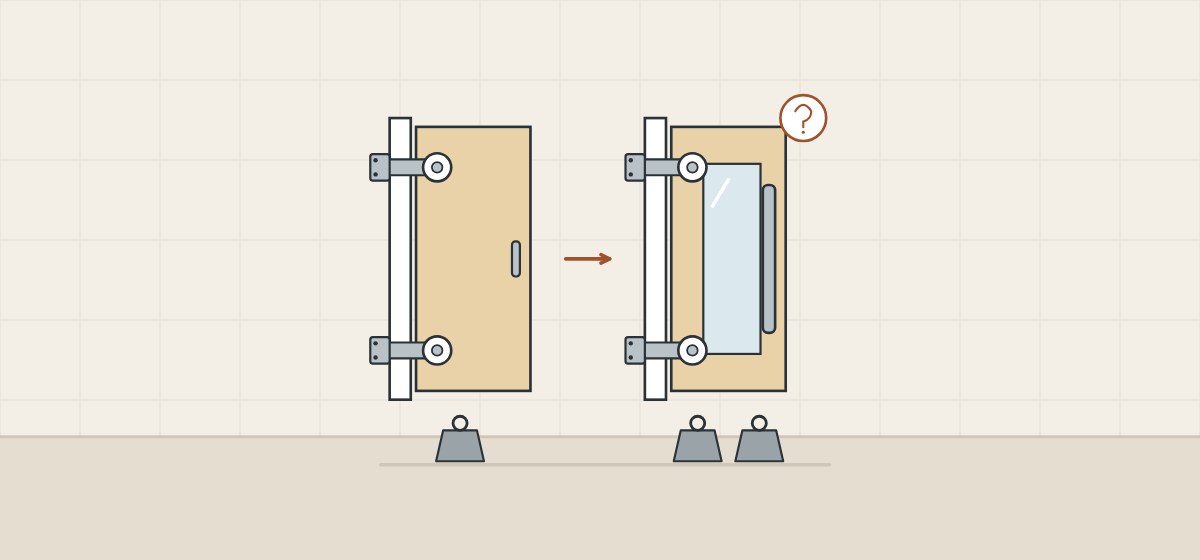
Check the count again whenever an input named by the makers changes. The advice to recheck is this guide’s own.
| Change | Why it reopens the count |
|---|---|
| Handle added or changed | Blum counts handles in the door weight. |
| Mirror or glass insert | Changes the total door weight, Blum’s key factor. |
| Door material or thickness | Hettich’s guide values assume 19 mm chipboard at 750 kg/m³. |
| Wider door | Blum’s counts hold up to 600 mm wide. |
| Taller door | Blum and Hettich both link height to the count. |
| Different hinge | Each figure belongs to a named hinge. |
How should a buyer specify hinge count for a vanity order?
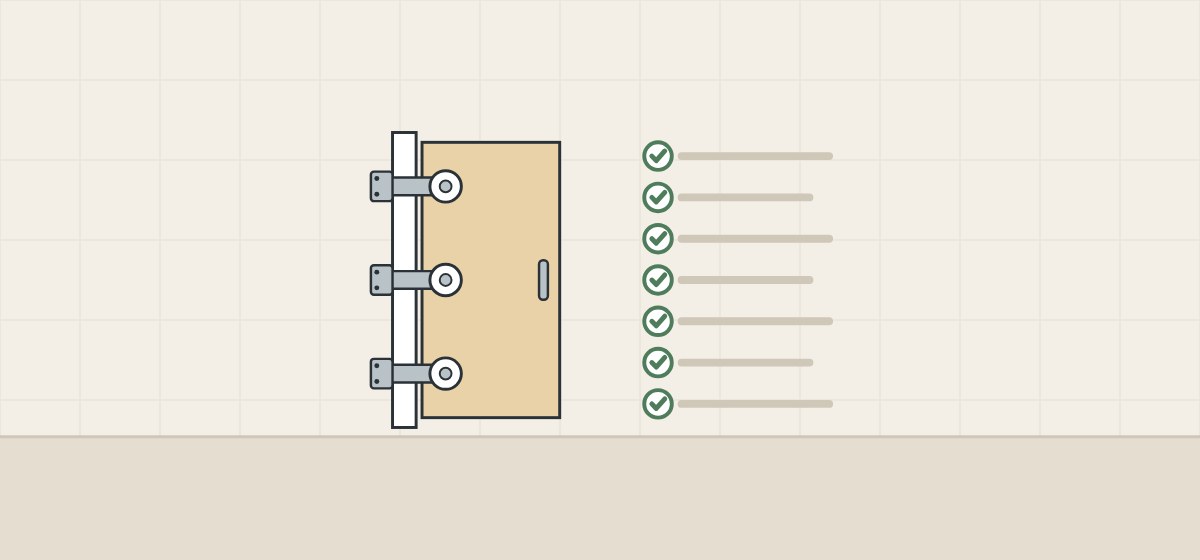
Put the count, the hinge and the door on one approved record. These seven steps are procurement guidance, not an engineering calculation.
- Fix the finished door. Material, thickness, facing, insert and handle, as it will be produced.
- State the weight and its basis. Weighed or calculated, with handles and inserts included.
- Record the size. Width, height and finished thickness of each door type.
- Name the hinge. Maker, series and part numbers for hinge and mounting plate.
- Ask for the maker’s guidance. The published chart or page the count was read from.
- Show count and positions. On the door drawing, clear of shelves, pull-outs and other fittings.
- Mark open points. If the weight is not known yet, label the count provisional.
When the door changes after approval
Ask for a revised hinge schedule instead of carrying over an approval made on a lighter sample. The supplier should confirm the whole arrangement.
What should you send and ask before a quotation?
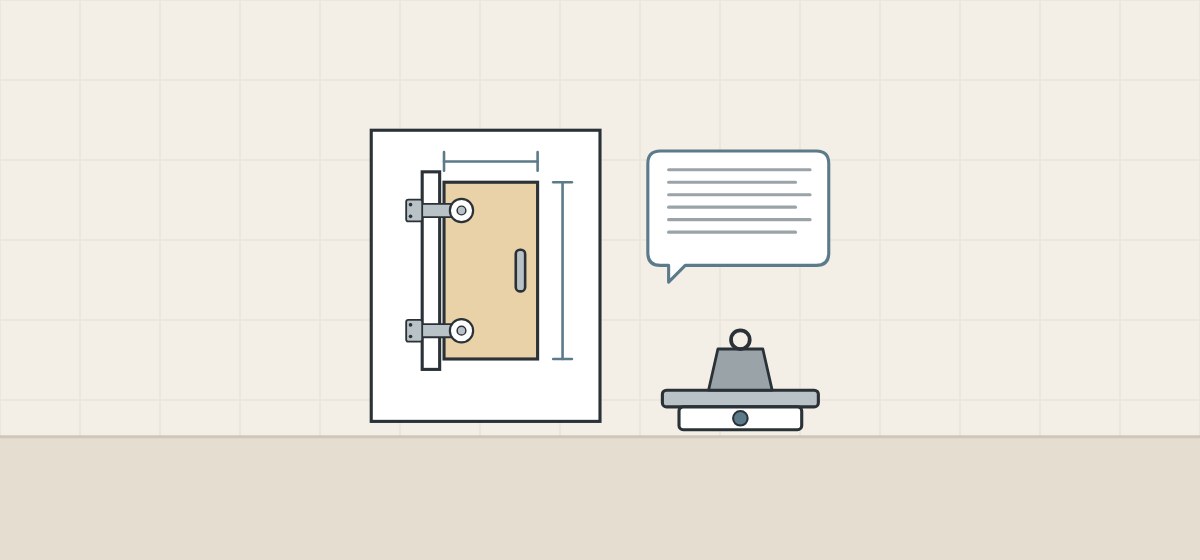
A complete request describes the door, not just the cabinet size.
| Question | Why it matters |
|---|---|
| What is the finished door weight? | Blum calls weight the key factor. |
| Are handles and inserts included? | Blum counts additional weights. |
| Which hinge and plate are offered? | Counts belong to a named hinge. |
| Which maker guidance gives the count? | Conditions differ by maker. |
| Is the door within the stated width? | Blum’s counts are valid up to 600 mm; up to 650 mm it adds a hinge. |
| Was a trial door mounted? | Hettich advises one if in doubt. |
Include with your request
- Door drawing with width, height and thickness
- Door material, facing and any insert
- Handle type and position
- How the door weight was worked out
- Quantity per door type
WNS Global confirms any product and terms it offers separately in writing. This guide does not state that WNS Global products have the features, ratings or listings named above.