From leaf to elevation
What do book, slip and sequence match mean?
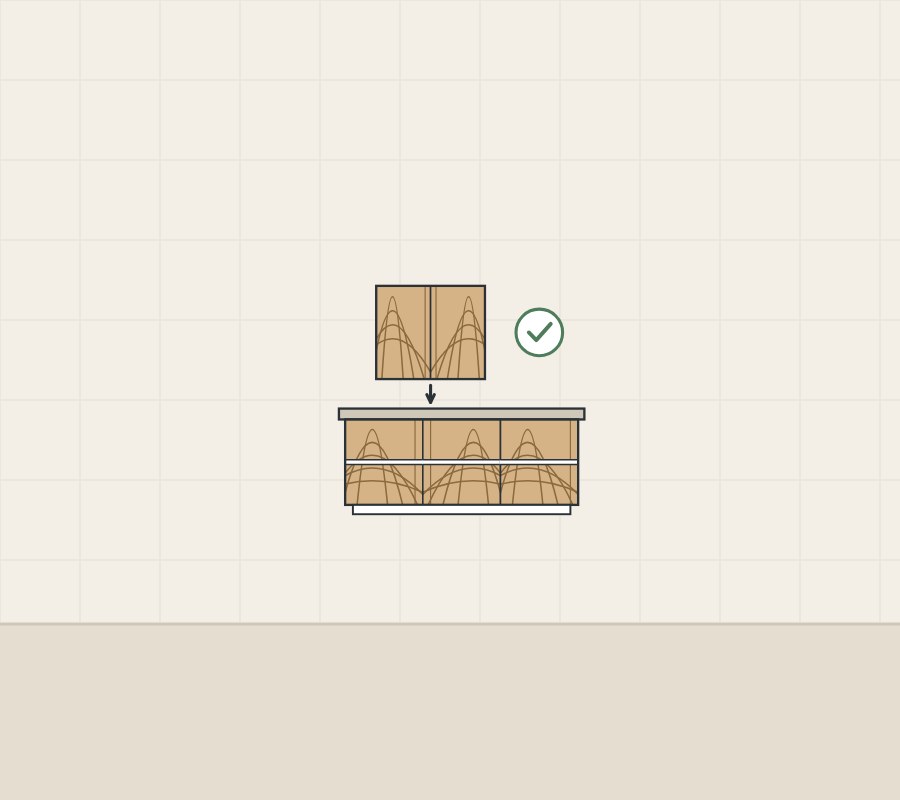
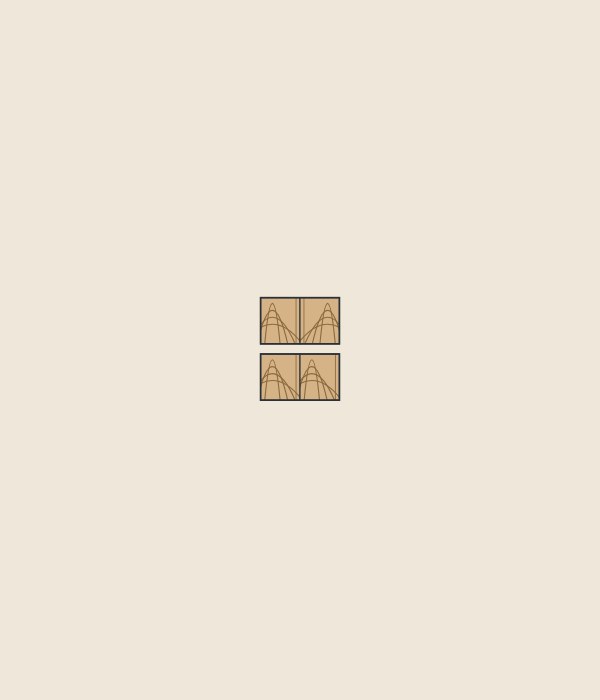
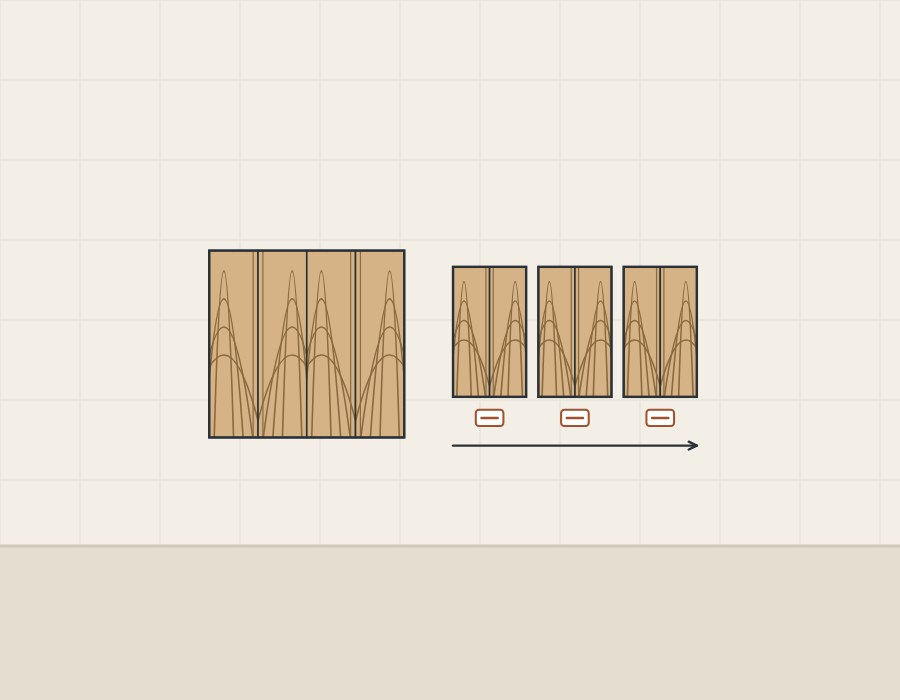
Book and slip match are leaf matches inside one face; sequence match is an order kept between panels. Columbia’s FAQ says book matching reverses every other component “as if you were opening the pages of a book”, which gives a mirror image at the splice line.
Columbia describes slip matching as splicing the leaves without turning any over, and sequence matching as panels produced from faces kept in order and numbered during manufacture.
The first two rows follow the WDMA door glossary, which uses component, piece and leaf interchangeably; the rest follow Columbia.
| Term | What it means |
|---|---|
| Leaf or component | One piece of veneer joined to others in a face. |
| Flitch | The bundle of sheets, in the order cut. |
| Book match | Every other leaf turned; mirror image at the joint. |
| Slip match | Leaves joined without turning. |
| Face arrangement | Running, balance or center match across one face. |
| Sequence match | Panels made from faces kept in order and numbered. |
How does a flitch become a matched front?
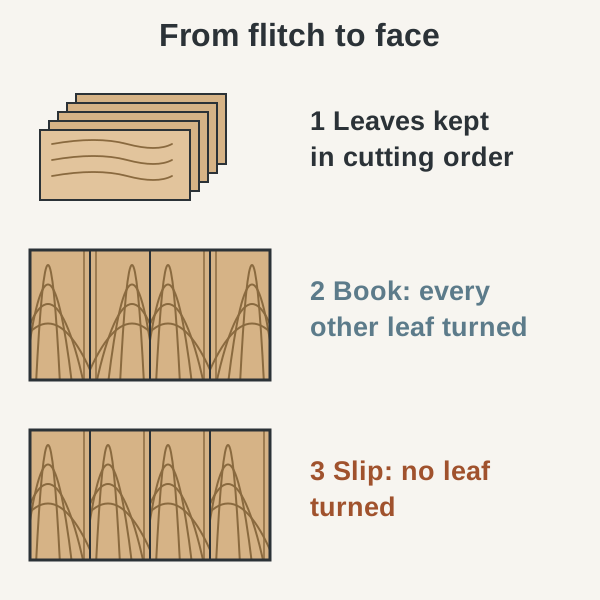
A matched front starts as leaves kept in cutting order. The steps follow the definitions of WDMA, AWI and Columbia.
- Leaves are cut and kept in order as a flitch.
- For a book match, every other leaf is turned over.
- For a slip match, no leaf is turned.
- The leaves are spliced into a face in a running, balance or center arrangement.
- For a sequence match, faces stay in order and are numbered.
The AWI glossary puts a bundle at typically 24 to 32 leaves. Under Grades AA and A of ANSI/HPVA HP-1-2024, every component of a book or slip matched face comes from the same flitch.
Which leaf matches can a buyer name?
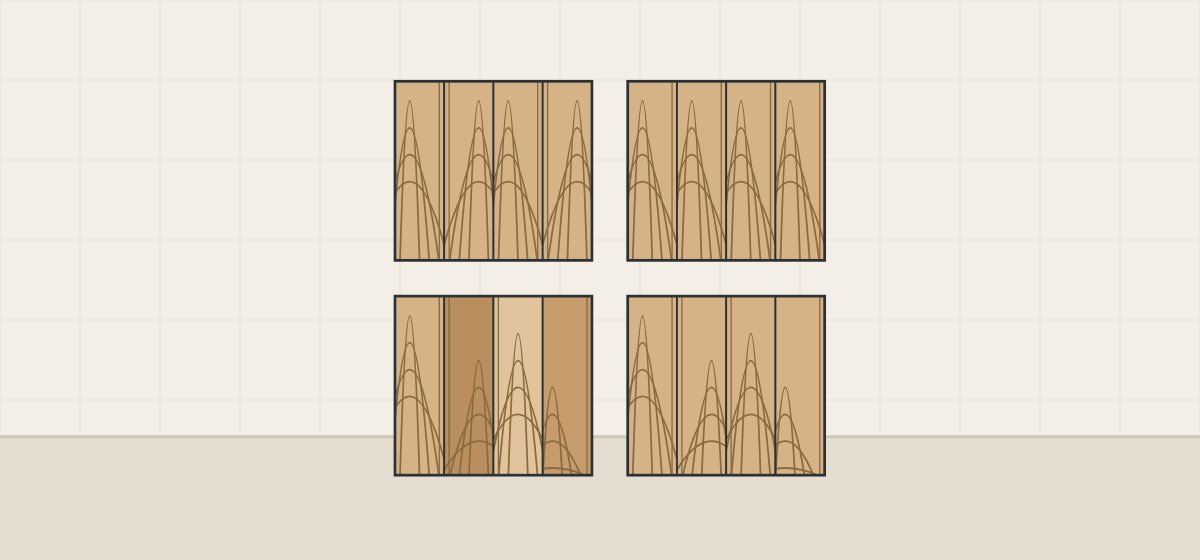
Five names recur in the sources read for this guide.
| Match | How the source describes it |
|---|---|
| Book | Every other leaf turned over. The HPVA handbook calls it the most common matching type. |
| Slip | States Industries: leaves fed out in sequence without turning, same side exposed. |
| Random | WDMA: strips of one species assembled without regard to color or grain. |
| Pleasing | States Industries: selected for uniform color, without regard to grain pattern. |
| Plank | AWI: dissimilar leaves of one species, made to resemble a panel glued up from lumber. |
What is supplied when no match is named depends on the grade. In HP-1-2024, Grade AA plain-sliced and multi-piece rotary-cut faces are book matched unless a running, balanced or center arrangement is specified; multi-piece Grade B faces are pleasing matched for color unless the buyer specifies slip or book.
How are the leaves arranged across one face?
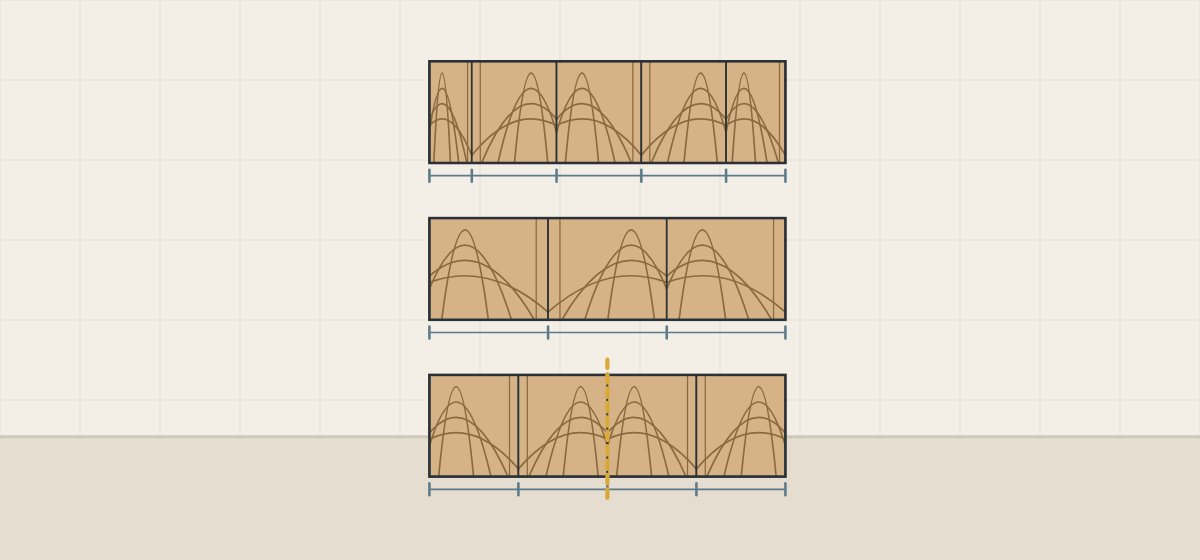
Running, balance and center match describe leaf widths and joint positions across the whole face.
| Arrangement | Leaf widths | Source wording |
|---|---|---|
| Running | Unequal | Columbia: outer components differ in width from inner ones. AWI: a leftover portion may start the next panel. |
| Balance | Equal | Columbia: all components the same width. |
| Center | Equal, even number | AWI: a joint in the center of the panel, giving horizontal symmetry. |
Columbia states that it provides running match unless otherwise specified, and that the outer components of balance and center matched faces will be slightly narrower.
What is the barber-pole effect?
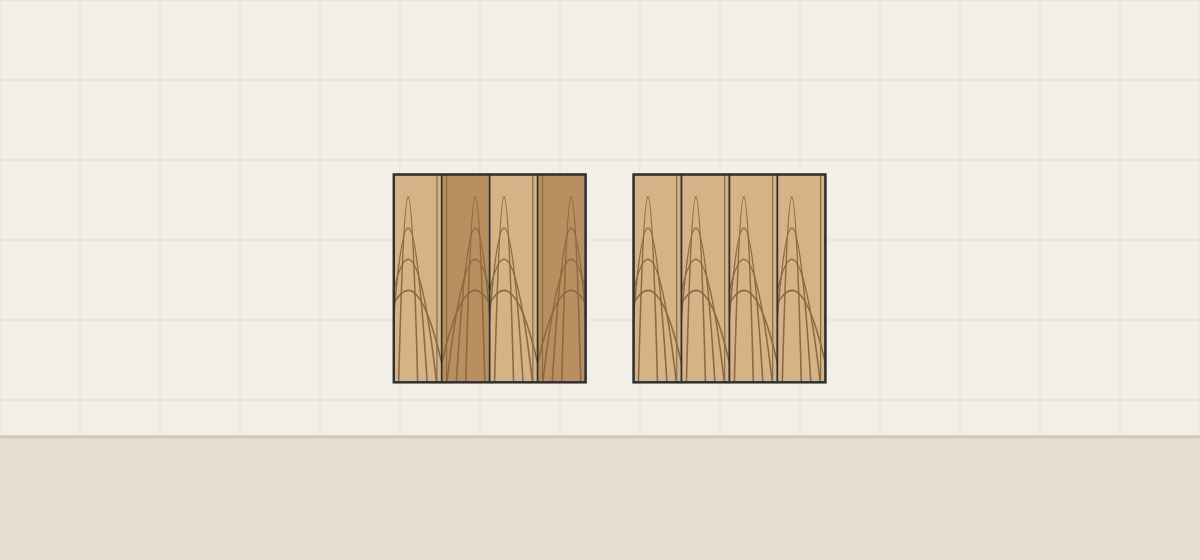
Barber pole is an alternating light and dark look across the leaves of a book-matched face.
What it is
The AWI glossary calls it an optical effect that often occurs when veneers are book matched; Columbia says it is occasionally observed.
Why it happens
Columbia’s FAQ traces it to the different surface character of the tight side and the loose side of a leaf, and says it is especially noticeable after finishing. WDMA defines the loose side as the side that touched the knife and carries cutting checks.
Light and stain
The HPVA handbook says alternating leaves in a book-matched face may reflect light and accept stain differently.
How it is reduced
Columbia says slip matching allows the tight side to face out on every component, which helps avoid the effect. WDMA says slip match minimizes it.
What to ask for
This guide’s own advice: to judge barber pole before approval, ask for:
- A finished sample, not raw veneer
- Two or more adjoining leaves
- The stain or clear coat of the order
- The match named on the order
How far does a sequence match run?
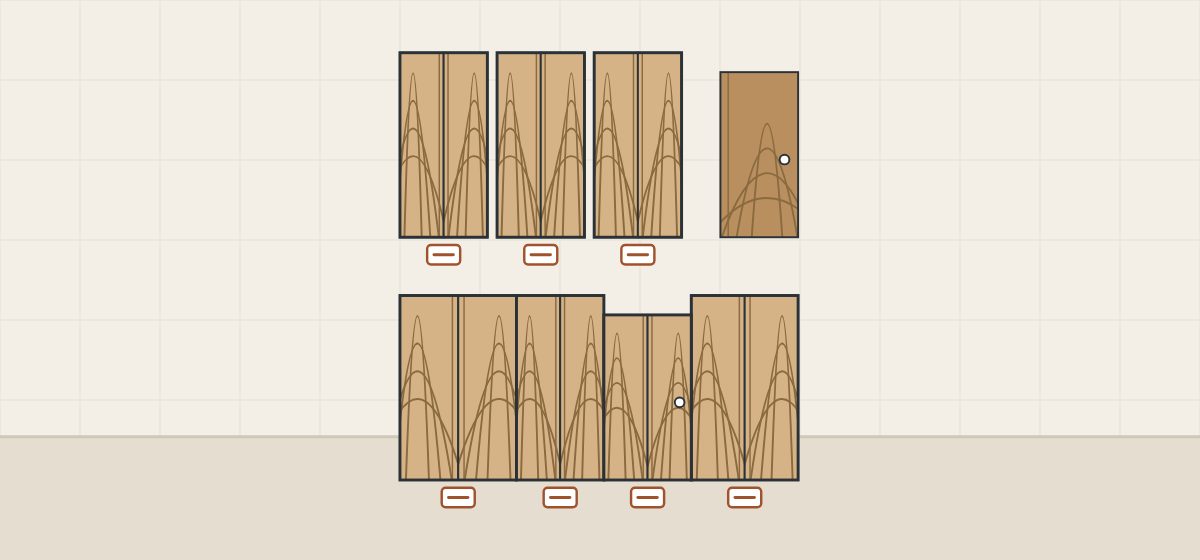
In the paneling documents below, sequence is defined within a set. The set types come from architectural paneling documents.
Premanufactured sets
The AWI glossary describes sequenced sets of balance-matched panels, usually 4 ft by 8 ft or 4 ft by 10 ft. The 2014 Architectural Woodwork Standards say sequencing between sets cannot be expected, and that doors or components cannot be made from the same set.
Made-to-order sets
Per the glossary: panels made to the width, the height or both of each elevation, balance matched and sequenced to adjacent panels.
Blueprint-matched sets
Here the glossary includes components such as doors, each made to its required size. The 2014 standards say this maximizes grain continuity.
Numbering
Columbia’s definition depends on faces being numbered. Navy Island describes its custom panels as sequenced, numbered and blueprint-matched.
In ANSI/AWI 0642-2024, the wood paneling standard, made-to-order and blueprint-matched sets are required only if specified. For a vanity, ask the same things: which set, how far, and which parts are included.
What does a casework standard ask of door and drawer fronts?
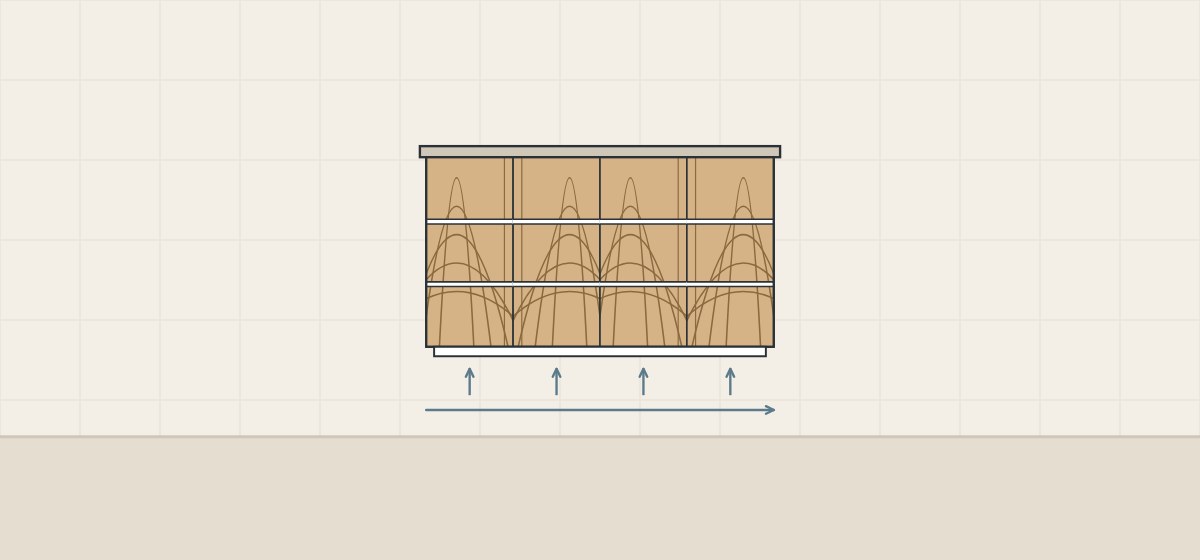
ANSI/AWI 0641-2019, the AWI casework standard, sets grain rules for flush overlay doors, drawer fronts and false fronts by grade. Its general section makes Custom Grade the default unless the contract documents say otherwise. Confirm whether the contract names this standard.
| Grade | Grain direction | Color and grain match |
|---|---|---|
| Premium | Run and match vertically, sequenced horizontally, within each cabinet | Well matched for color and grain across the cabinet faces of one elevation |
| Custom | Run and match vertically within each cabinet | Doors and drawer fronts compatible in color across faces in each room |
| Economy | Vertical or horizontal at the maker’s option for the whole project; doors vertical | Mismatch is permitted |
How should a buyer specify veneer matching on vanity fronts?
Name the leaf match, the face arrangement and the extent of the sequence, then tie all three to a numbered elevation. These steps are procurement guidance.
- Name the leaf match. Book, slip, random, pleasing or plank, as the supplier defines it.
- Name the face arrangement. Running, balance or center match for each front.
- Set the extent of the sequence. One cabinet, one elevation or one room.
- Number every front. The number stays with the visible panel through finishing, packing and installation.
- Approve a finished layout. Adjoining leaves in the ordered finish, not a small raw swatch.
- Record changes. Mark any moved or resized front on the elevation before production.
- Keep the record. Hand over the numbered elevation and the sample record.
Replacement fronts
Agree before the first shipment how a replacement will be judged: original panel number, material then available, acceptable appearance. The sources read here do not say a replacement can repeat an original sequence, so do not rely on a promise of exact grain continuity.
What should you send and ask before a quotation?
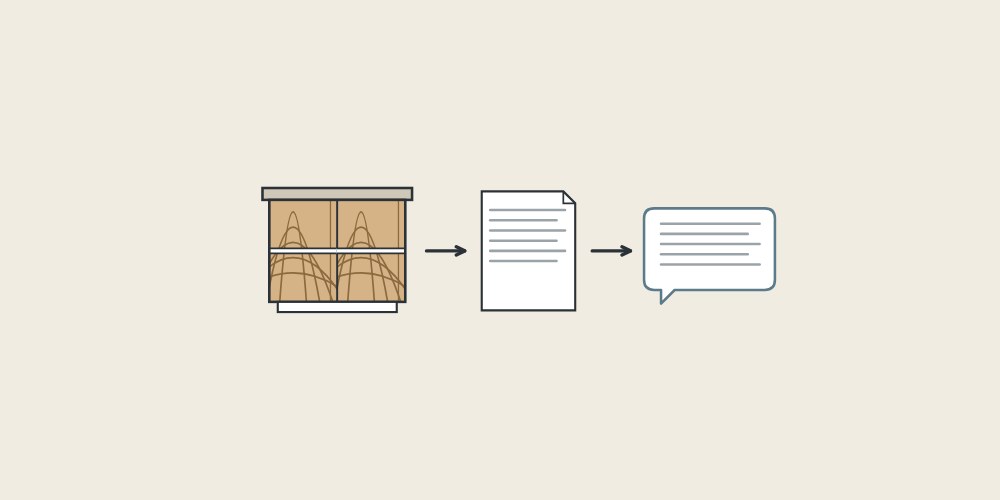
Send the elevation and ask the supplier to state each matching decision in writing.
| Question | Why it matters |
|---|---|
| Which leaf match is quoted? | The default differs by grade. |
| Which face arrangement is quoted? | Columbia supplies running match unless told otherwise. |
| Is each face cut from one flitch? | HP-1-2024 Grades AA and A require it for book and slip match. |
| How far does the sequence run? | The 2014 Architectural Woodwork Standards say sequencing between premanufactured sets cannot be expected. |
| How are fronts numbered? | Sequence match depends on faces kept in order. |
| Which finish does the sample show? | Columbia says barber pole is especially noticeable after finishing. |
Include with your request
- Front elevation with every door and drawer
- Species, cut and finish wanted
- Leaf match and face arrangement
- Extent of the sequence
- Any standard and grade the contract names
WNS Global confirms any offered veneer, matching method, sample and commercial terms separately in writing. This guide does not state that WNS Global products have any match, sequence, grade or standard compliance named above.