From material to written record
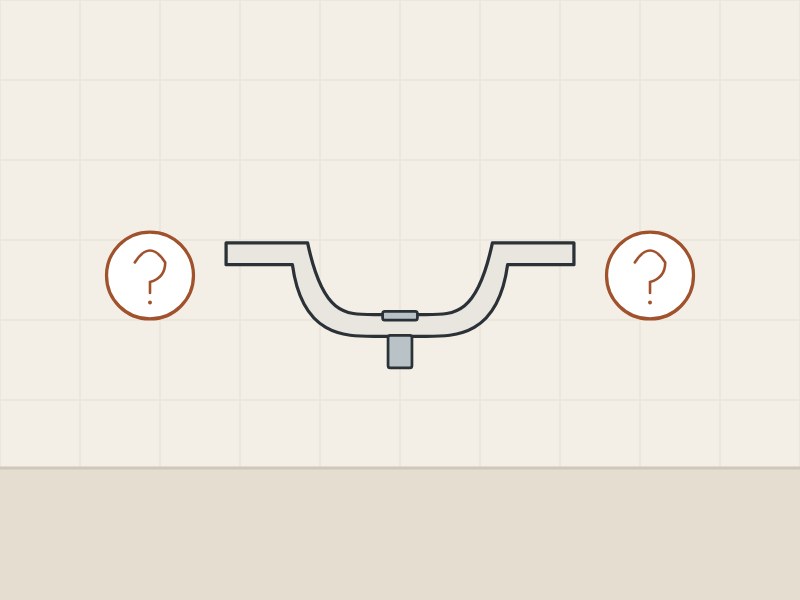
What is an integrated basin top made of?
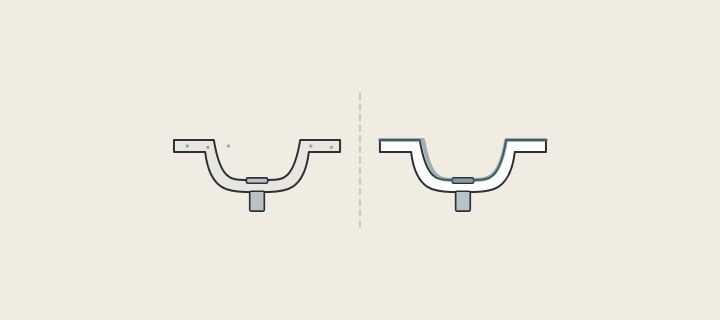
This guide covers three material families: gel-coated cultured marble, solid surface and vitreous china. The material decides what the visible surface is.
The International Cast Polymer Association says solid surface, like cultured marble, consists of resin and filler but has no surface gelcoat, and that vanity tops are cast as single, seamless units.
Corian’s sink installation bulletin describes two ways to mount a sink under a countertop: a hard seam made with joint adhesive and a soft seam made with silicone.
| Material | What the source says |
|---|---|
| Cultured marble | ICPA: polyester resin, fillers and pigments poured into molds coated with a clear gelcoat. |
| Solid surface | ISFA 2-01: solid, non-porous, homogeneous and renewable; seams may be inconspicuous. |
| Vitreous china | Kohler K-2779-8: an integrated sink and vanity top in vitreous china. |
How do you inspect an integrated basin top by hand?
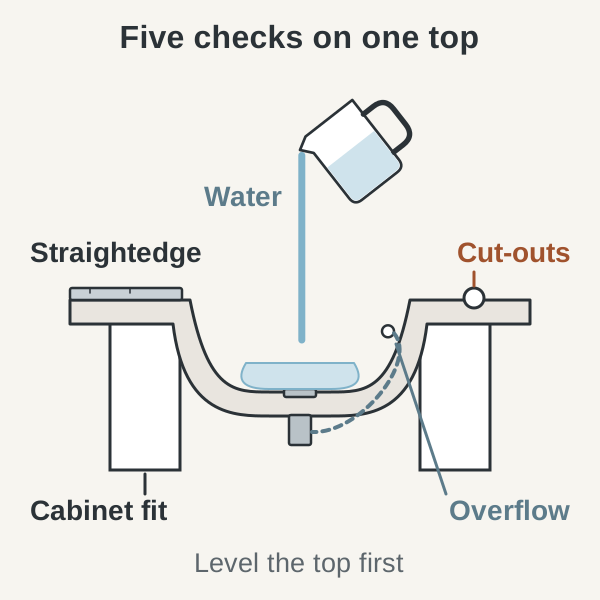
Work in a fixed order; the order below is this guide’s own. Makers ask for a first look too: Kohler tells installers of two vanity-top lavatories to inspect for damage, as ARSTAR does for its cultured marble tops.
- Set the top on a firm support and check it with a level.
- Look across the deck and into the bowl under even light. Mark what differs from the approved sample.
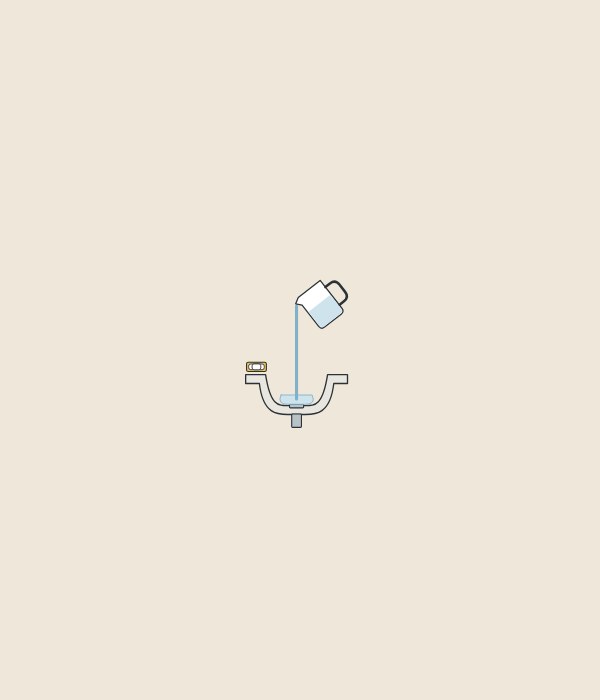
- Pour water into the bowl and onto the deck. Note where it stays.
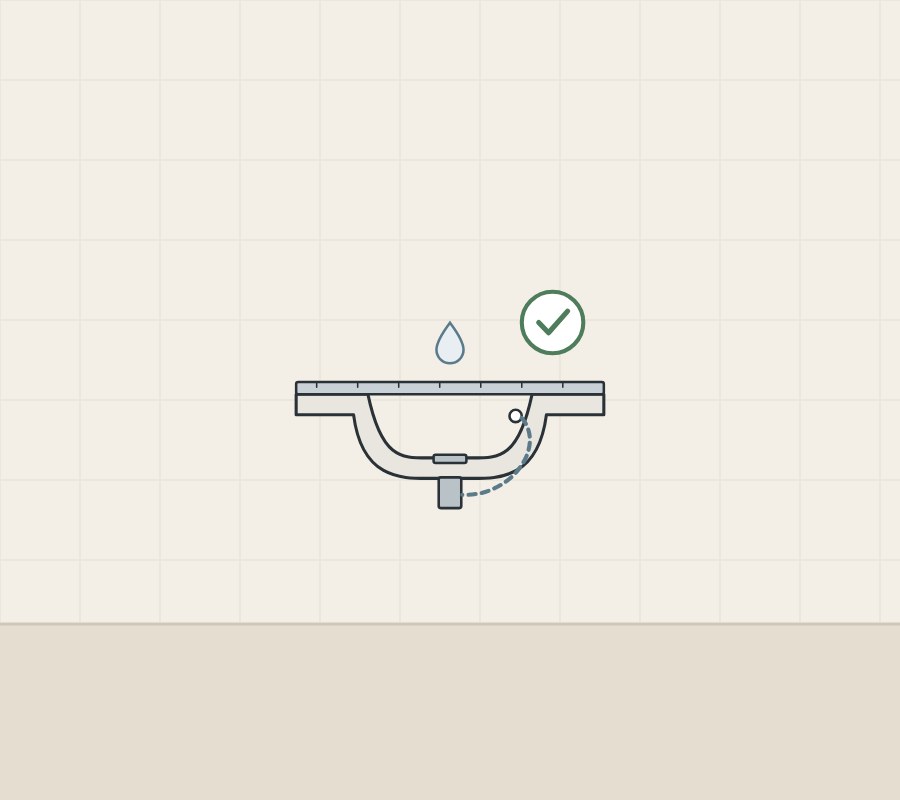
- Fit the drain specified for the bowl. Pour water into the overflow, if there is one, and watch it reach the drain.
- Lay a straightedge along the length and width of the deck. Note any gap.
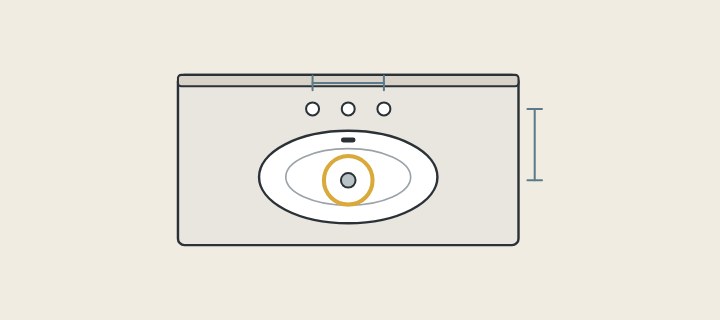
- Measure the faucet holes and drain opening against the drawing. Check hole edges for chips.
- Set the top on its cabinet. Check for rocking, and check overhangs and drawer clearance. Record the result against the top’s ID.
Leak checks belong to the installed fixture: the same Kohler instructions say to run water into the basin and check the drain connections for leaks.
What do the fixture standards cover?
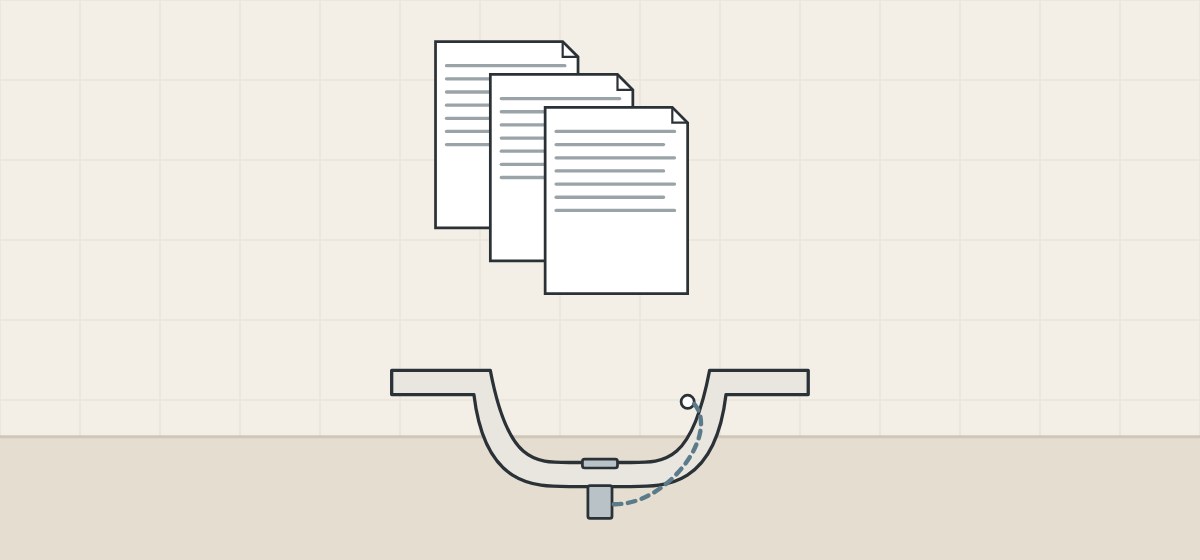
The public pages of the fixture standards give scope and edition. They do not show test methods or limits.
| Standard | Covers | Shown on public pages |
|---|---|---|
| CSA B45.5:22/IAPMO Z124-2022 | Plastic plumbing fixtures, lavatories included (third edition; supersedes 2017) | Materials, construction, performance, testing and markings |
| ASME A112.19.2-2024/CSA B45.1:24 | Vitreous and non-vitreous china fixtures | Materials, construction, performance, testing and markings |
| BS EN 14688:2015+A1:2018 | Washbasins for domestic purposes, hotels included | Functional characteristics and test methods; “Overflows” is a page descriptor |
For test methods and limits, read the standard or ask for the test report.
What do published flatness and defect limits say?
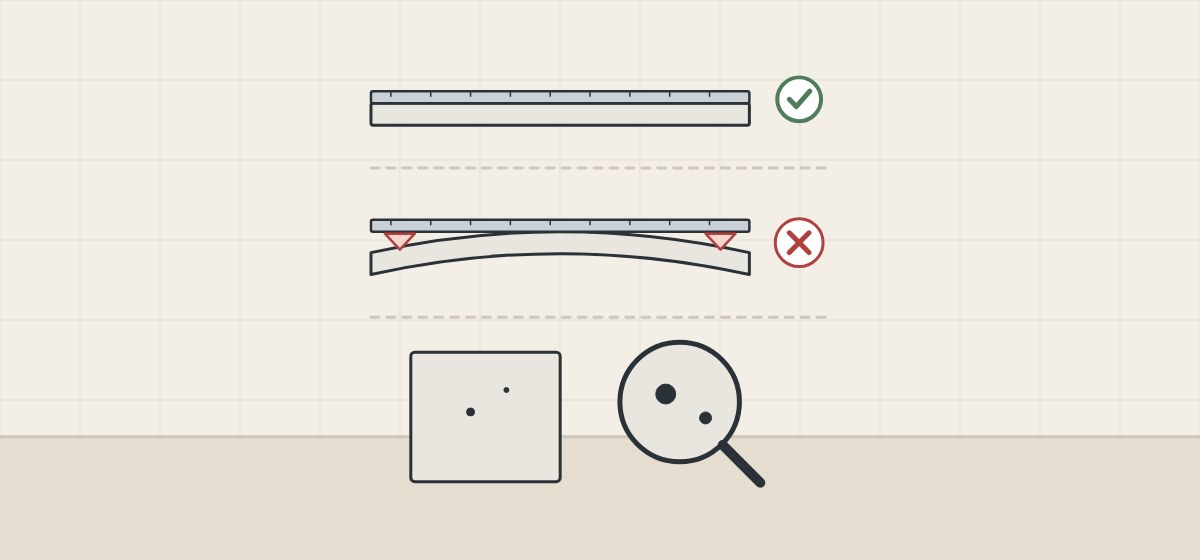
The limits found apply to solid surface sheets or to one maker’s own cultured marble bowls, not to finished integrated tops in general. ISFA 2-01 says shaped goods are outside its scope.
| Source | Item | Published figure |
|---|---|---|
| ISFA 2-01 (2013) | Flatness of standard-type sheets, 1220 mm straightedge | 1.6 mm or less |
| HIMACS HM2050 | Sheet smile or frown warping | Less than 1.5 mm per m |
| HIMACS HM2050 | Pin holes and voids, sheet face side | None |
| Rynone, cultured marble bowls | Bowl length, width and placement dimensions | May vary 1/4 to 1/2 in |
ISFA places the straightedge edgewise on the sheet in the length and width directions. For a finished top, agree the allowed gap in writing.
How should drainage, overflow and cut-outs be checked?
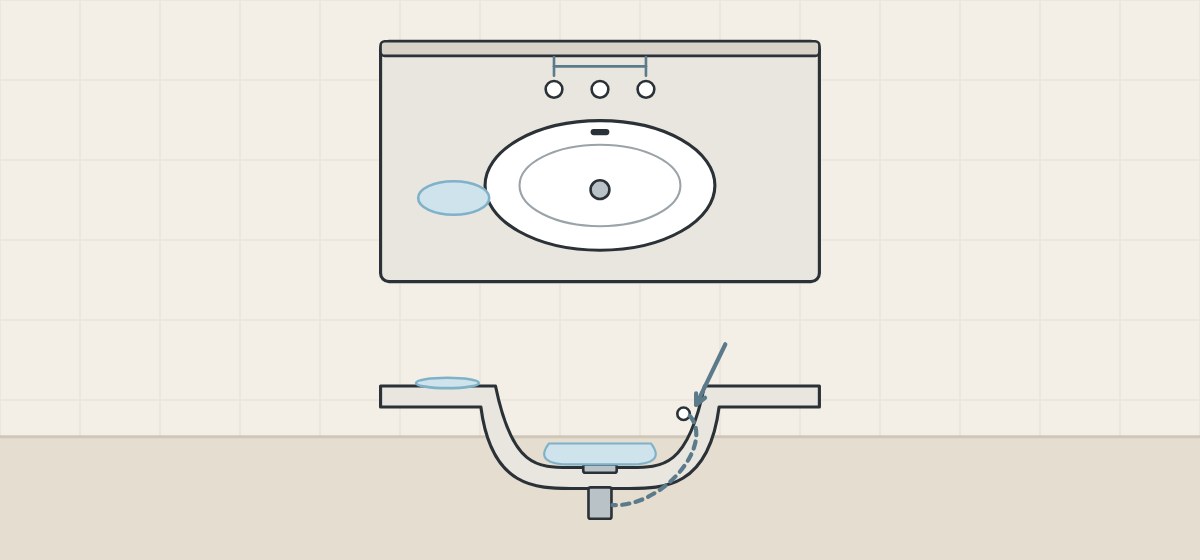
Check each with the real part: water, the actual waste and the drawing.
Drainage
Watch for standing water on the leveled top. In its care advice for countertops, Corian says a film builds up if water is left to dry on the surface.
Overflow
Rynone says all its cultured marble bowls come with an overflow unless the buyer specifies otherwise. Ask whether the bowl has one before choosing the drain.
Drain fitting
ARSTAR says never to use plumber’s putty on its cultured marble and not to over-tighten drain nuts, because cultured marble can crack.
Faucet holes
Kohler lists 8-inch widespread faucet holes and an overflow drain for the K-2779-8. Measure what was drilled against the order.
- Where water stood, with the top level
- Whether overflow water reached the drain
- Hole count, centers and diameters
What can a photograph not show?
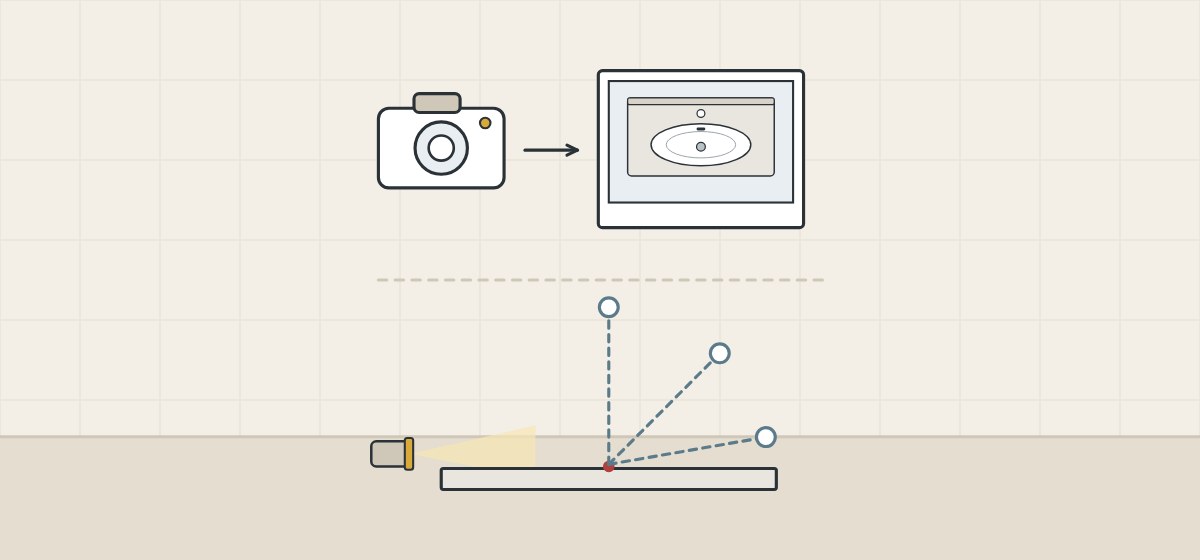
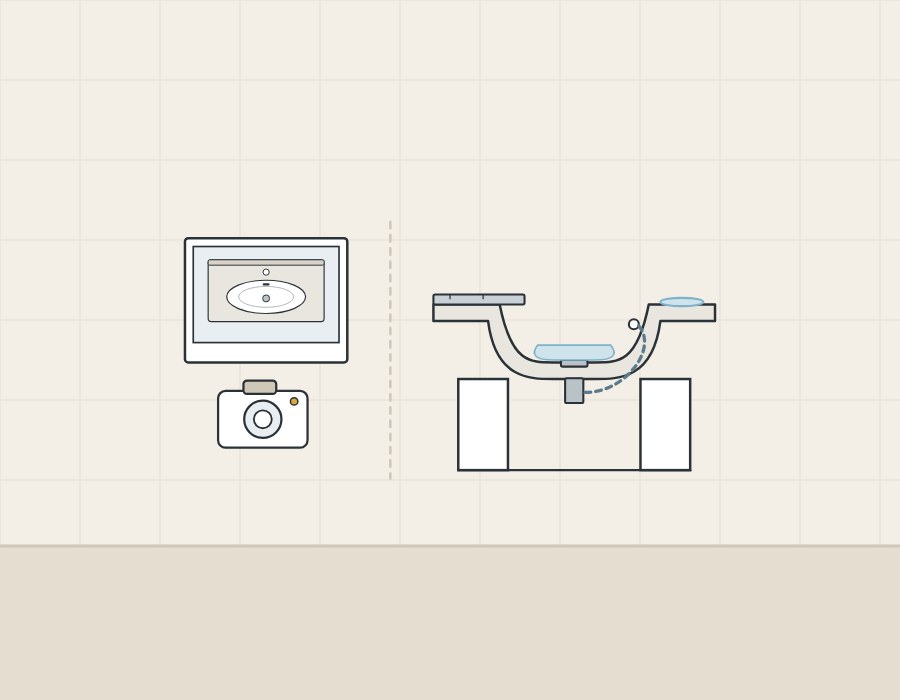
A photograph cannot show which way a surface falls, how flat it is or how the top sits on its cabinet. It shows marks from one angle under one light.
Angle and light
ISFA 2-01 inspects sheets for visual defects from 610 to 750 mm, at 10, 45 and 90 degrees to the horizontal, under white fluorescent light of 800 to 1100 lux. One photo fixes one angle.
Color
LX Hausys says never to inspect HIMACS color under bright light such as direct sunlight, and does not guarantee a color match between its shapes and sheets.
What photos are for
When a defect is reported, LX Hausys asks for a photograph, if possible, of the area of concern and the material identification. Use photos that way: to record a mark and its top.
A water-test video shows where water runs only if the support was level. Keep the level in the frame.
How should the top fit its cabinet?
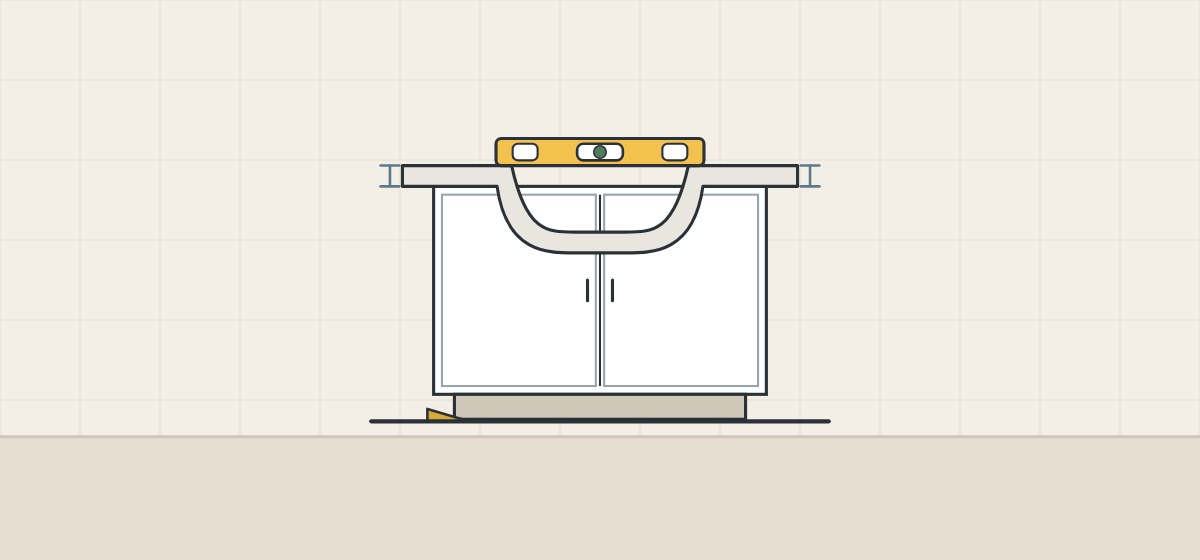
The top should sit on a level cabinet without rocking, with the planned overhangs and no clash between bowl and drawers. That is this guide’s test; makers’ documents add detail.
| Source | What it says |
|---|---|
| ARSTAR, cultured marble tops | Shim the cabinet until level; dry-fit the top to verify size, level and alignment. |
| Kohler K-2748T/K-2749T | Wall and floor square and plumb; level the lavatory; do not overtighten the cap nuts on the wall bolts. |
| Swan, its vanity tops | A bead of adhesive or silicone on the cabinet corners; let the top set for 24 hours. |
How should a buyer write the inspection into an order?

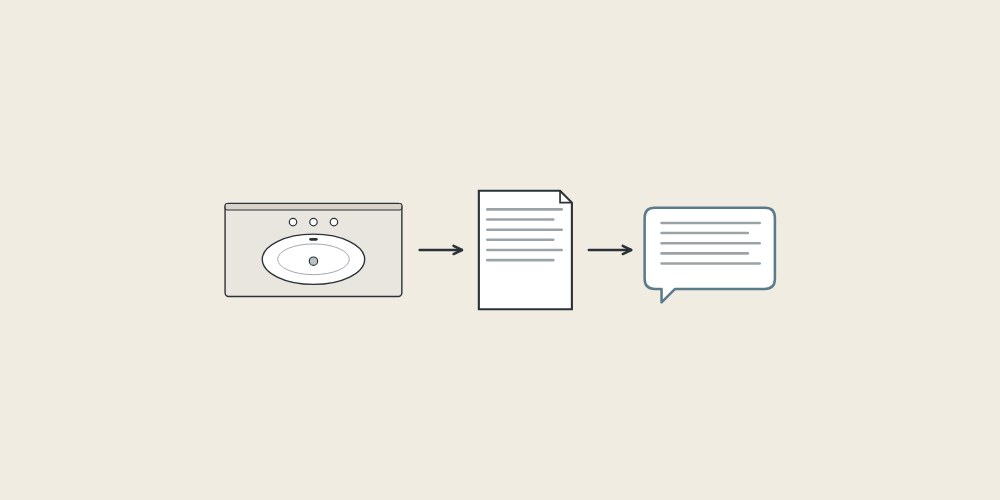
Write the checks into the order before production. These steps are procurement guidance.
- Name the material and construction. Cast in one piece, or a bowl seamed to a sheet deck.
- Name the standard, if one is required. Give the edition and ask for the test report.
- Agree tolerances for the finished top. Straightedge gap, size and hole positions.
- Fix the water test. Top leveled, water in bowl and on deck, filmed with the level in view.
- Fix the overflow test. Drain fitted; water poured into the overflow reaches the drain.
- Fix the viewing conditions. Light, distance and angles, against the approved sample.
- Agree sampling and records. First units in full, then a sample per lot; one result per top ID.
Mistakes that pass a bad top
Five mistakes to avoid: approving from photos; skipping the water test because the top looks right; testing on a support that is not level; testing the overflow without the drain; ignoring water that stays on the deck.
What should you send and ask before a quotation?
A complete request says how the top will be checked, not only what it is.
| Question | Why it matters |
|---|---|
| Which material, and is the bowl cast or seamed? | It decides what the surface is. |
| Does the bowl have an overflow? | It decides the waste and the test. |
| Which standard, edition and report? | Public pages show scope, not test methods or limits. |
| What flatness tolerance applies to the top? | Published limits are for sheets. |
| How is the water test recorded? | A support that is not level proves nothing. |
Include with your request
- Top drawing with bowl and hole positions
- Faucet, waste and overflow models
- Cabinet drawing or model
- Approved sample or finish reference
- Quantity and inspection sampling
WNS Global confirms any offered top, material, tolerance and commercial terms separately in writing. This guide does not state that WNS Global products have the features, tolerances, test results or listings named above.