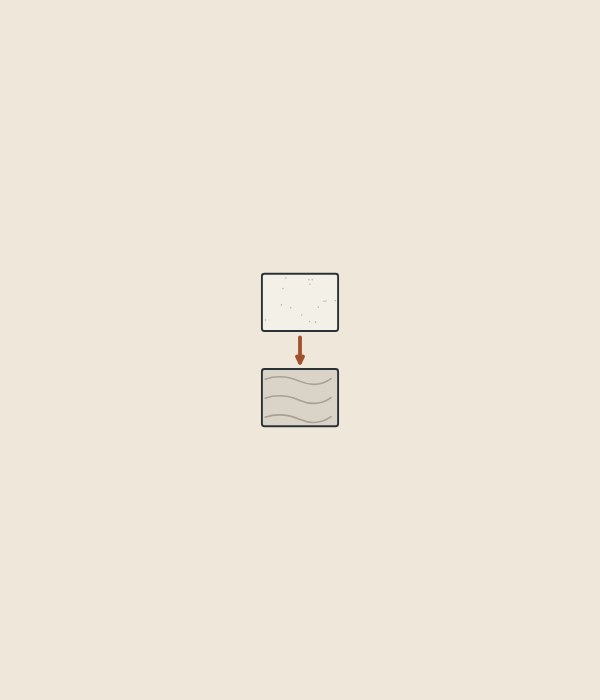
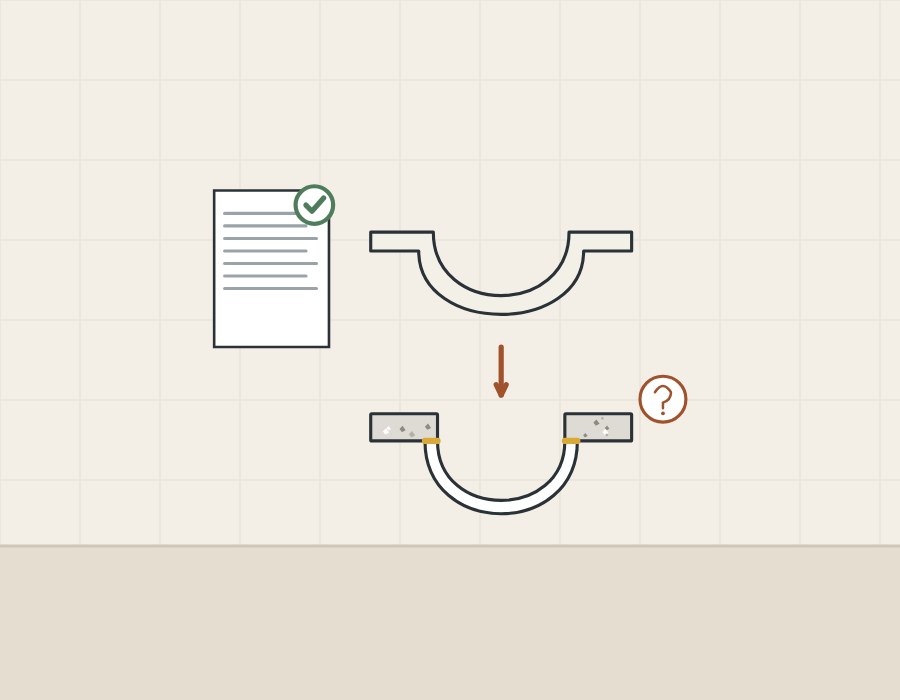
From material to change record
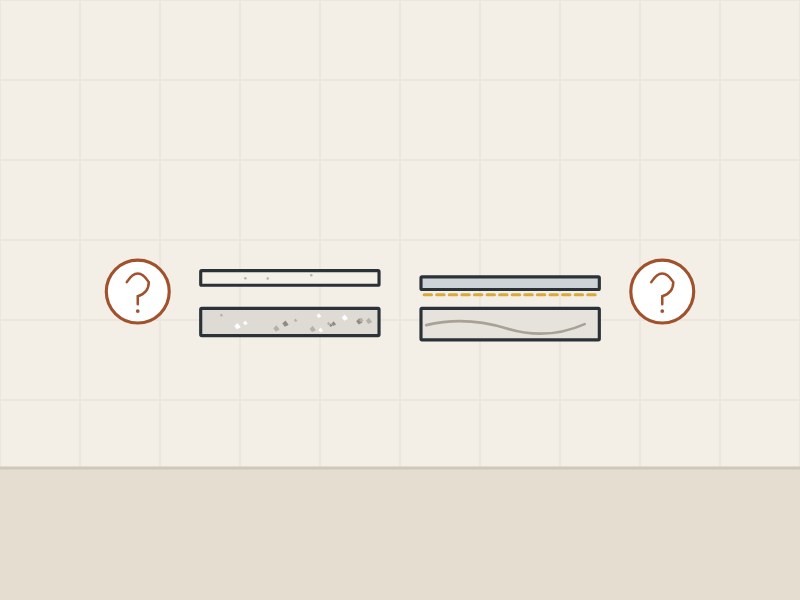
What actually changes when the top material changes?
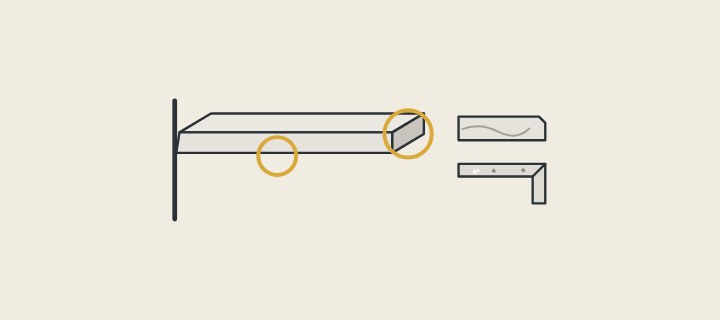
The way the top is made changes, and the basin joint, edge, support, cut-outs, weight and care can change with it.
Corian describes its solid surface as about one third acrylic resin and two thirds natural minerals.
| Material | How its source describes it |
|---|---|
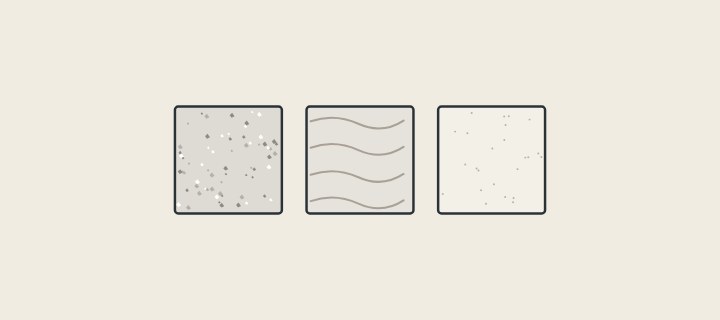
| Solid surface | ISFA (2013): resins, mineral fillers and pigments in sheets; homogeneous and renewable. |
| Engineered quartz | ISFA (2013): natural quartz particles with resins and pigments, made as slabs. |
| Sintered or ceramic slab | Laminam: its 12+ and 20+ are a slab reinforced with a fiberglass mesh. |
| Natural stone | Natural Stone Institute: calcareous (mainly calcium carbonate) or siliceous (mainly silicates). |
In what order should a material change be reviewed?
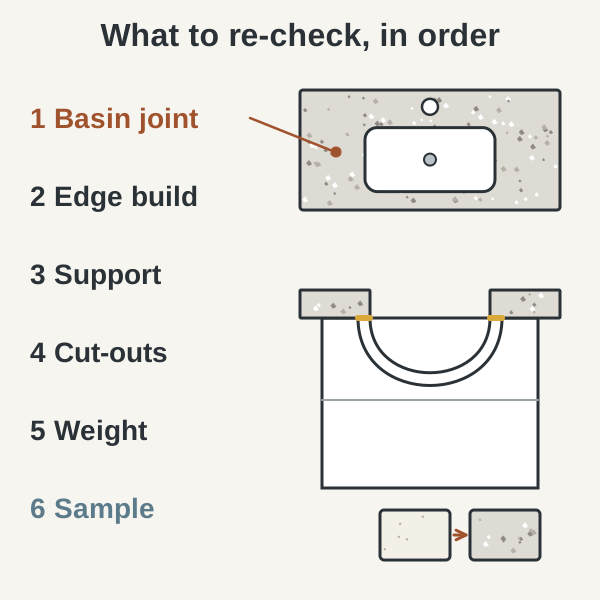
Review the basin first, because it decides whether the approved drawing survives. The order is this guide’s suggestion.
- Basin type and how it is joined to the top.
- Slab thickness and how the edge is built.
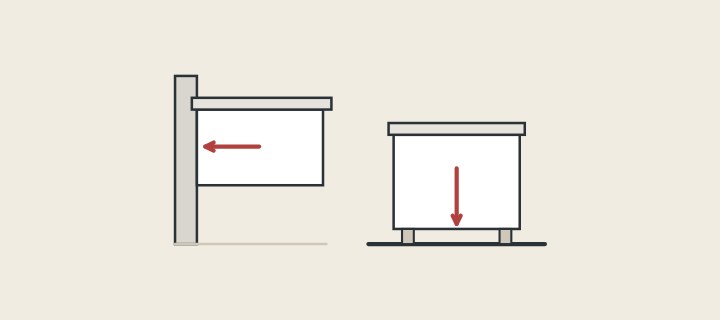
- Support under the top, and any overhang.
- Cut-out corners and hole positions.
- Weight of the new top.
- Sample, shade, finish and care.
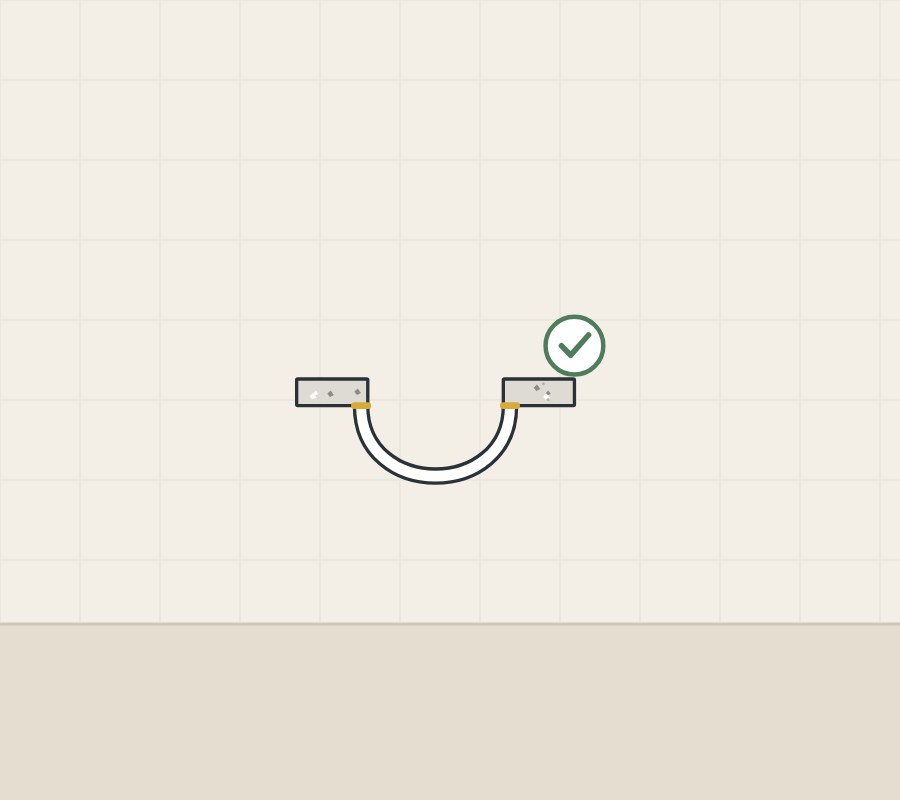
Corian’s sink bulletin prefers one mounting method for its own solid surface sinks and another for sinks made from other materials, so a material change can change the joint.
Which basin types and joints does each material allow?
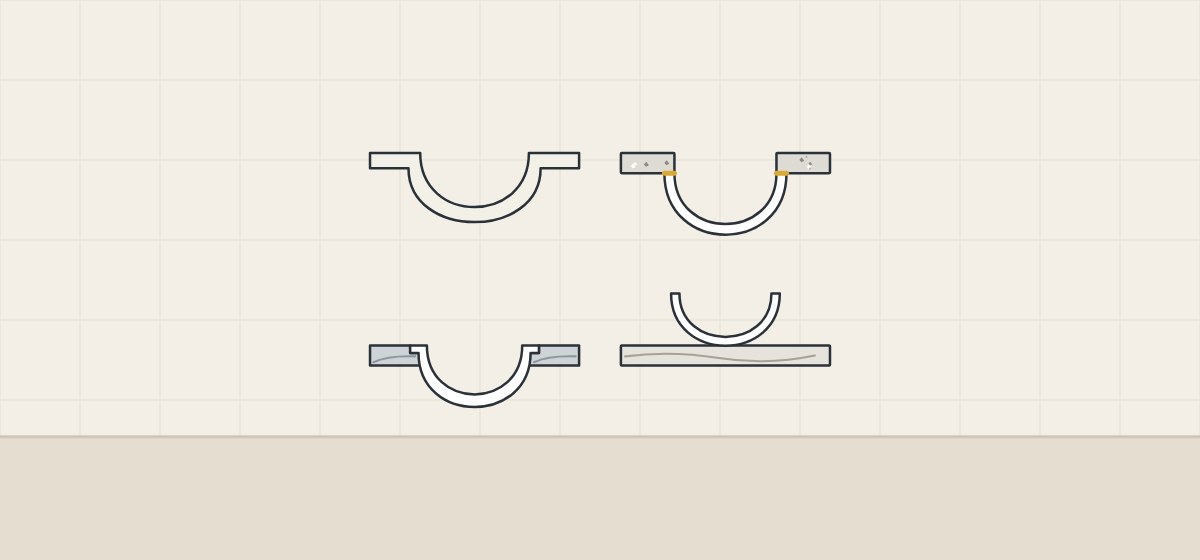
Each maker read for this guide names its own mounting methods, so the approved basin may not carry over.
| Top material | Basin and joint the maker describes |
|---|---|
| Corian solid surface | Corian: own sinks on a hard seam with joint adhesive; other sink materials on a soft seam undermount with silicone. |
| HIMACS solid surface | LX Hausys: its own bowls installed with or without a rebate, bonded with adhesive. |
| Corian Quartz | Lavatory undermounts on clips or cradles; clips not screwed into quartz. A Corian solid surface lavatory can be undermounted with joint adhesive, with added support in the cabinet. |
| Silestone and Dekton | Cosentino: under-mount (glued, with plate or with anchoring), top-mounted or flush-mounted. |
| Laminam 12+ and 20+ | Laminam: undertop, flush or overtop; a 45° joint when the sink is made of Laminam. |
One maker describes an integrated look: Cosentino says its Silestone washbasins are designed to merge with the bathroom countertop. No natural stone rule was read.
How do thickness and edge build-up differ by material?
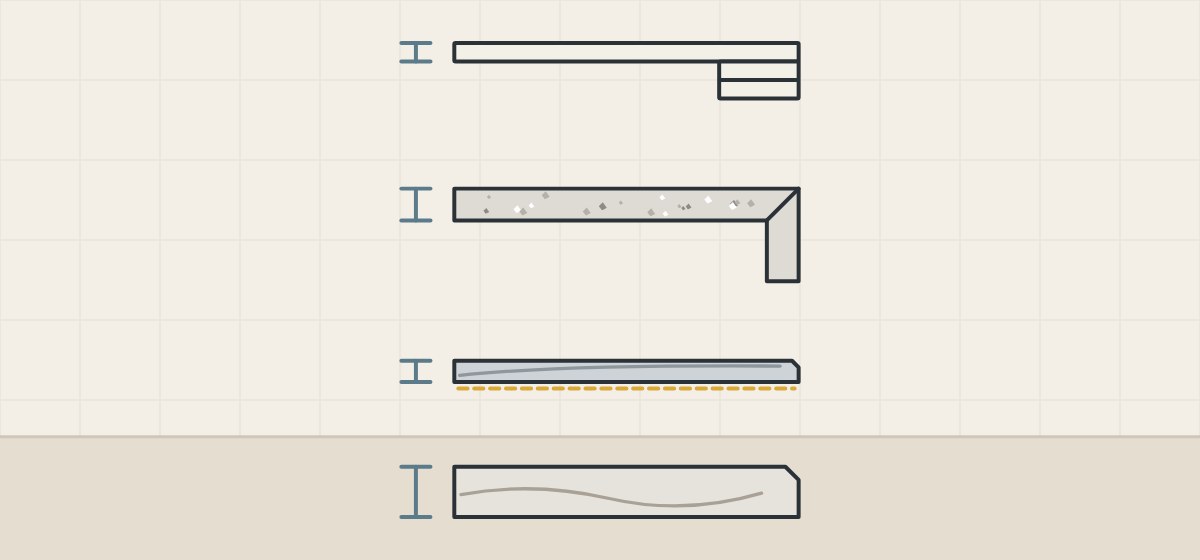
Each source lists its own thicknesses and edge methods.
| Material | Thicknesses listed | Edge notes |
|---|---|---|
| Corian solid surface | 12 mm sheets; 19 mm in select colors (6 mm is for vertical or furniture use) | Stack or drop-edge build-ups |
| Quartz surfacing | ISFA: generally 1.2, 1.5, 2 and 3 cm | Seaming allows built-up edges |
| Silestone | 12, 20 and 30 mm | Mitered skirt for straight sections only |
| Dekton | 12 and 20 mm for countertops; 8 mm has its own document | Mitered skirt for straight sections only |
| Laminam 12+, 20+ | 12.5 and 20.5 mm nominal | Bevel of at least 2 mm suggested |
The same front height can be built differently, so re-approve the edge on a corner sample.
Does the cabinet support have to change?
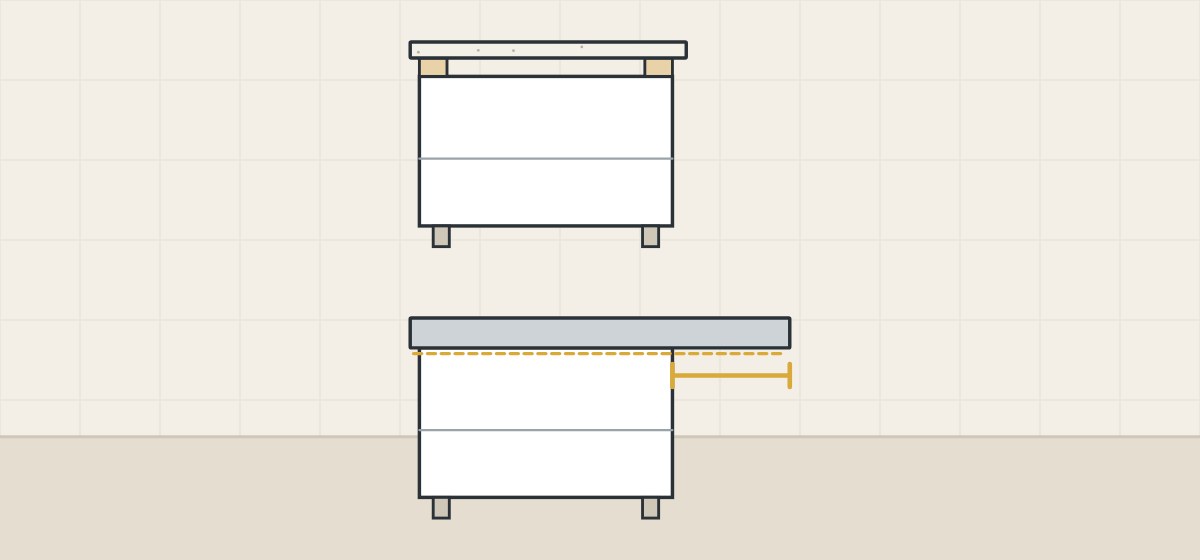
It may: the makers’ documents ask for different support. Each figure is the named maker’s, under its stated condition:
Corian solid surface
A strong, continuous perimeter support frame; full underlayment is not recommended outside stated cases. A 12 mm top may overhang up to 6 in (150 mm), and a 19 mm top up to 12 in (305 mm), without added support at zero load.
Corian Quartz
Perimeter support flat within 1/8 in over 118 in. Overhangs under 12 in on 2 cm slabs, and under 15 in on 3 cm, need no support, and an overhang should not exceed one third of the top’s depth.
Silestone and Dekton
Both Cosentino manuals say the countertop must always rest completely on the cabinet structure. On a kitchen island without cut-outs, a 12 mm top may overhang up to 200 mm in Silestone and 300 mm in Dekton, with support at least twice the overhang.
Laminam
Maximum overhang 350 mm for 12+ and 450 mm for 20+, with a hole-free depth of supported top at least equal to the overhang (faucet hole excepted); tested with a 100 kg static load 50 mm from the edge.
- Check overhang at front and ends
- Check frame or full contact
- Check support under the basin
Do cut-out and hole rules change with the material?
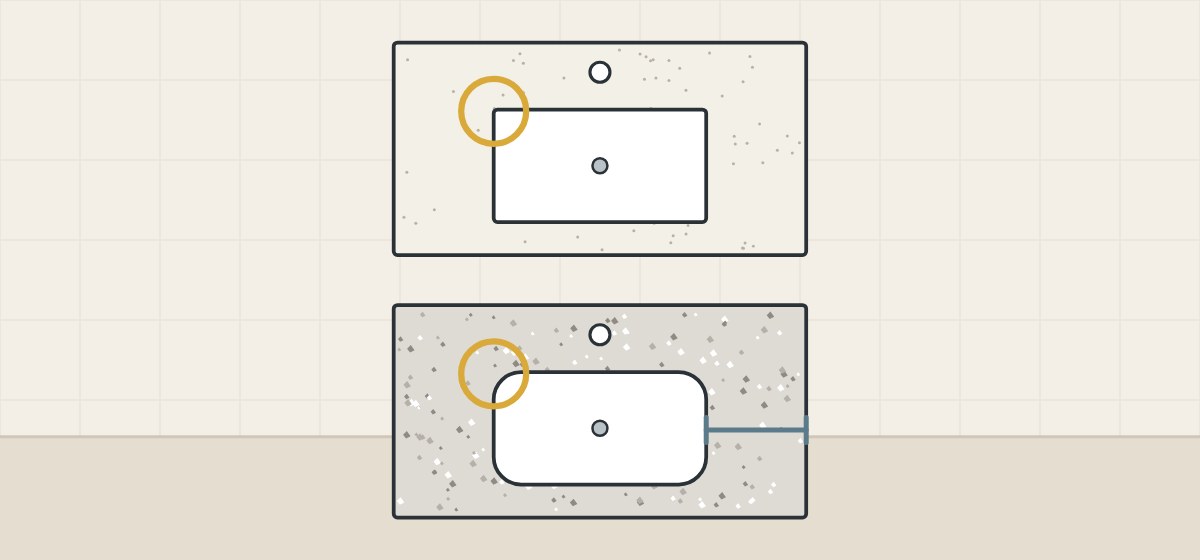
Yes, in the documents read: each states its own minimum inside-corner radius, and some add distances to edges and joints:
Corian solid surface
Minimum inside corner radius of 3/16 in (5 mm) for all cutouts, made with a router and template guide.
Corian Quartz
Minimum inside radius of 1/4 in (6 mm) for all cutouts.
Silestone and Dekton
Sink cut-out corners of at least 10 mm, and at least 150 mm from a cut-out to a joint in 12 mm material.
Caesarstone
At least 10 mm on all seen and unseen cut-out corners, and no square corners.
Laminam
Minimum radius of 5 mm, and at least 50 mm from holes or cut-outs to the external edge of a kitchen countertop.
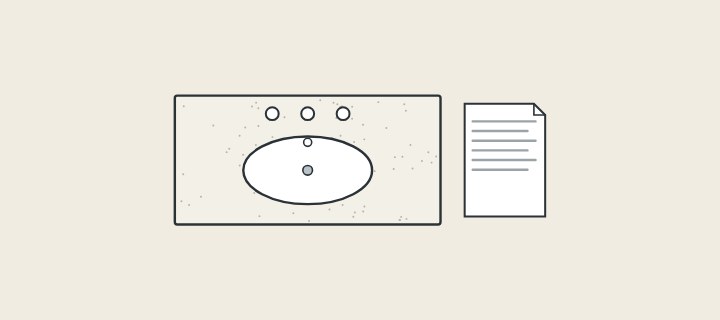
A basin opening drawn for one material may need its corners redrawn for another, so the revised drawing should show every hole again.
How do weight, finish samples and care change?
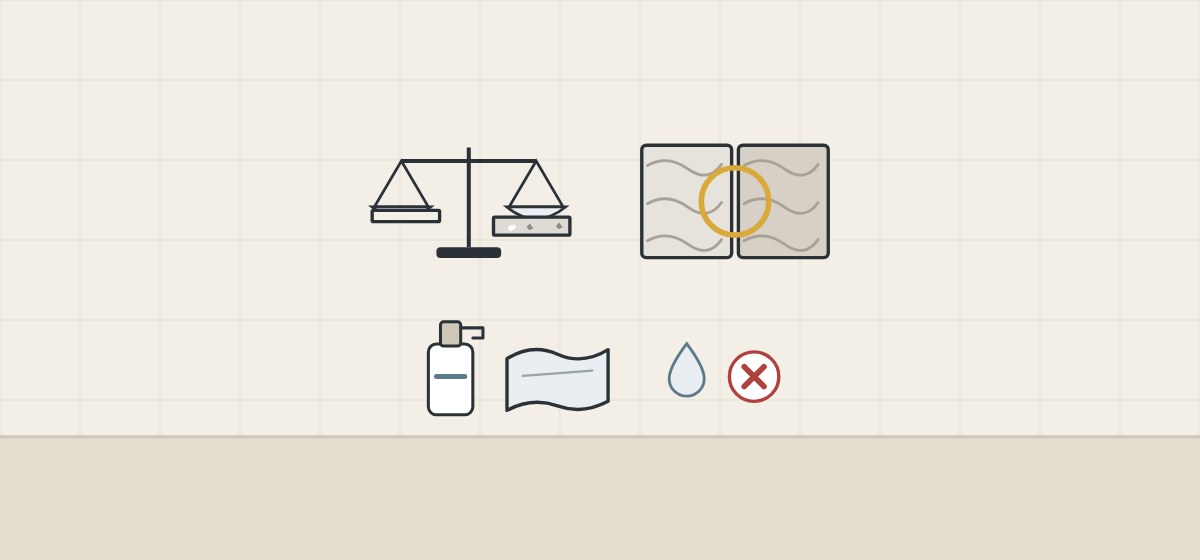
Weight, shade and cleaning limits are stated per product.
| Topic | What the source says |
|---|---|
| Weight, quartz | Corian Quartz: 10 lb/sq ft (about 49 kg/m²) at 2 cm and 15 lb/sq ft (about 73 kg/m²) at 3 cm. |
| Weight, sintered slab | Laminam: averages of 30 kg/m² for 12+ and 50.4 kg/m² for 20+. |
| Shade | Laminam: verify shade when a project uses several slabs. Corian: slight color variation sheet to sheet. |
| Finish | Caesarstone: Natural, Honed, Concrete and Rough finishes need more cleaning than Polished. |
| Stone | Natural Stone Institute: acids may dull or etch calcareous stones; sealing makes stone more stain resistant, not stain proof. |
How should a buyer control a top material change?
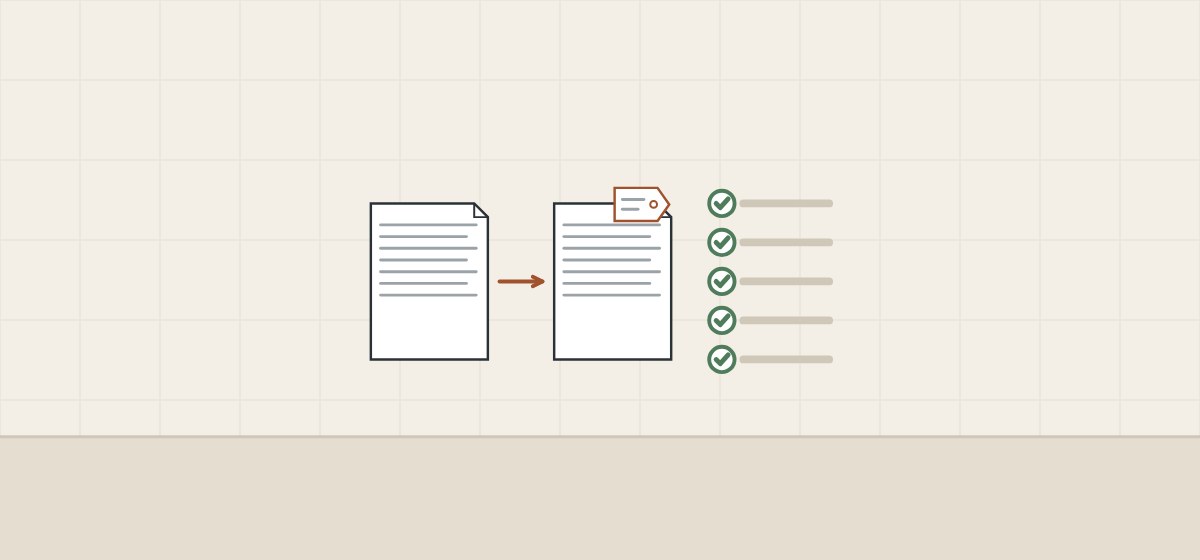
Treat the request as a new revision of the top. These steps are guidance.
- Hold cutting. No top is made until the change is closed.
- Name the new material. Maker, product, color, thickness, finish.
- Ask which document governs. The maker’s fabrication guide.
- Reopen the basin. Type, joint, support and drain data.
- Get a revised drawing. Thickness, edge, joints, corners and holes.
- Send weight and overhangs for cabinet review. Wall-hung cabinets first.
- Approve a new sample and care sheet. Edge, finish and shade range.
- Get cost and time in writing. Before release.
Changes that backfire
A basin the new material cannot take as drawn; a wall-hung cabinet designed for a lighter top; an edge the material cannot produce; a color approved from the old sample; a change agreed by email with no revised drawing.
What should the supplier send before you agree the change?
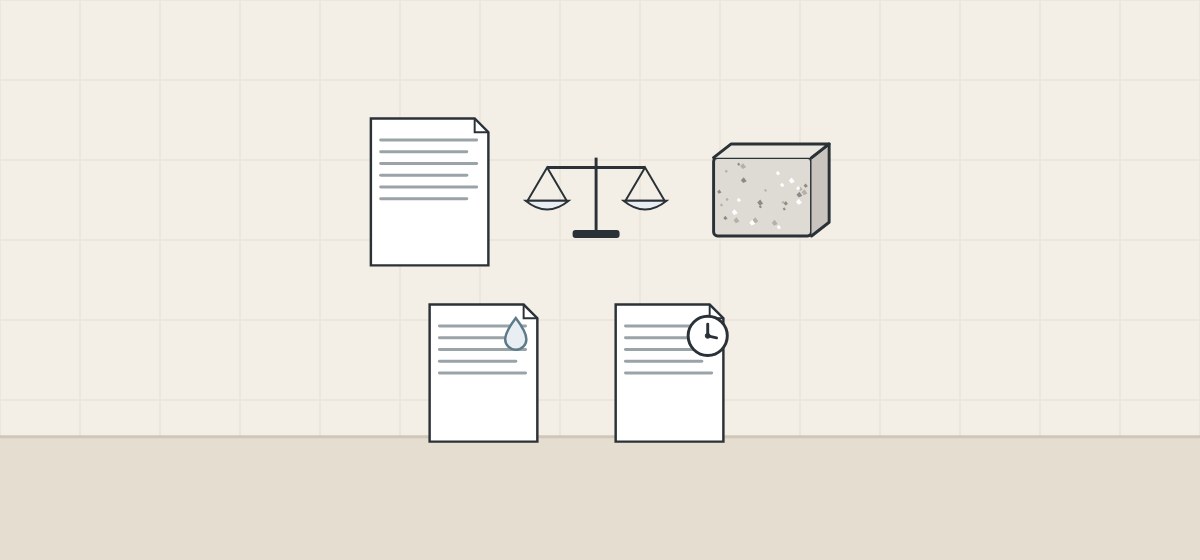
A change is complete only when these documents exist.
| Document | What it settles | What it does not |
|---|---|---|
| Revised top drawing | Basin, thickness, edge, joints, holes | Fit to the cabinet |
| Stated weight of the new top | Input for cabinet review | The wall or fixings |
| Cabinet review note | Support was reconsidered | Site wall condition |
| New sample with edge | Appearance | Durability |
| Maker’s care instructions | Cleaning limits | Actual use |
| Written cost and time effect | Terms of the change | Delivery performance |
Include with your request
- Approved drawing and revision
- New material, maker and finish
- Basin and faucet models
- Wall-hung or floor-standing cabinet
WNS Global confirms any offered top, basin, material and commercial terms separately in writing. This guide does not state that WNS Global products are made from, or meet the rules of, any material or maker named above.